Appeals court hears challenge to stop, exit order and frisk after nearby gunfire
Loading...
Summary
A defendant convicted after officers stopped a car near where shots were heard argued the stop and subsequent exit order and frisk violated Article 14 because officers lacked individualized suspicion; the Commonwealth says proximity, evasive driving, a single glove and physical evidence justified the measures.
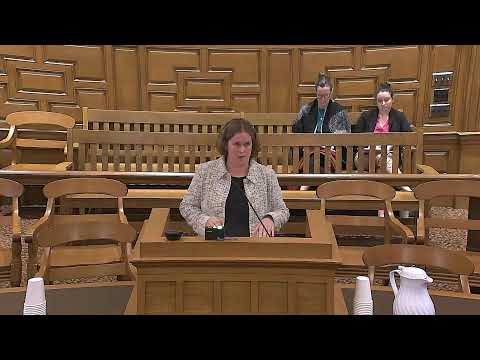
A three‑justice panel heard competing accounts Thursday in Commonwealth v. Young over whether police may lawfully stop the first person they encounter after hearing gunfire and then order an exit and a frisk.
Daniel DeMaria, counsel for appellant Jonathan Young, told the court officers had “no suspect description, no vehicle description, no direction of travel, no observed criminal conduct” and argued officers relied only on proximity to the shots. DeMaria said those facts describe “a very large category of persons” and cannot meet Article 14’s requirement for particularized, individualized suspicion. He added that body‑camera footage shows less than 34 seconds elapsed between the officers’ arrival and Young’s removal from the vehicle, arguing there was insufficient time to form a reasonable belief of danger to justify the exit order or a pat frisk.
The Commonwealth, represented by Malcolm Palley, replied that officers heard multiple shots while patrolling a neighborhood known for firearm violence, then observed a single white vehicle “rapidly exiting,” jump a curb, turn onto a nearby street and abruptly pull over, turn off headlights and go dark. Palley said those observations, together with the immediacy and proximity of the shots, were properly considered under the totality of the circumstances and supplied reasonable suspicion to stop the vehicle and a reasonable belief occupants might be armed.
The parties disputed whether a single black latex glove observed on Young’s right hand and palm prints on the magazine were sufficient to infer knowledge of a loaded firearm. Palley pointed to physical evidence he said supported the verdict: a firearm recovered on the defendant within about a minute of the shooting, prints on a detachable magazine, a slide locked back indicating recent discharge, and ballistics matching scene casings. DeMaria countered a glove or nervousness are equally consistent with an innocent person panicking after hearing gunshots and argued the pat frisk required particularized articulable facts showing danger.
The panel also pressed both sides about ineffective assistance of trial counsel. DeMaria argued counsel’s failure to object to an officer’s unsolicited hearsay remark—later ruled to be in evidence—amounted to deficient performance; Palley said the record shows counsel litigated the issue pretrial and made a tactical decision not to object in front of the jury.
After questioning from the justices, both sides rested their arguments and the case was submitted for decision.