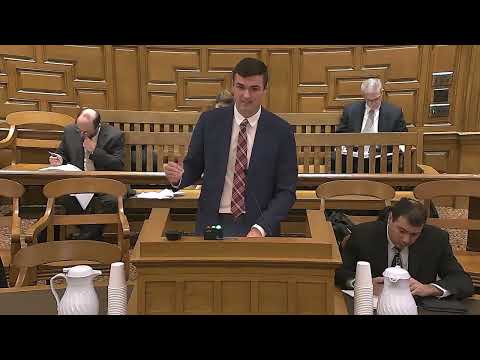
Appeals court hears challenge to sufficiency of evidence in juvenile firearm and drug case
Loading...
Summary
Defense argued surveillance footage and officer testimony did not directly link a juvenile to a firearm found on a building windowsill; the Commonwealth conceded insufficiency on the cocaine count but defended the firearm conviction based on flight, a vehicle chase, and the weapon’s location.
The panel heard argument in an impounded juvenile appeal about whether the Commonwealth presented sufficient evidence to support firearm and drug convictions. Defense counsel Matthew Coase argued the evidence was largely circumstantial and that video surveillance and officer testimony did not directly connect the juvenile to the gun found on a 3rd‑floor windowsill. Coase urged that flight and running behavior have diminished probative value once contexts such as race and policing practices are considered and that inferences about a waistband bulge were speculative.
The court examined the record closely, asking whether the officer described a direct observation or was describing surveillance footage and whether that distinction changed admissibility or weight. Coase noted a roughly nine‑to‑11 second gap between the juvenile and the officer on the video and argued that the officer’s statements relied on watching the surveillance rather than on in‑person observation.
The Commonwealth — represented by ADA Brain Morris — conceded the cocaine possession sufficiency issue, acknowledging the jury did not receive key bodycam footage (exhibit 10) and that the only direct trial testimony about the jacket was limited. Morris nevertheless defended the firearm sufficiency, pointing to consciousness‑of‑guilt evidence (vehicle flight, passenger running, and the firearm being found in a public corridor in plain view) and argued a juror could reasonably infer the juvenile discarded the weapon during flight.
The justices probed how the juvenile’s path of flight connected to the location where the firearm was found, whether elevators or alternate stairways could break any inference, and whether testimony about responding to a shots‑fired call unduly prejudiced the jury. The court took the matter under advisement.