Appeals court considers whether Facebook lookup tainted in‑court ID in Moran case
Loading...
Summary
In Commonwealth v. Moran, defense counsel argued an in‑court identification by an officer—after searching Facebook and viewing a photo—was unduly suggestive and the admission created a substantial risk of miscarriage of justice; the Commonwealth said the identification was corroborated by circumstantial evidence.
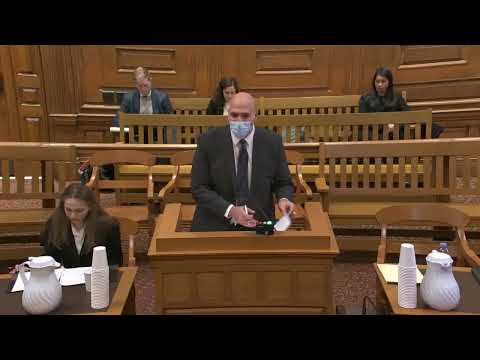
Mike Rusconi, arguing for appellant Darren Moran, told the panel that the critical error in the underlying trial was admission of an in‑court identification by Sergeant Emily Mello that followed a Facebook search. Rusconi described the procedure as effectively a one‑photo, name‑tagged show‑up and said the officer’s later courtroom certainty—"I am 100% sure"—was the single most powerful evidence in the case.
Rusconi argued that Creighton and related case law require constitutionally permissible out‑of‑court identification procedures (non‑suggestive photo arrays or show‑ups) before an in‑court ID is elicited. He said the officer looked up a name (from a pill bottle found in the vehicle) on Facebook, focused the investigation on a single suspect and then testified with unqualified certainty in court, creating a substantial risk of prejudice.
The panel pressed on preservation and the proper remedy for an unraised pretrial objection. The justices asked whether the issue should have been preserved by a motion to suppress or raised later as ineffective assistance. Rusconi said the standard on direct appeal is whether the error created a substantial risk of a miscarriage of justice and that Creighton places the burden on the Commonwealth to seek pretrial rulings when identification procedures are at issue.
Assistant District Attorney Alyssa Almeda told the court the Commonwealth relied on a “strong circumstantial” record: a pill bottle with Moran’s name in the vehicle, a sweatshirt the officer tied to a Facebook photo, corroborating calls from another department, and the defendant’s leaving the vehicle and heading to a known address. Almeda said the officer’s later unequivocal testimony was supported and that even if procedures were not textbook, there was not a substantial risk that the outcome would differ.
The panel asked follow‑up questions about timing of the Facebook search (under an hour), whether the officer did the lookup at the station, and whether the earlier RMV photo failure to identify undermined the later certainty. Counsel and the panel discussed related precedent (Jacquard, Barrett, Martinez, Rodriguez) and whether prompt confirmatory identification was reasonable under high‑urgency circumstances. The argument concluded with the case submitted to the panel.