Get Full Government Meeting Transcripts, Videos, & Alerts Forever!
Get email alerts on the Oakshade Rezoning topic
No spam. Unsubscribe anytime.
Public hearing on Oakshade Estates rezoning continued after residents raise traffic, drainage, school‑capacity and privacy concerns
Summary
The commission continued the Oakshade Estates rezoning public hearing to the January meeting after staff said the application was advertised incorrectly and neighbors voiced concerns about Oakshade Road capacity, drainage toward Meadowbrook, nearby transmission lines, and impacts to privacy and schools.
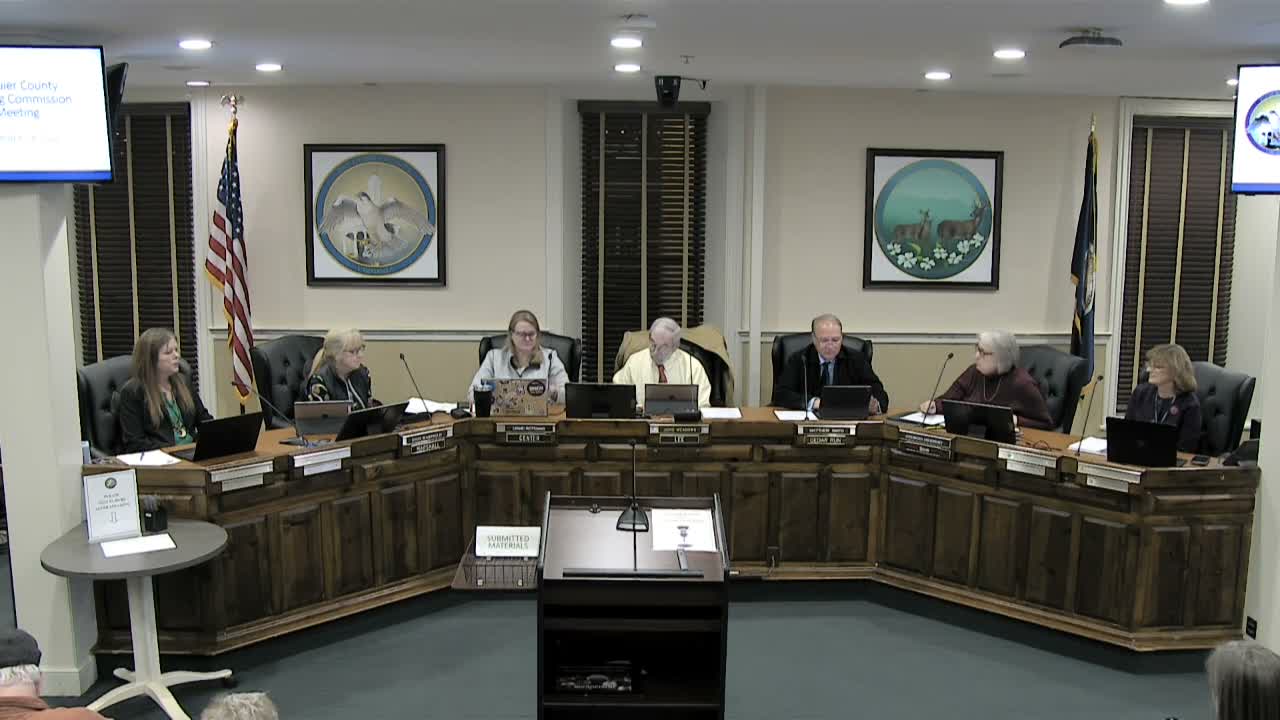
The Fauquier County Planning Commission continued the public hearing on the Oakshade Estates rezoning on Dec. 18 after staff disclosed an error in the property's advertising and several nearby residents described traffic, drainage, school capacity and privacy concerns.
Staff member Mr. Shellenberger described the application as roughly 34.5 acres on Oak Shade Road in Bealton, about halfway between Routes 28, 29 and 17, currently zoned RA and R‑2 in parts. The applicant asked to rezone about 12.5 acres to R‑2 (cluster standards) and just over 21 acres to R‑4 with proffers, proposing 49 single‑family detached homes (19 in the northern section, 30 in the southern) with approximately 52% open space (about 18 acres). Staff said the proposal anticipates 10,000‑square‑foot lots (70‑ft width) in the R‑2 cluster and 6,665‑square‑foot lots (55‑ft width) in the R‑4 area, with sidewalks, street trees, public utilities provided by the water and sewer authority, community gardens and trails.
On school impacts, staff reported current enrollments exceed ideal capacity at Pierce Elementary, Cedar Lee Middle and Liberty High; with the project, Pierce would reach about 102% (three students over capacity), and Cedar Lee and Liberty High about 97%. Staff listed proffers intended to offset impacts: roughly $235,690 for public schools, no proffer for the sheriff's office, just under $156,000 for fire and rescue, and just under $7,000 for parks and recreation, which staff said breaks down to just over $8,000 per lot. A traffic impact analysis submitted by the applicant evaluated five intersections and found no mitigation needed in most cases; an exception was the Oakshade Road and Route 28 intersection, which staff said operates at a level of service F in future scenarios and the project would add approximately 16 seconds of delay in the morning and 45 seconds in the evening with no mitigation proposed.
Applicant Chandra Malina said the development team has experience in nearby states, described planned house size options, and said the design sought to preserve neighborhood patterns while providing amenities. Malina said the team prepared wetlands, surveying and traffic studies and hoped to provide requested answers before the January meeting.
Several Meadowbrook residents urged caution. "Oakshade Road is not really sustainable for a lot of this development," said Carl Wilt, who described existing shortcut traffic, congestion and concern that three new entrances would increase traffic. Justin Wilt urged additional buffers and detailed runoff reports, saying water currently flows along the property tree line toward proposed sites 7–11. Patrick O'Keefe described heavy construction traffic and road damage and raised health concerns about homes built beneath transmission lines, citing online reports he provided. Madonna Wilt said the proposal would place houses about 16½ feet from her property line, described a density mismatch with existing R‑2 lots and requested mitigation including a 20‑foot evergreen buffer, 6‑foot solid privacy fencing, single‑story construction adjacent to her property, restrictions on rear second‑story windows, grading rules to avoid swales toward Meadowbrook and tree preservation. Farren Williams reiterated drainage and road upgrade concerns and suggested the intersection of 661 and Route 28 may need a traffic signal during peak hours.
Because staff identified a discrepancy in the required advertising for the application, the commission did not close the public hearing and the chair moved, and the commission approved, continuing the public hearing to the commission's regularly scheduled January meeting (staff noted that meeting date will be Wednesday, Jan. 21, 2026, and that new notices will be sent). The applicant said they would try to provide requested information before the January meeting.
The public hearing remains open; the commission will take substantive action on the rezoning only after re‑advertisement and rehearing at the rescheduled date.