
Jacksonville officials discuss nonprofit-backed program to rescue historic homes from 'demolition by neglect'
Get AI-powered insights, summaries, and transcripts
Subscribe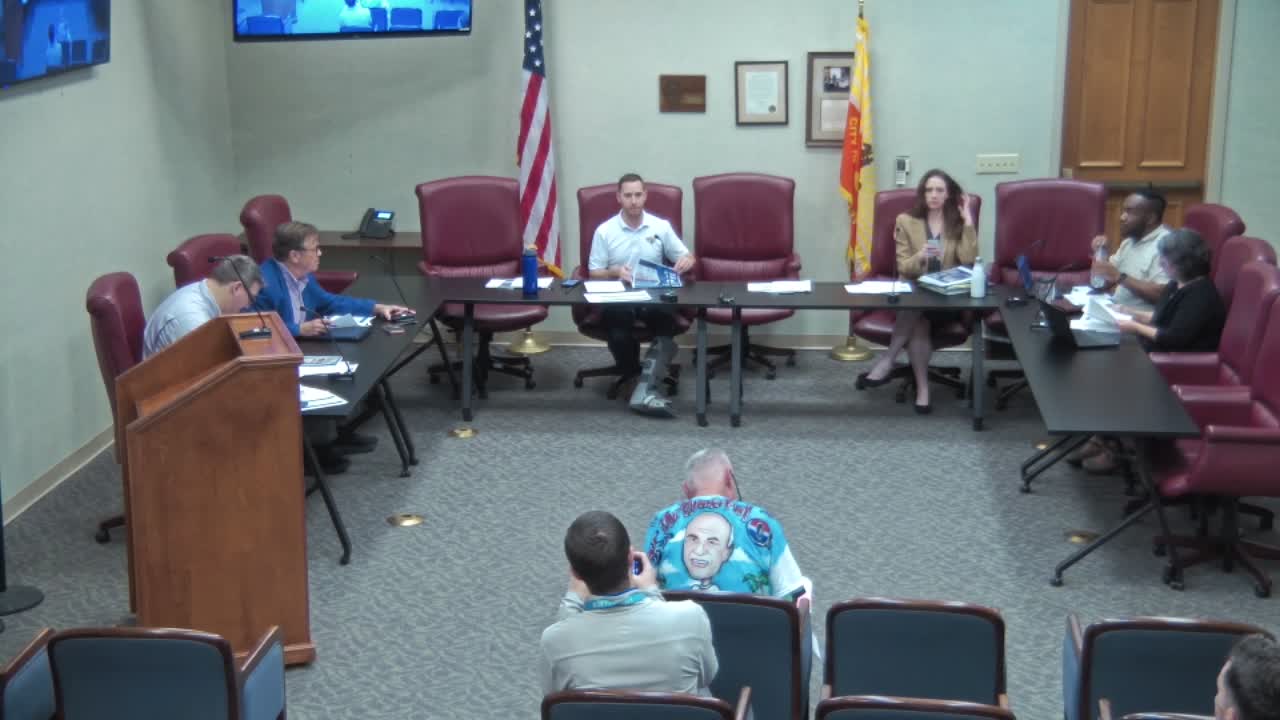
Summary
City and preservation officials discussed a task force report recommending a five-part approach — including a maintained list of at-risk properties, objective criteria, limited use of foreclosure, and a nonprofit partner with a revolving fund — to save historic single-family homes threatened by neglect.
At a Jacksonville meeting on preservation strategy, city officials, members of the Historic Preservation Commission and preservation advocates discussed a task-force proposal to prevent “demolition by neglect” by using a combination of targeted foreclosures, nonprofit stewardship and a revolving fund to restore and resell historic single-family homes.
The task force, which ran about eight to nine months, produced five priority recommendations, William Off of the Historic Preservation Commission said: maintain a list of historic properties with unpaid fines or liens; create an objective scored matrix to identify properties at risk; convene stakeholders to develop a restoration plan; exercise the city’s authority to foreclose on selected properties when legally appropriate; and partner with a nonprofit to accept, hold and renovate properties the city does not want to own long term. “The city itself would, exercise, their authority, to foreclose on certain properties,” Off said.
Advocates framed preservation as economic development. Alan Bliss of the Jacksonville History Center said the city’s many historic neighborhoods require tailored solutions and emphasized adaptive reuse as a financially sustainable path: “Historic preservation is economic development,” Bliss said, arguing that preservation tied to housing or reuse can attract capital that makes restoration viable.
Speakers warned the work will require capital and careful property selection. Developers and rehabbers said restoration is often more expensive than new construction and margins can be thin. Glenn Chandler, representing RAP and Allstate Properties, described rehabs in Riverside Avondale as costly and said selection criteria must consider whether a renovated house can be resold at a price that justifies the investment.
Officials described how foreclosure could work in practice but cautioned it is legally complex. An administration staff member explained that foreclosure is a forced sale for the amount owed and that if liens exceed a property’s value no one may bid, in which case the city can end up with title. Staff also noted foreclosure timelines and outcomes depend on lien position and other legal specifics; the administration said it would need detailed lists to analyze each case.
Participants discussed forming a separate nonprofit or corporate entity to receive title and manage restorations, with professional fund administration and reporting to inspire public confidence. Bliss and others said the Jacksonville History Center could be part of such a model but noted the center is currently understaffed to execute the program alone.
Questions about funding and rules followed. The host noted an existing rehab grant program for commercial properties and churches that cannot be used for housing. Council auditors pointed out residential use of public dollars raises public-purpose questions and that a nonprofit intermediary could address those concerns. The host said the plan would likely start with a small number of pilot properties, ideally in markets where resale is feasible, so seed money and private matching funds can sustain a revolving fund.
A public commenter, John j Newny, read submitted materials and said the city has a large inventory of properties with significant lien balances; he urged broader public awareness and action. Kim Taylor, council auditor, recommended sorting through the public-purpose rules; Britney Norris for the administration said more detail is needed but raised no immediate objections.
Next steps outlined by attendees included the Historic Preservation Commission compiling a shortlist (the host suggested 1–5 properties), the Office of General Counsel vetting legal feasibility and the administration deciding whether to pursue foreclosure for specific parcels. The host also said they would raise the idea at an upcoming priorities meeting hosted by Council Member Matt Carlucci.
The meeting closed without formal motions or votes. Attendees described the proposal as a multi-step pilot requiring legal vetting, modest public seed dollars, private matches and professional administration before scaling citywide.