Get Full Government Meeting Transcripts, Videos, & Alerts Forever!
Get email alerts on the Real Estate Redevelopment topic
No spam. Unsubscribe anytime.
Council approves rules substitute for Armory sale after developer pledges major remediation investment
Summary
The Finance Committee approved a rules substitute revising parcel size, assessed value and purchase price for the Armory property, applied $496,537.10 to repay prior CDBG funds, added a three-year transfer restriction, and heard the developer say the project is a roughly $30 million redevelopment with about $15 million in remediation costs.
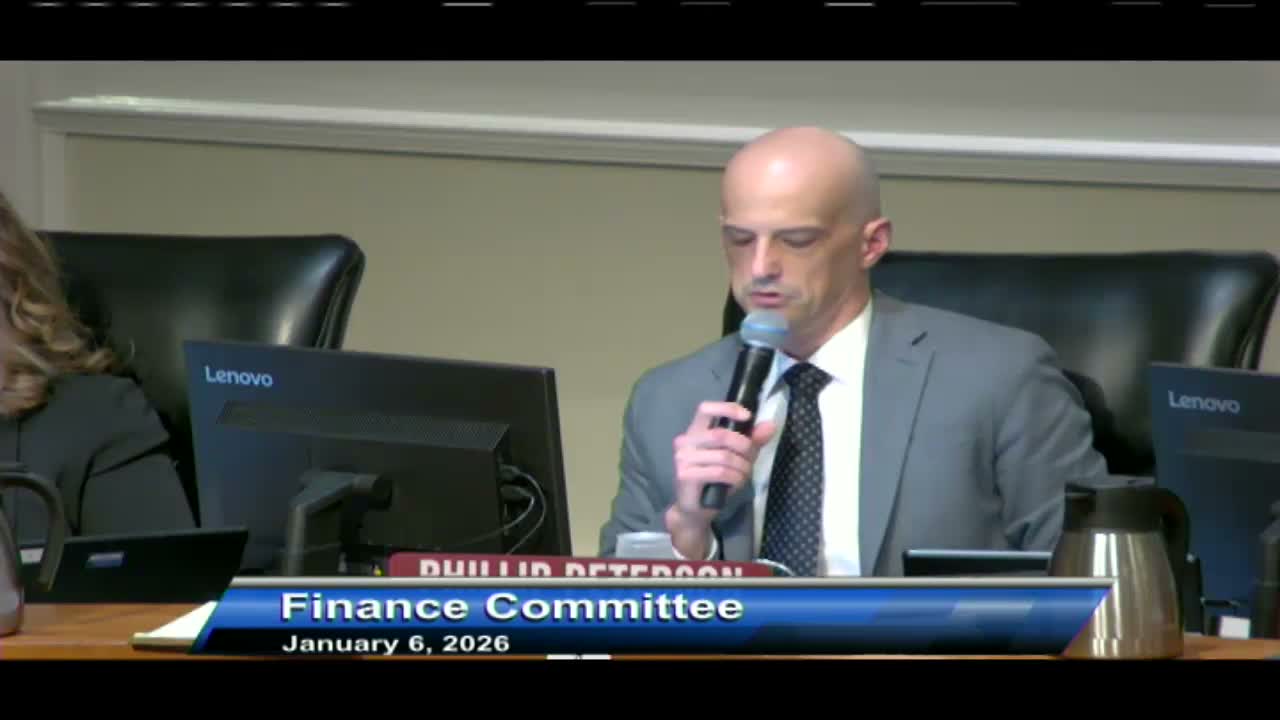
The Finance Committee approved a rules substitute on Jan. 6 that revises the purchase terms for the Armory parcel and places conditions on its resale and the disposition of prior CDBG funds.
The substitute adjusts the parcel size and assessed value, raises the purchase price to reflect repayment of previously dispersed Community Development Block Grant (CDBG) funds ($496,537.10 applied to repay that obligation), prohibits resale to a tax-exempt entity to preserve ad valorem tax revenue, and restricts sale or transfer for three years after closing unless foreclosure occurs.
Council staff and the Office of Economic Development said the property has known environmental issues and that the buyer will assume remediation responsibilities. Ed Randolph of OED said the developer has been engaged with the project since 2020 and that remediation will be substantial; the developer's managing member, Don Patterson, described the plan as a roughly $30 million project with about $15 million in cleanup costs. "It's a $30,000,000 project," Patterson said, and later added, "There is $0 invested by way of the city." Patterson also cited expectations of local hiring and about $1 million in annual tax revenue once stabilized.
Council members pressed for protections and clarity: staff confirmed the purchase agreement contains traditional as-is disclaimers, indemnification language, environmental-risk notices, and release-of-claims provisions. Public Works and counsel said the city did not commission a certified appraisal and relied on the property appraiser's assessed value in structuring the transaction; the committee added prohibitions on flipping the property and on sale to tax-exempt entities to preserve tax revenue.
The substitute and the bill as substituted were carried in committee; votes were recorded in the transcript as carried by the committee with the indicated tallies.
Why it matters: The transaction moves a long-vacant public asset into private redevelopment that staff and the developer say will require major environmental remediation paid for by the buyer, with the city gaining tax revenue and reduced ongoing liabilities if the deal closes.