Get Full Government Meeting Transcripts, Videos, & Alerts Forever!
Get email alerts on the Auditor Report topic
No spam. Unsubscribe anytime.
Council auditor: unaudited year-end snapshot shows $33.6M net growth to reserves but many carryforwards mean final numbers will change
Summary
Auditor Kim Taylor presented a quarterly summary showing a $92 million positive variance on a snapshot basis, explained most of it is carryforward revenue, and reported underlying growth to operating reserves of about $33.6 million before appropriations and adjustments.
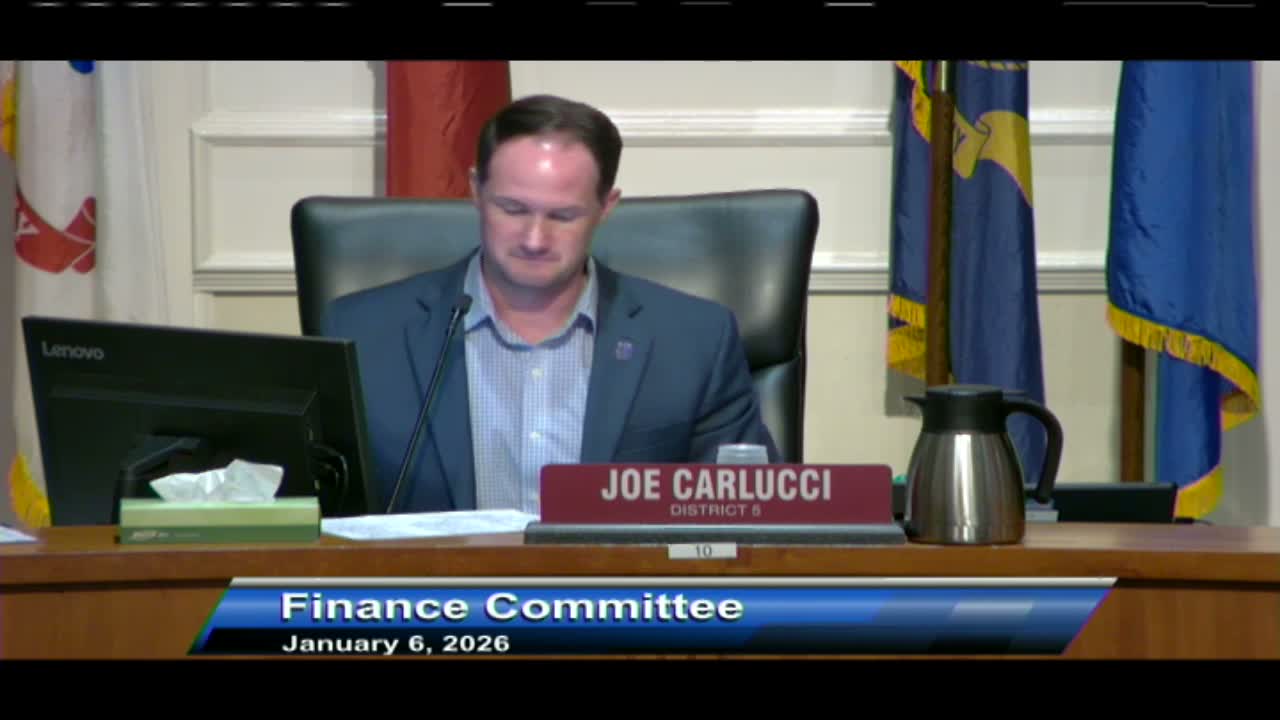
Council Auditor Kim Taylor told the Finance Committee on Jan. 6 that the quarterly summary (Report 899) shows substantial unaudited variances at year end but cautioned that many dollars are carryforwards and that final audited adjustments remain pending.
"You will see that current year, your far right column is a $92,000,000 positive variance," Taylor told the committee, adding that much of the favorable variance reflects funds that will be carried forward into the next fiscal year rather than added to available operating reserves.
Taylor summarized the arithmetic: the city's available unassigned operating reserves stood at about $392 million at Sept. 30; after adjusting for carryforwards and known year-end entries, unaudited growth of roughly $33.6 million would bring operating reserves to about $425.7 million, but subsequent appropriations (roughly $29.5 million) reduce that net growth, leaving a current fund-balance estimate near $396 million.
She reviewed key fund-level highlights: Solid Waste Disposal showed about $5.7 million of favorable variance due to higher tipping fees and savings on hauler contracts; the self-insurance (workers' compensation) fund showed a $33.2 million favorable variance before a $7.3 million year-end adjustment; and the group-health fund had roughly $2 million in positive cash but would have been negative without a $5 million legislative infusion.
Taylor also flagged independent-authority outcomes. JEA reported multi-million-dollar surpluses; Jacksonville Aviation Authority posted about $78 million in surplus (with roughly $34.9 million falling to retained earnings); but JTA will need a budget amendment after exceeding its council-authorized budget by about $19 million, largely driven by Connection (paratransit) and bus division costs.
Council members pressed on implications for debt ratings and reserves. One member warned rating agencies may discount contingency accounts when evaluating unassigned balance as a percentage of revenue; another asked whether the self-insurance savings are safe to use for completion-grant obligations due in upcoming years. Taylor said cash in the self-insurance fund was about $217 million with liabilities near $165 million and that roughly $25 million of the fund's equity related to savings in the most recent year.
The committee and staff discussed a plan to allocate some of the available equity to outstanding downtown completion grants to reduce next year's projected deficit; the chair indicated a bill would be filed to allocate $25 million toward completion-grant obligations.
What happens next: Taylor will finalize audit adjustments as year-end closings are completed; independent authorities (notably JTA) may return with budget amendments; the Finance Committee will consider proposed allocations (e.g., completion-grant funding) in coming meetings.
Why it matters: The auditor's snapshot frames the city's near-term fiscal choices'what to hold in contingency, what to budget for, and how to address multi-year obligations that affect projected deficits.