Get Full Government Meeting Transcripts, Videos, & Alerts Forever!
Get email alerts on the Artificial Intelligence topic
No spam. Unsubscribe anytime.
City staff describe Gov AI pilot and urge regular council oversight for AI use
Summary
ITMD and the innovation office described a trial of a government‑oriented AI assistant (Gov AI) and a call center voice product; staff recommended enterprise tools, training, and a city AI product registry. Aldermen asked for frequent updates and for the council to play an oversight role.
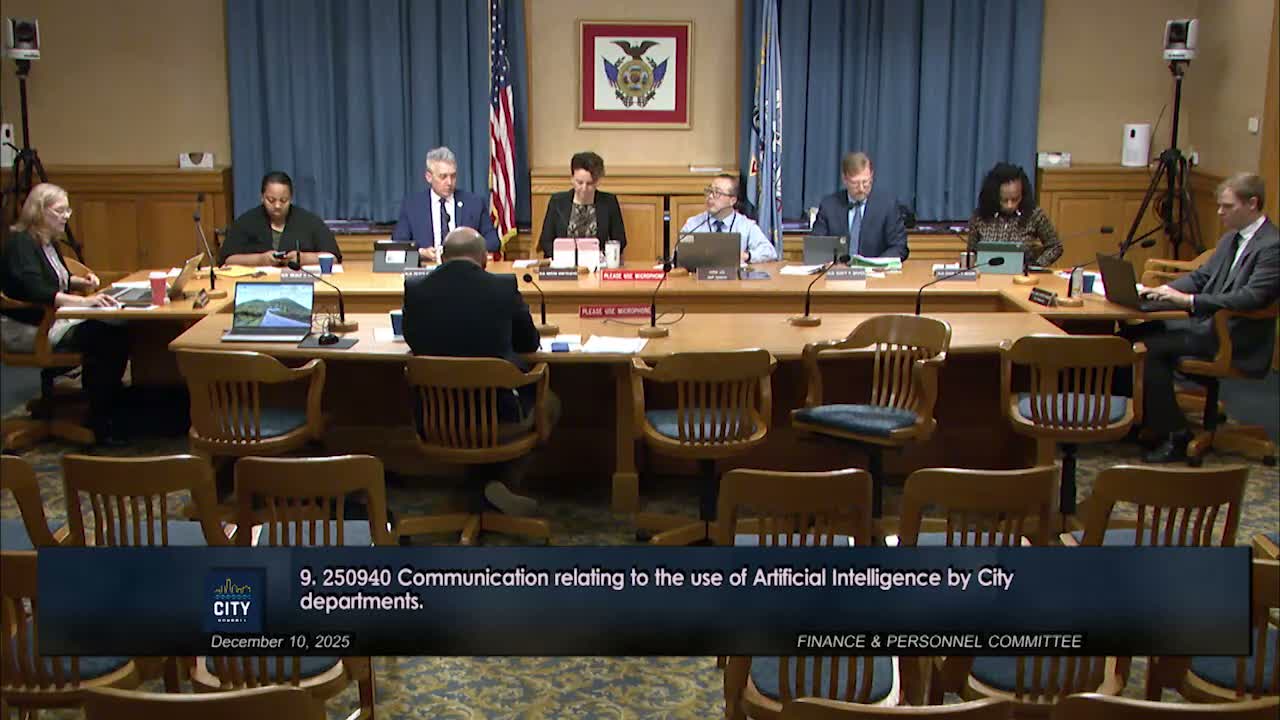
A communication introduced by Alderman Scott Speicher prompted an extended discussion about how Milwaukee's city government will use generative artificial intelligence.
Speakers from Information Technology Management Division (ITMD) explained that the city is in a trial with a government‑focused AI product (referred to as Gov AI) and is negotiating a contract estimated around $50,000 per year for unlimited users. David Henke, ITMD director, said the trial will inform a phased, citywide rollout next year that will include training, a phased rollout, continuous feedback and identification of specific departmental use cases. Henke stressed the advantage of enterprise tools over ad‑hoc public tools because of security, tracking and accountability needs.
Alderman Speicher and other council members pressed for regular touchpoints and stronger oversight. They asked whether the council would be involved in policy decisions and how enforcement of security and policy requirements would be handled. Henke said the council is welcome to participate and that ITMD will provide communication files and updates on rollout progress. Director Steve Mahan and other administration speakers proposed creating an AI product inventory or registry to track where the city is testing or using AI, document data sources, identify project leads, and assess risk and governance adherence.
Council members asked for clear reporting and enforcement mechanisms so adopted AI policies are followed in practice, not just published. The committee moved to hold the item to the call of the chair for a fuller presentation and a longer discussion in January, and staff agreed to return with a deeper presentation and proposed governance steps.