Get Full Government Meeting Transcripts, Videos, & Alerts Forever!
Get email alerts on the Downtown Overlay Zone topic
No spam. Unsubscribe anytime.
New Rochelle Council OKs intent to act as lead agency to begin environmental review of downtown overlay amendments
Summary
The council voted to circulate a statement of intent to serve as lead agency under the state environmental review process for proposed changes to New Rochelle's downtown overlay zone, a procedural step that begins SEQRA review and public comment ahead of potential zoning changes.
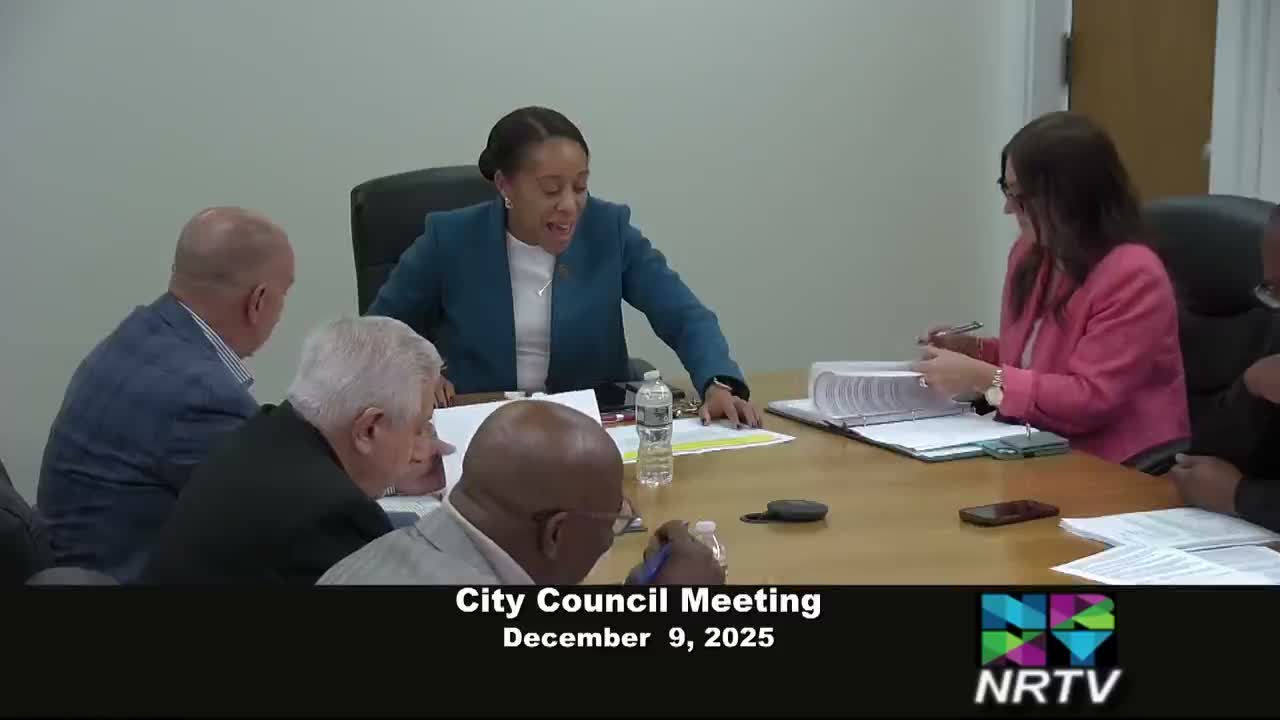
The New Rochelle City Council on Dec. 20 voted to circulate a statement of intent to act as lead agency to begin state environmental review of proposed amendments to the downtown overlay zone (DOZ), a procedural step that does not itself approve zoning changes.
City Manager (staff) told the council the update is a refinement after almost 10 years of DOZ implementation and "is purely procedural at this point." Planning staff and consultants from BFJ said the amendments aim to refine boundaries, encourage retail and missing-middle housing, improve public space, and align zoning with upcoming infrastructure projects such as the Link and Penn Station access work. "One thing is development fatigue," the city manager said, and staff framed the proposal as responding to residents, retailers and developers.
The measure asks the council to declare its intent to be the lead agency for the State Environmental Quality Review Act process and to circulate the Part 1 Environmental Assessment Form to involved agencies. BFJ's presentation described a multi-step schedule: circulation of Part 1, a 30-day window for other agencies to respond, then Parts 2 and 3 and, if required, a supplemental generic environmental impact statement. Staff told the council a final vote on the zoning amendments could follow the environmental review and public comment process and projected a timeline that could lead to a final vote in May.
Council members asked for plain-language explanations of the process and raised questions about where the DOZ boundaries and height limits would change. Planning staff described specific proposals including a boundary adjustment around the Huguenot Street corridor to support large-format retail near I-95 (without increasing the existing 28-foot height limit in the D02 expansion) and a DO8 reorientation to open building frontages toward the Link project and Memorial Highway. Staff also said they would remove a general waterfront fee that applied to projects not near the waterfront and instead increase the fair-share mitigation fee so funds could be used more flexibly across the city; staff noted the true waterfront district (D07) would retain a $10,000 per-unit waterfront fee.
The council debated disclosure and recusal. One council member disclosed owning downtown property since the 1980s and noted prior corporate counsel had advised that the DOZ applied broadly and had not required abstentions; another council member raised a new map-based data point suggesting development clustering around a particular property and urged caution. No council member formally recused themselves; the mayor reminded members that disclosure and recusal are separate and that an ethics opinion would be required to force recusal.
On a roll-call vote the council approved circulating a statement of intent to act as lead agency and begin the EAF process; Council member Tarantino announced he would vote no. The vote begins a 30-day window for other agencies to respond; staff said they will return in January to request an official declaration of lead agency and that the environmental review and public comment period will follow.
What happens next: staff will circulate the Part 1 EAF to involved agencies; if no objections are raised in 30 days the council can declare lead agency, proceed with Parts 2 and 3 of the EAF, and — if required — commission a supplemental generic environmental impact statement. The council and staff said they expect additional public hearings and a public comment period as part of the process.
Provenance: Topic introduced at SEG 116; presentation and Q&A through SEG 616; roll-call vote recorded SEG 1158–SEG 1226.