Get Full Government Meeting Transcripts, Videos, & Alerts Forever!
Get email alerts on the Code Enforcement Public Safety topic
No spam. Unsubscribe anytime.
Nye County debate over towing abandoned RVs: commissioners seek legal plan before funding
Summary
Commissioners discussed a proposal to set aside up to $35,000 to remove illegally parked or abandoned RVs and trailers from private and public land. Sheriff and code officials highlighted legal and logistical hurdles; the board asked the DA and county staff to craft a formal process before further action.
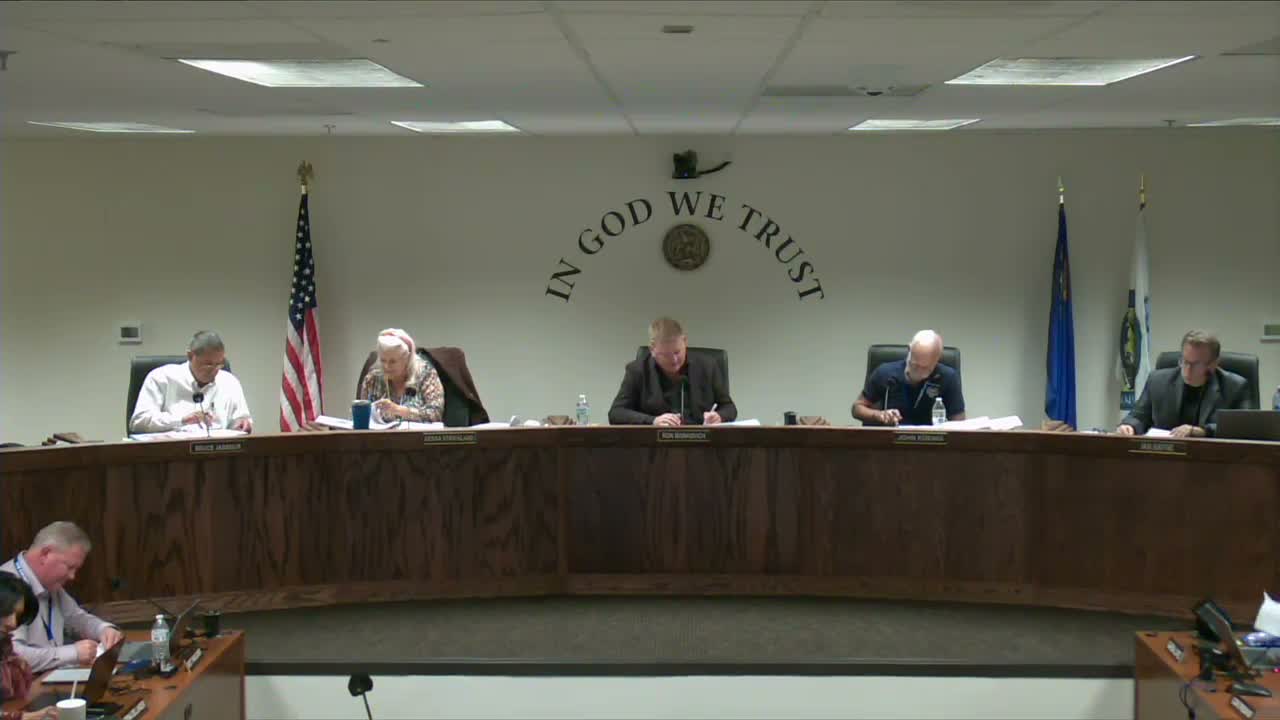
Nye County commissioners spent more than two hours on Oct. 21 debating whether to set aside up to $35,000 to fund towing, impound and removal of RVs, campers and trailers illegally parked on another's land.
Proposing commissioner Ian Bain framed the measure as a tool to fight blight and illegal encampments that, he said, attract crime and create public-safety risks. "These are illegal RVs," Bain told the board, arguing private landowners currently bear the cost and burden of removal.
Sheriff Joe McGill and other law-enforcement witnesses described practical obstacles. McGill said many vehicles are abandoned or lack clear title, and that the county's towing partners lack equipment or willingness to remove heavily deteriorated rigs. "Some of these... do not have a legitimate owner," the sheriff said, noting DMV and title issues that complicate disposing of towed vehicles.
The district attorney and county counsel urged caution: statutory notice, proof of ownership, the abandoned-vehicle rules and DMV procedures create a legal sequence that the county must follow before disposing of property. Several commissioners and the DA recommended drafting a clear operational policy or an ordinance that defines the process, owner-notice requirements, funding source and where vehicles will be stored or disposed.
Commissioners discussed possible funding streams (forfeiture accounts, corrections-related funding, code-enforcement fees or general fund offsets) and the idea of piloting the program in Pahrump. Public commenters offered mixed views: some urged immediate enforcement and removal, while others warned the county to avoid criminalizing homelessness.
Rather than immediately implementing removal operations, the board directed staff and counsel to develop a formal plan that addresses title searches, owner notification, towing logistics and a funding source. The board’s action was to continue and further develop the proposal with legal and administrative safeguards before any large-scale removals occur.