Get Full Government Meeting Transcripts, Videos, & Alerts Forever!
Get email alerts on the Reparations Fund topic
No spam. Unsubscribe anytime.
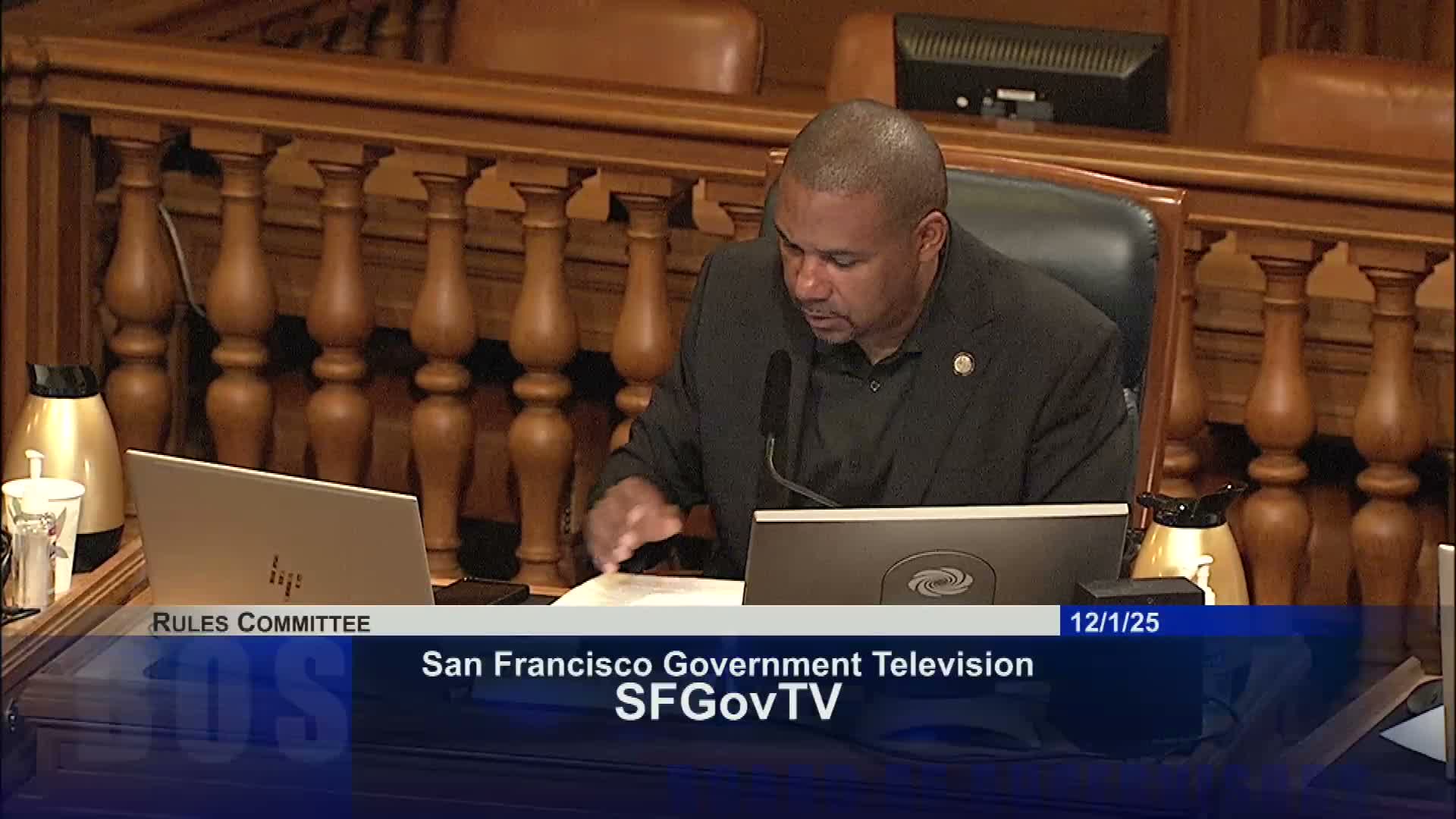
Rules committee advances ordinance to establish San Francisco reparations fund
Summary
The rules committee voted to forward an ordinance creating a San Francisco Reparations Fund, which HRC will administer; advocates urged that the fund be resourced and produce concrete housing, education and economic supports for Black residents.
The San Francisco Board of Supervisors Rules Committee on Dec. 1 voted to send an ordinance to the full board that would create a San Francisco Reparations Fund to receive monies appropriated or donated to support implementation of the African American Reparations Advisory Committee's plan.
Chair Supervisor Shamone Walton introduced the ordinance and said the fund "may receive any legally available monies appropriated or donated for this purpose through donations or optional tax refunds for businesses" and does not by itself compel the city to expend general fund dollars. Walton said the Human Rights Commission will administer the fund and develop criteria aligned with the advisory committee's recommendations.
The Human Rights Commission's director, Mawili Tugbenyo, described the commission's role in staffing the advisory body and said the final report documents past harms and contains roughly 110 recommendations across policy reform, community investment, health, education, housing and cultural preservation. Eric McDonald, chair of the African American Reparations Advisory Committee, told the committee the plan centers on three core recommendations: a formal city apology and sustained systemic investment; creation of an independent office of reparations to lead and track implementation; and formation of a community-led stakeholder authority for accountability.
Public commenters urged supervisors to move beyond an apology to tangible action. Reverend Amos Brown called for "total revitalization and restoration of the Harlem of the West" in Fillmore, saying the city must act quickly to restore cultural and economic life. Resident Leah McGeever alleged the city's failures contributed to recent harms and asked what reparations would have done to prevent the death of Banco Brown; the comment was presented as a constituent allegation and was not contested by staff during the hearing. Tenderloin resident Dale Seymour said he did not want an apology alone and urged supervisors to "listen to the people." Several advisory-committee members and former members praised the plan's research and urged that the fund be used to provide access and opportunity for Black San Franciscans.
After public comment, Walton moved to forward the ordinance to the full board with a recommendation; Vice Chair Cheryl and President Mandelmann voted "aye," as did Chair Walton. The motion passed without objection. The committee record indicates the item is expected to appear on the Board of Supervisors agenda for Dec. 9, 2025.
The ordinance as presented creates a vehicle to accept private, philanthropic and public monies for implementation of the advisory committee's plan and charges the Human Rights Commission with administering funds and developing eligibility and prioritization criteria. It does not itself appropriate city general-fund dollars or create immediate spending obligations; those would require separate appropriation actions by the board.