Get Full Government Meeting Transcripts, Videos, & Alerts Forever!
Get email alerts on the Regulation Change topic
No spam. Unsubscribe anytime.
Ethics commission shortens staff rush by approving more flexible waiver timeline
Summary
The commission approved regulation changes to give staff at least three weeks to prepare recommendations on post-employment and compensated advocacy waiver requests by allowing requests to be considered at either of the commission's next two meetings instead of mandating consideration at the very next meeting when submitted within two weeks.
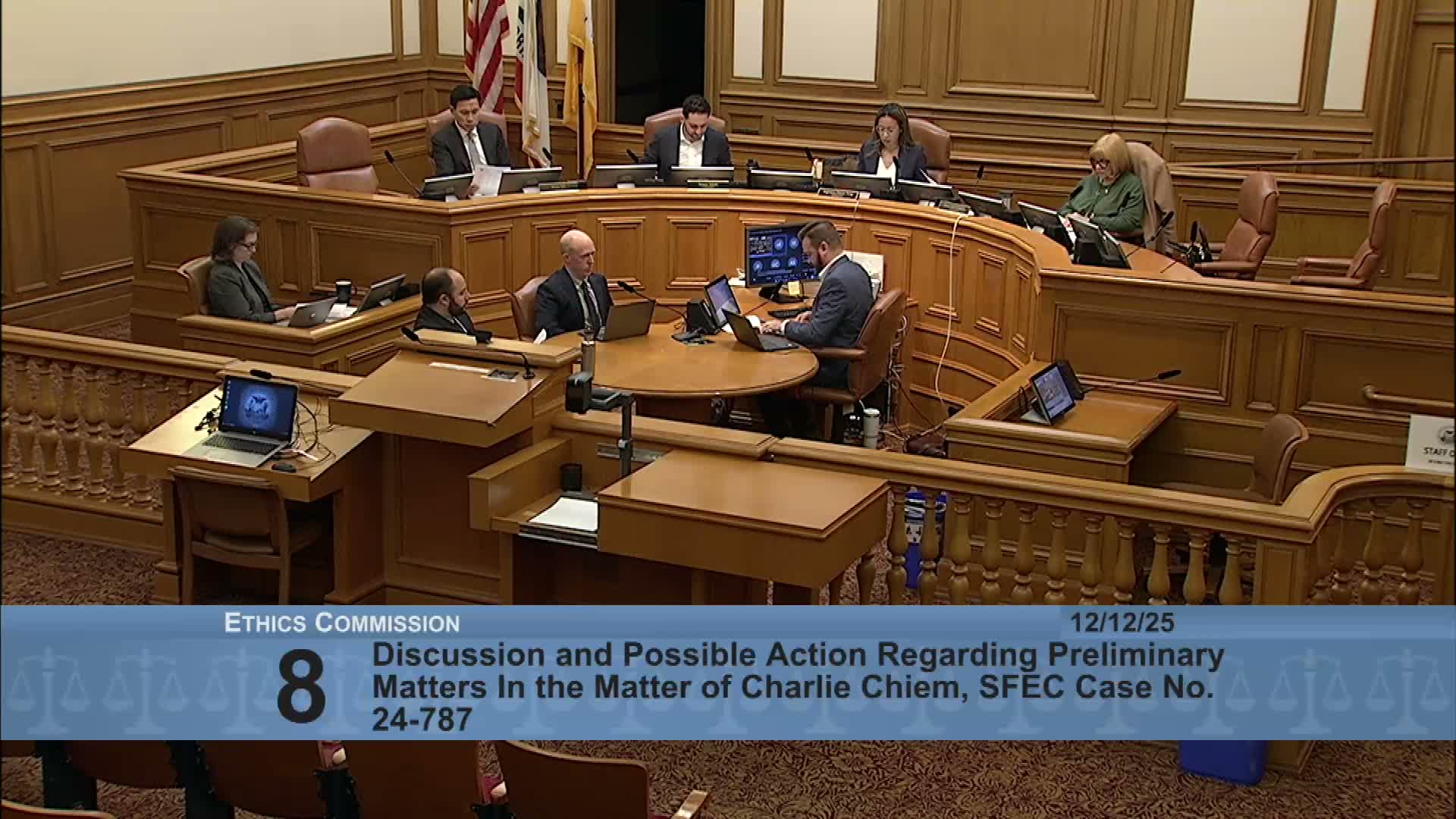
The San Francisco Ethics Commission on Dec. 12, 2025 approved amendments to its regulations that change the commission's required timeline for considering post-employment and compensated advocacy waiver requests.
Michael Canning, policy and legislative affairs manager, told the commission that the current rule requiring a waiver received within two weeks of a meeting to be considered at the commission's next meeting leaves staff about one week to analyze requests and prepare recommendations. "This would mean that staff would always have at least 3 weeks to prepare a recommendation and the request would be heard within a maximum of 2 months of being submitted," he said, describing the amendment attached to the staff memo.
Canning said staff consulted with the Department of Human Resources and had not received pushback about potential delays; staff would continue to prioritize time-sensitive requests such as those tied to pending job offers. The proposed change permits staff to place requests on either of the commission's next two meetings, giving needed flexibility while capping the delay at roughly two months in practice.
A motion to approve the proposed regulation amendments was moved, seconded, and approved by a 4-0 roll-call vote. Commissioners recorded "Aye" votes and the motion passed. Staff said it would generally still seek to present requests at the next feasible meeting when time and workload permit.