Get Full Government Meeting Transcripts, Videos, & Alerts Forever!
Get email alerts on the Permit Modernization topic
No spam. Unsubscribe anytime.
San Francisco outlines phased Permit SF rollout using OpenGov to centralize permitting and add audit trails
Summary
City officials presented Permit SF, an OpenGov-based permitting portal to centralize intake, improve data quality and add click-level audit logs; testing begins in January, soft launch in early February and a broader rollout the week of Feb.13. Presenters and public debated migration, controls and costs.
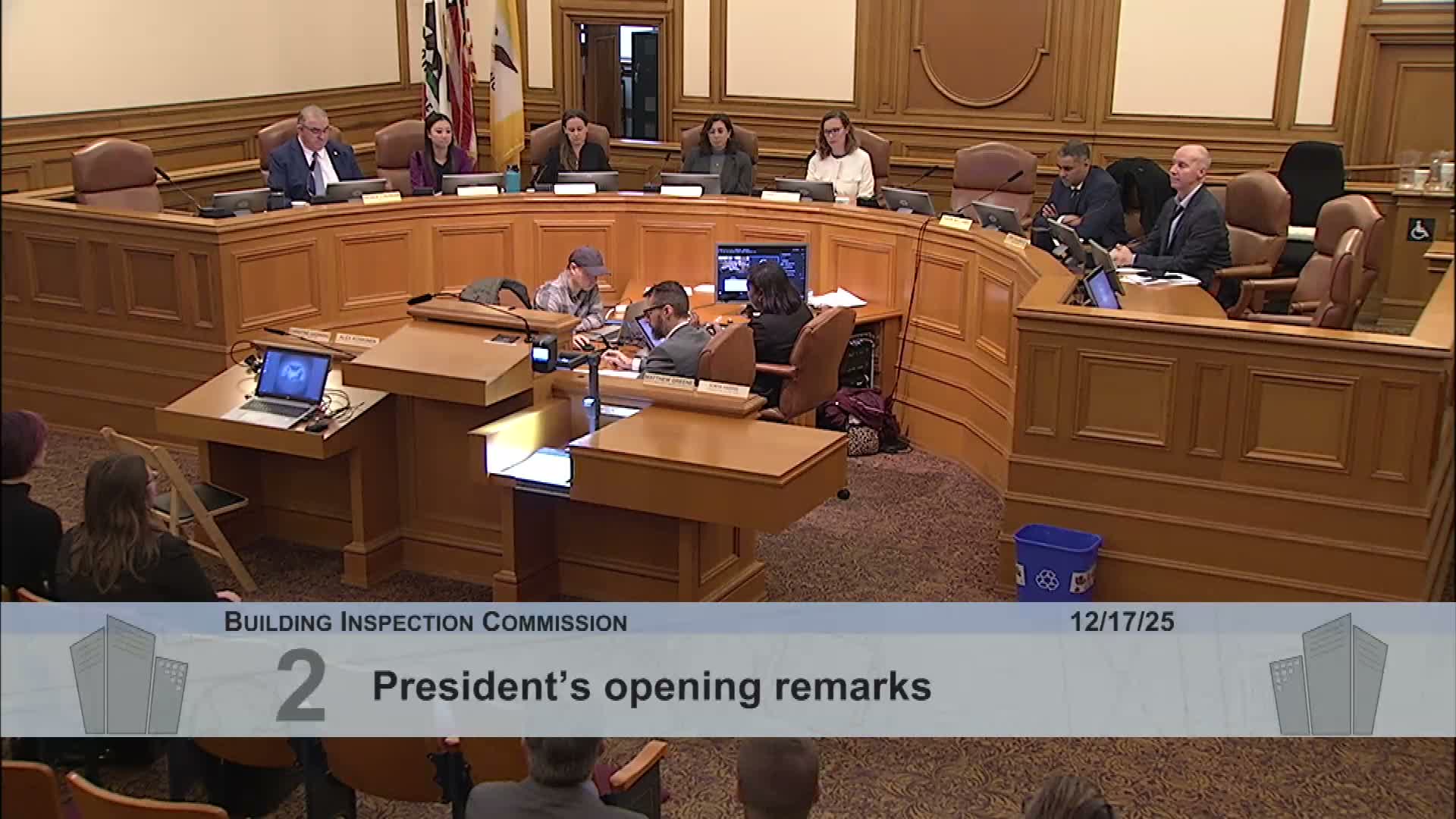
San Francisco officials on Tuesday unveiled Permit SF, a multi-year effort to replace the city's aging permit tracking system with an OpenGov platform designed to centralize intake, give applicants a real-time status tracker, and create click-level audit logs for every permitting action.
Elizabeth Waddy, director of Permit SF, said the project aims to simplify application steps for small businesses and homeowners by providing a single public portal that uses dynamic questions and enterprise address lookups to reduce incomplete or inaccurate submissions. "We want the customer to have a real-time status tracker so they know where they are and what to expect next," Waddy said.
The presentation followed remarks from Patrick O'Rearton, director of the Department of Building Inspection (DBI), who described longstanding pain points: a customer interface more than 20 years old, separate departmental comment processes, no user accounts for applicants, and an Oracle-based back end no longer supported. "The current technology relies on manual processes," O'Rearton said, adding that many permit steps still require in-person transactions at 49 South Van Ness.
In Phase 1 the city will "bite off" high-impact, manageable permit types, Waddy said, including over-the-counter building permits (window, door, siding, reroofing), certain fire permits (sprinkler and alarm), sign permits and an intake front door for special events. The team emphasized that the first tranche focuses on front-end intake and workflow automation rather than wholesale back-end replacement for every department.
A live demo by Darcy Bender of the Digital Services team and OpenGov staff showed applicants a landing page that prefills known information, conditionally displays only relevant fields, links to the city's enterprise addressing system, and pulls contractor and workers' compensation information from the state license board. On the staff side, demoed features included mapped reviewer workflows, internal messaging between staff and applicants, inspection scheduling, photo attachments, and reporting tools for managers.
"There's an app for OpenGov that we expect the inspectors to use in the field," Bender said, demonstrating photo upload and mobile inspection scheduling features.
Presenters said the system will generate audit logs that record every action on a project and allow the city to enforce required step sequences for complex inspections. "Any deviation is either not allowed because we're building that in, or if it is made, we're able to see that granular level audit trail," Waddy said.
Testing with real customers begins in January, the team said. Officials plan an early February soft launch for limited customers and a broader rollout the week of Feb. 13, with the project continuing iteratively and OpenGov partnering with the city for about three years.
Cost and financing: Alex Koskinen, DBI deputy director for administration, told commissioners the OpenGov implementation is estimated at about $15,000,000 phased over three years. DBI's estimated share is approximately one-third based on license allocation; the department was directed to make $5,500,000 available in the current fiscal year and has paid $4,700,000 so far.
Public and commissioner concerns: During public comment, Jerry Dratler pressed the team on data integrity and controls in the current PTS system, citing permit counts and percentages he said are not finaled and asking how those records will migrate. Waddy and DBI staff said the new system will enable automated reports, expiration notifications, and business rules to prevent improper extensions or edits, but did not provide a step-by-step migration plan at the meeting.
Commissioners questioned how the system would prevent errors such as contractors or engineers being incorrectly added to projects; presenters said emailed guest notifications are sent when someone is added to a project and that state data imports will make contractor fields noneditable in the form. On language access, presenters said OpenGov uses Google Translate and the city's customer support teams will provide human help and in-person assistance where needed.
What happens next: Staff said they will conduct multiple customer-testing approaches in January to identify pain points, run customer education sessions, and refine business rules before the February soft launch. The city asked commissioners for ongoing feedback as it completes testing and migrates legacy records.
Provenance: Topic first introduced at SEG 068 and the presentation and Q&A continued through SEG 1378.
Ending: Commissioners thanked the team and asked to hear updates after testing and early rollout; presenters said they would return with lessons learned after launch.