Get Full Government Meeting Transcripts, Videos, & Alerts Forever!
Get email alerts on the Public Health Fentanyl topic
No spam. Unsubscribe anytime.
Mayor Lurie cites expedited contracts and housing, says he will back drug-market intervention
Summary
Mayor Daniel Lurie told the Board of Supervisors the fentanyl state of emergency sped up hiring, contracting and housing and treatment expansions; he said he will support a board-backed drug market intervention strategy once the board endorses it.
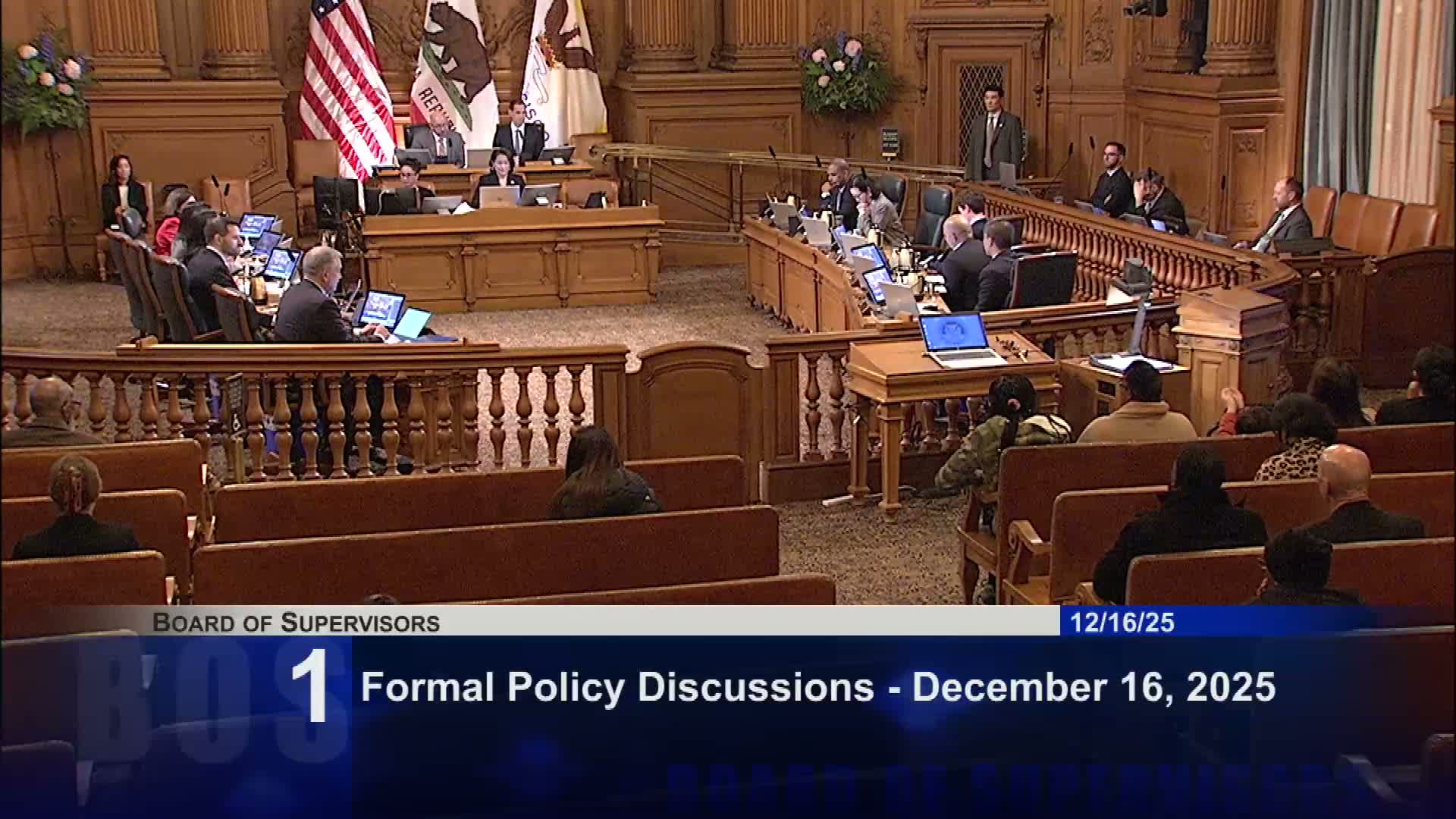
Mayor Daniel Lurie told the San Francisco Board of Supervisors on Dec. 16 that the city has used powers granted by the fentanyl state of emergency to accelerate contracting, hiring and treatment capacity.
"Since its passage, we have moved quickly to unlock resources and deploy new tools to get fentanyl off our streets and keep San Franciscans safe," Lurie said, listing actions by multiple departments including 31 contracts and one lease HSH executed, 219 new interim housing beds (60 recovery-focused), and 594 scattered-site housing slots. He said the ordinance enabled MOHCD to advance five permanent supportive-housing projects and DPH to stand up new behavioral-health programs using the ordinance's contracting authority.
Supervisor Mahmoud, who led the district 5 special order that brought the mayor before the board, asked for specifics about "what resources, tools, and contracts have been used under the fentanyl state of emergency ordinance to address the fentanyl crisis in this last year." Lurie answered with the program and contract counts above and said the authority expedited hiring and allowed departments to launch new programs more quickly than under regular processes.
Mahmoud also asked whether Lurie would join supervisors in supporting a drug-market intervention strategy the board recently endorsed via resolution. "Yes. I will," the mayor replied, adding he "looks forward to working with you" and other supervisors to deploy new approaches "in the Tenderloin and SoMa and wherever else it demands our attention."
The mayor framed the ordinance as a tool that "is delivering real, immediate results, moving faster than our traditional systems allow, expanding care and housing, and strengthening public safety." He closed by thanking supervisors for their collaboration this year.
Next steps: the exchange leaves the board positioned to pursue a drug-market intervention pilot with mayoral support; the mayor and supervisors said they will continue collaboration on implementation and oversight.