Get Full Government Meeting Transcripts, Videos, & Alerts Forever!
Get email alerts on the Digital Accessibility topic
No spam. Unsubscribe anytime.
City officials warn departments to meet federal web-accessibility rules by April 2026
Summary
COIT staff told the Mayor’s Disability Council that the city must meet a Department of Justice rule requiring WCAG 2.1 AA compliance by 04/24/2026 and outlined Department-level coordinators, training resources and remediation steps to help departments reach that deadline.
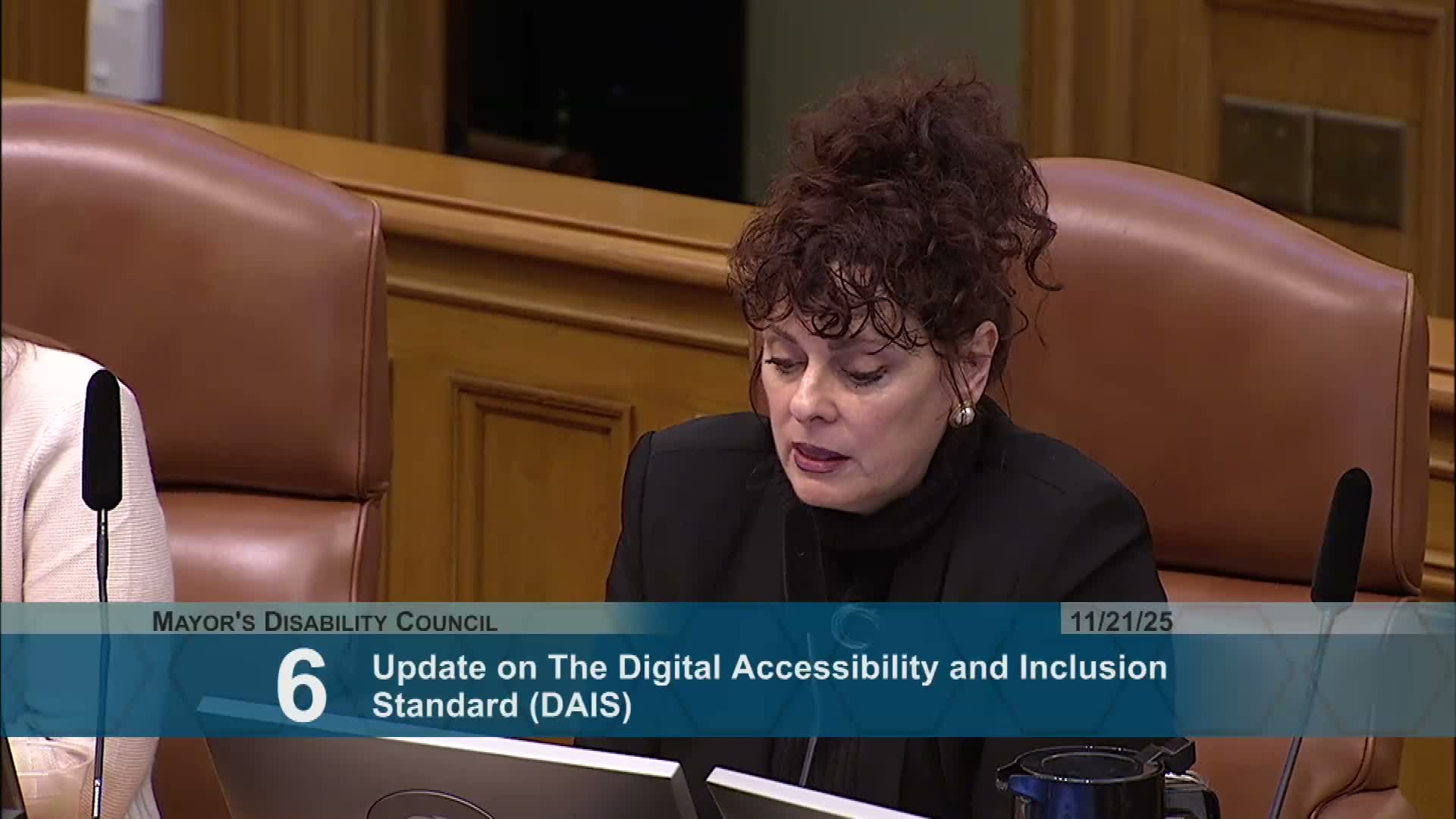
The Committee on Information Technology (COIT) presented to the Mayor’s Disability Council on the Digital Accessibility and Inclusion Standard, warning that a Department of Justice rule requires state and local governments to meet WCAG 2.1 AA digital-accessibility standards by April 24, 2026.
COIT Director Edward McCaffrey said the rule, originally announced by the DOJ in April 2024, applies to all city digital content and that the city has established an implementation team to support departments’ compliance. "The deadline of which the city and county of San Francisco needs to be in compliance with this federal regulation is 04/24/2026," McCaffrey said.
Why it matters: the DOJ rule ties long‑standing Title II obligations under the Americans with Disabilities Act to specific technical standards for websites, mobile apps and other digital tools. That expands what departments must inventory and fix, and raises administrative and budgetary demands on city staff who manage public-facing content.
COIT described five central implementation areas: updating policy language in DICE to reflect the federal rule; building SFGov tools and integrations; naming a DICE coordinator in every department; creating training and a resource hub; and running an awareness campaign for department leaders. The team has built an internal SharePoint site with training videos and a 40‑plus‑page resource guide for staff and web editors.
COIT also urged departments to inventory four priority categories—web content and mobile apps, third‑party software, electronic documents (PDFs, Word, PowerPoint, Excel) and social media—and to remediate inaccessible items. McCaffrey said the city is pushing departments to identify inaccessible PDFs for removal or remediation and to adopt testing resources that allow departments to verify accessibility in real time.
During Q&A, council members raised equity and access concerns. Council member Paul Bendix asked whether the city is working with private internet providers to expand resident access; McCaffrey said digital equity work crosses multiple offices (mayor’s office, city administrator, community housing and technology departments) and COIT can coordinate further. Patricia Arac asked if switching meeting platforms (WebEx vs. Zoom) would increase public participation; McCaffrey acknowledged platform friction and offered to follow up.
Next steps: COIT said it will continue outreach to department DICE coordinators, provide remediation tools and share its materials with the MDC. COIT listed COIT.STAFF@sfgov.org as a contact for follow-up questions.