Get Full Government Meeting Transcripts, Videos, & Alerts Forever!
Chief economist: family‑zoning rezoning yields modest housing gains; committee adopts several amendments and continues package to Nov. 17
Summary
The city economist told the committee the family‑zoning rezoning could produce thousands of units over 20 years and modestly reduce housing costs, but the model shows outcomes vary widely; supervisors adopted several technical and substantive amendments and continued the full family‑zoning package (items 6–11) to Nov. 17 for further drafting and capacity analysis.
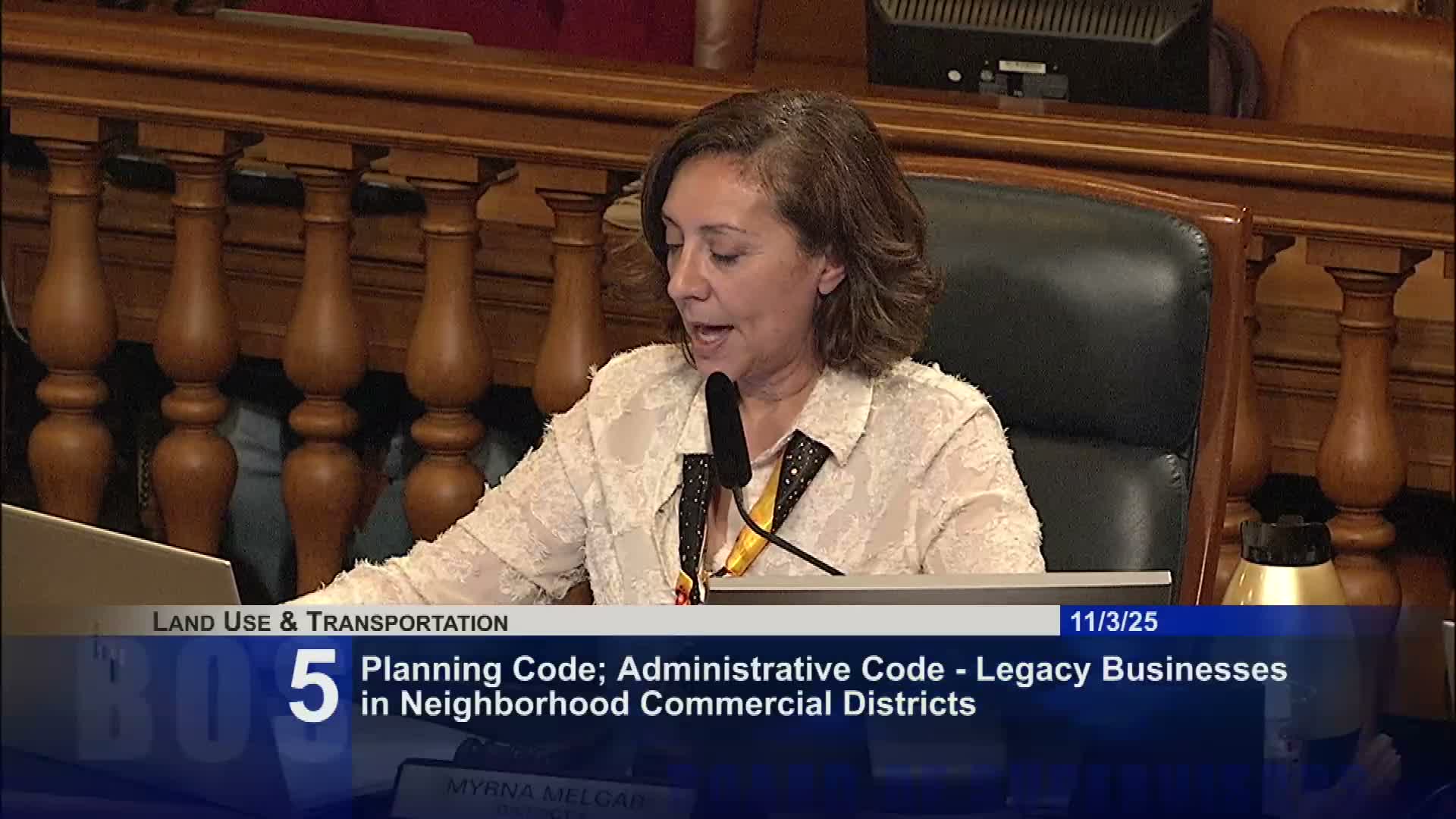
The Land Use & Transportation Committee spent the bulk of its Nov. 3 hearing on a broad package of zoning and General Plan changes commonly called the Family Zoning Plan (items 6–11). The committee heard a statistical economic impact report from the city economist, lengthy questions from supervisors, and more than three hours of public comment for and against the map and text changes. The committee adopted a set of sponsor amendments and then voted to continue the package to Nov. 17 for further work.
City economist Ted Egan summarized an Office of Economic Analysis forecast that used a parcel‑level model to estimate housing production under the proposed rezoning. He said the model projects roughly 10,000 to 18,000 housing units could be produced on rezoned parcels over a 20‑year period and that the net effect (rezoning minus baseline) is about 8,500 units…
Already have an account? Log in
Subscribe to keep reading
Unlock the rest of this article — and every article on Citizen Portal.
- Unlimited articles
- AI-powered breakdowns of topics, speakers, decisions, and budgets
- Instant alerts when your location has a new meeting
- Follow topics and more locations
- 1,000 AI Insights / month, plus AI Chat