Get Full Government Meeting Transcripts, Videos, & Alerts Forever!
Get email alerts on the Project Finance topic
No spam. Unsubscribe anytime.
Resident warns of bond risk, raises equity concerns over parking and transit goals
Summary
At the TIDA on‑island meeting, longtime resident Jeff Klein urged the board to reconsider project financing optimism and raised equity concerns about proposed parking/tolling policies and a 50% transit mode‑share benchmark, warning of developer shortfalls and possible city exposure on special tax bonds.
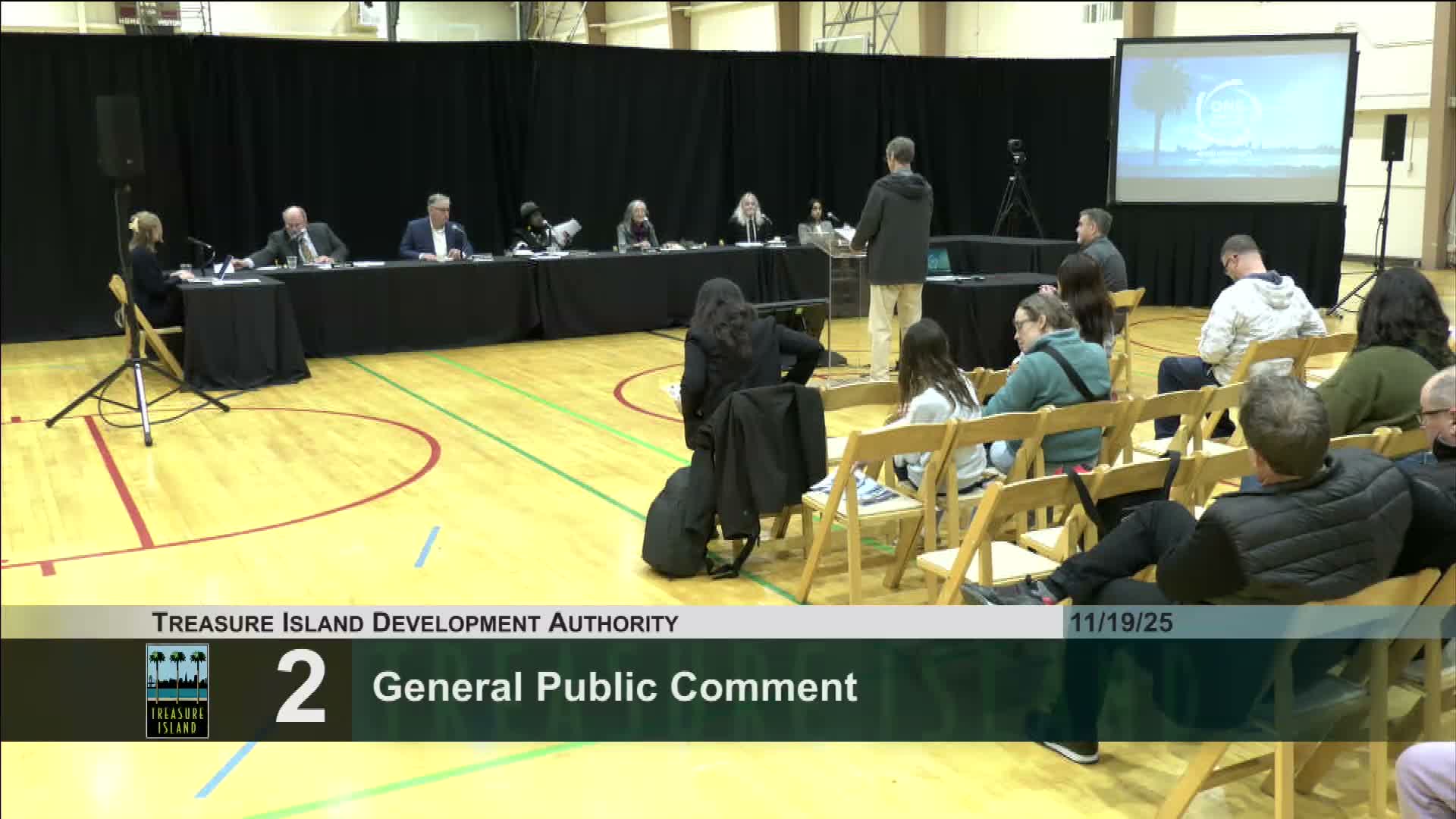
Jeff Klein, a 26‑year Treasure Island resident, told the Treasure Island Development Authority board that the redevelopment project is "ill conceived" and warned it may be financially strained, saying developers "began suing each other years ago" and sales remain far below expectations. "It's time to stop pretending the TI project will do anything to reduce greenhouse gas production or slow down global warming," he said during the public‑comment period.
Klein cited figures he described as evidence of fiscal stress — low sales rates in completed buildings and large outstanding obligations tied to CFDs and IRFDs — and said the city’s name appears on some bond documents, creating potential credit risk for San Francisco if developers default. He also argued that planned parking and tolling policies would disproportionately hurt lower‑income residents, calling the approach "punish[ing] poor Treasure Island folks." In a written communication included in board materials, Klein criticized a 50% residential transit mode‑share goal and cited a developer incentive in the Disposition and Development Agreement (DDA) that he said would result in financial penalties tied to mode share.
TIDA staff responded in the meeting that public comment items are not for board responses but highlighted recent public benefits and built affordable housing projects on the island, and noted staff follow‑up routes (TIDA@sfgov.org). The board accepted Klein's correspondence as part of communications to the board. Klein asked whether IRFD/CFD bonds (which he referenced at roughly $215 million) are rated or unrated and warned of short‑term construction financing rollover risks; staff indicated bond issuances and ratings are being managed through standard processes.
Why it matters: Klein's remarks touch on two issues that board members and city staff have flagged as central to the long‑term viability of the redevelopment: project financing (bond structures and developer liquidity) and whether parking and pricing policies will advance the stated mode‑shift goals without creating hardship for existing residents. Both issues bear on city exposure to debt instruments tied to the project and on housing stability for lower‑income households.
What happens next: The board did not take action on the public comment; staff noted the written communication and directed residents to staff for follow‑up. Questions about bond ratings and financial risk connect to ongoing financing work (IRFD pricing mentioned in staff reports) and to future board briefings on finance.
Sources: Public comment by Jeff Klein at the TIDA on‑island meeting (verbatim quotes and figures cited by the speaker).