Get Full Government Meeting Transcripts, Videos, & Alerts Forever!
Get email alerts on the Overdose Response topic
No spam. Unsubscribe anytime.
DPH reports October overdose deaths at lowest monthly count; announces shelter clinical expansion and new diversion models
Summary
DPH told commissioners October 2025 recorded 36 overdose deaths — the lowest monthly tally since the OCME began tracking — and described new clinical staffing at the Central Navigation Center shelter and support for a sheriff-led sobering/deflection center to divert people from jail into clinical care.
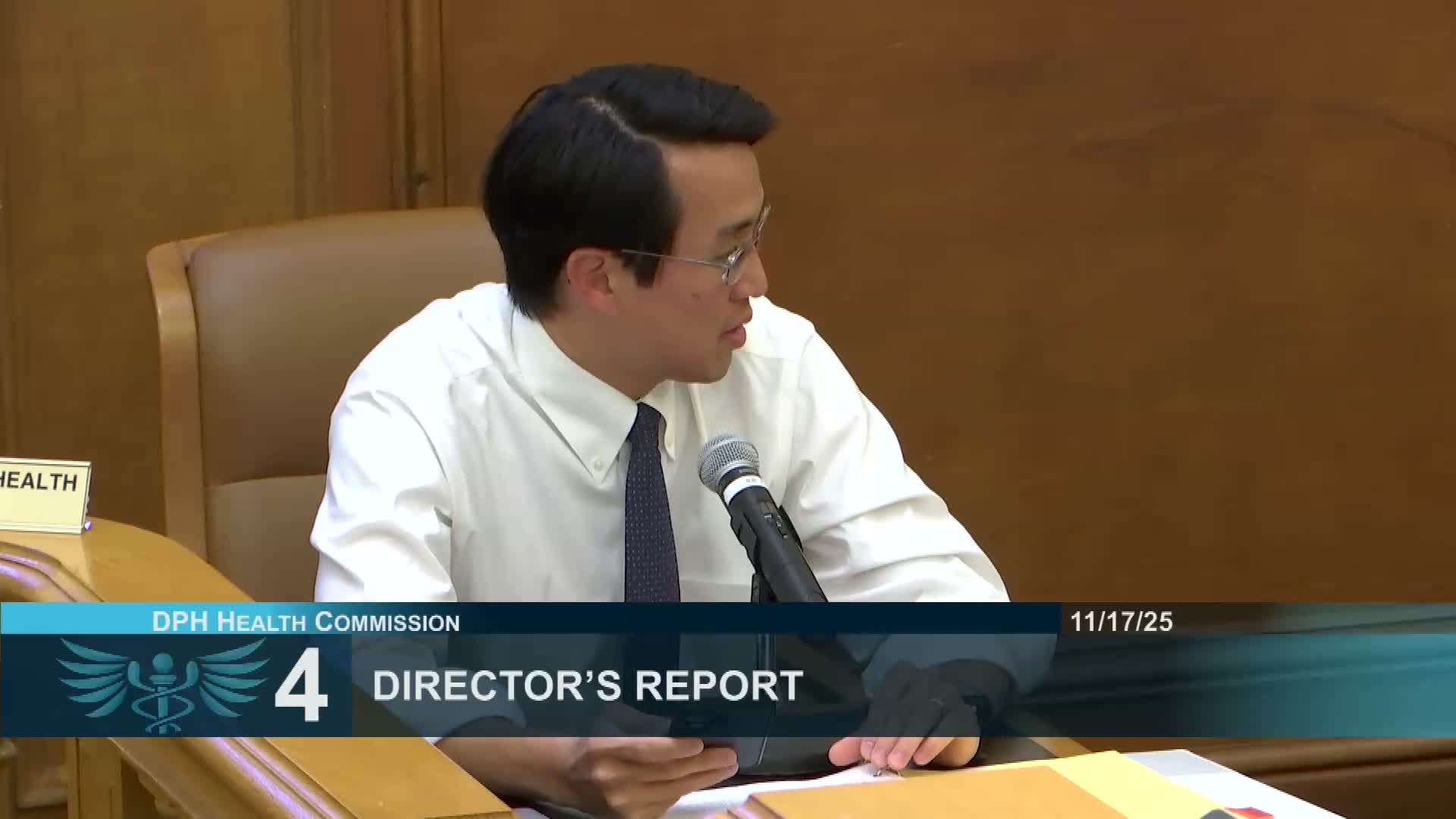
At the Health Commission meeting Director Tsai reported that the Office of the Chief Medical Examiner recorded 36 overdose deaths in October 2025, the lowest monthly count since the OCME began tracking overdose fatalities. "36 overdose deaths in October 2025," Tsai said, and added the department remains "not satisfied at all with the numbers" despite the encouraging trend.
Tsai highlighted the Addiction Care Team (ACT) at San Francisco General Hospital (ZSFG), noting UCSF colleague Dr. Marlene Martin described the ACT's role at a morning press event. DPH credited the ACT program with linking approximately 100 patients to residential treatment following hospital discharge and said ACT touches roughly 40% of patients with substance-use disorders at ZSFG.
The department has launched enhanced clinical services at the Central Navigation Center (a shelter at the Central Waterfront) to bring structured, on-site programming for people with behavioral-health and substance-use needs, while clarifying the site is not a walk-in clinic but offers more intensive clinical programming and peer supports.
Commissioners asked about medically complex, medically managed withdrawal-management capacity; Tsai and staff said San Francisco currently lacks higher-level medically managed withdrawal beds and is working to identify capacity. The department also described support for a sheriff-led sobering or deflection center where people arrested for public drug use could be diverted from jail to a clinical environment with peer support, where they could be cared for and connected to services for up to 23 hours; DPH plans data collection to compare outcomes to the status quo and to measure connections to treatment.
Commissioners requested robust data collection and periodic reports; Tsai said DPH would track offers made, individual choices and outcomes and compare diversion outcomes to people who are processed through jail. Funding for the diversion approach was described as a mix of DPH and the Sheriff's Office budgets, with some funds held in the approved budget for this purpose.
The director's report also referenced a forthcoming budget process: DPH will engage community-based organizations about $17,000,000 in proposed CBO budget reductions and intends to share a draft plan by mid-January for public input before formal commission budget proposals.