Get Full Government Meeting Transcripts, Videos, & Alerts Forever!
Get email alerts on the Housing Rezoning topic
No spam. Unsubscribe anytime.
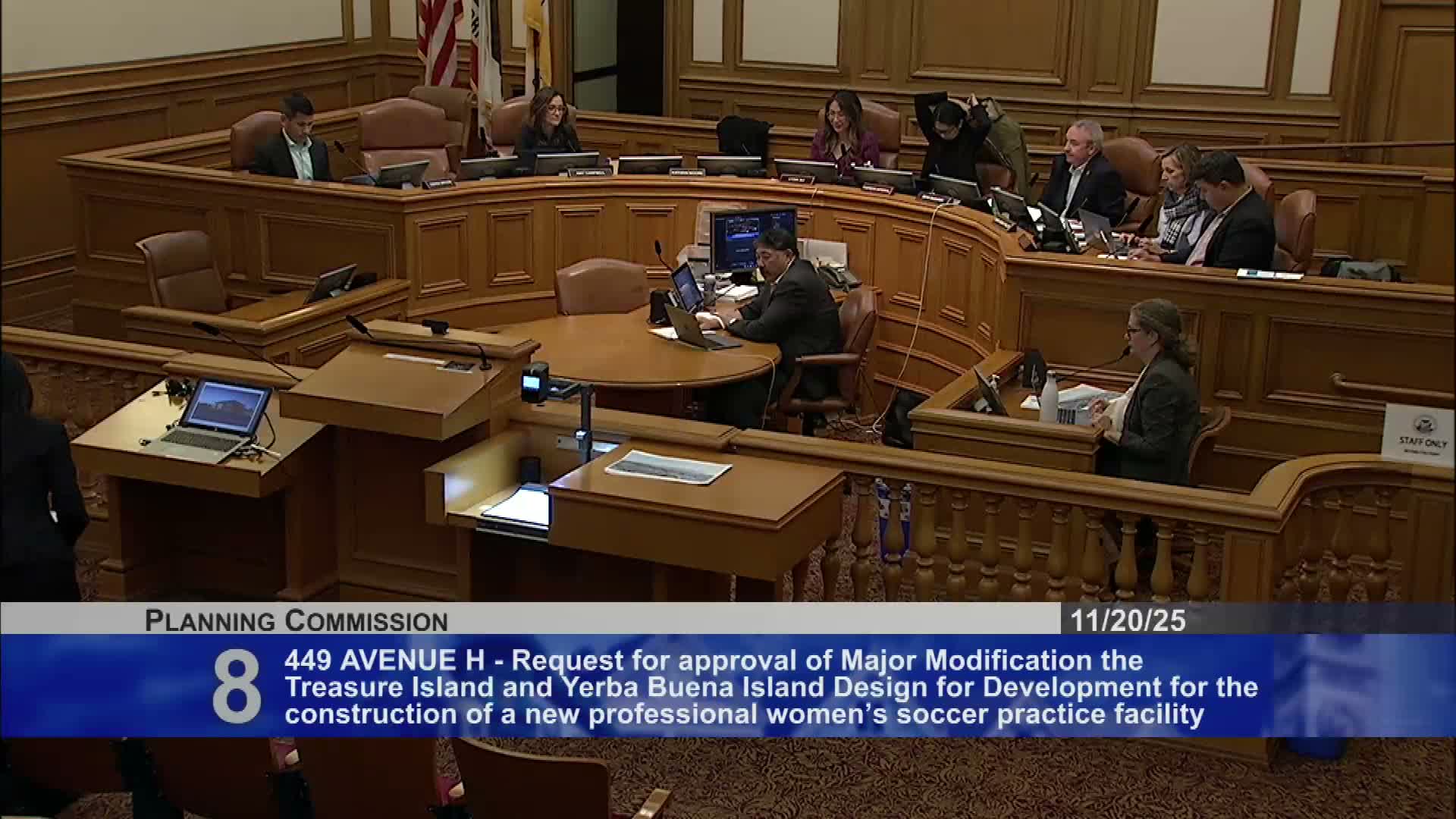
Planning Commission backs family zoning plan with staff modifications, splits commissioners 4–2
Summary
After extended public comment and a lengthy Q&A on preservation and lot‑merger rules, the San Francisco Planning Commission recommended approval of a Mandelmann‑referenced amendment to the family zoning plan with three staff‑recommended modifications; the motion passed 4–2.
The Planning Commission on Nov. 20 voted 4–2 to recommend approval of a family zoning plan planning‑code amendment with three staff‑recommended modifications that clarify historic‑resource definitions, the relationship between the local program and preservation design standards, and the scope of a lot‑merger prohibition.
Lisa Chen of the Planning Department described the amendment referred by the Board of Supervisors and presented staff—s revised recommendations: (1) replace a long list of named historic resources with the planning code—s existing "historic buildings" definition for clarity; (2) clarify that, where preservation design standards conflict with the local program—s modified standards, the code-based local program standards prevail provided they do not cause demolition of the resource; and (3) limit the lot‑merger prohibition to "housing development projects" as defined in state law (e.g., the Housing Accountability Act) so discretionary non-housing projects remain subject to environmental review.
Staff explained these changes are intended to balance historic‑resource protections with state compliance and the plan—s housing‑production objectives. Planning staff also described a two‑year accelerated SF survey and landmarking program to prioritize vulnerable buildings and noted adaptive‑reuse incentives in the local program.
Public comment included critiques that the rezoning could undercut inclusionary‑housing fees by creating many small upzoned lots that fall below fee thresholds; concerns about very large height increases (citizens cited examples along Van Ness and worry about sunlight and neighborhood character); and preservationists—requests to limit ministerial demolition pathways. Staff and preservation staff explained the preservation design standards and how objective numeric standards were created to be administrable citywide.
Commissioners debated the potential for the lot‑merger prohibition to create unintended constraints, the need to prioritize the SF survey, and whether the department—s modifications adequately preserved protections without violating state law. Commissioner Braun moved to recommend approval with the three staff modifications; the motion carried 4–2 (Commissioners Imperial and Moore dissenting). The recommendation advances the ordinance to the Board of Supervisors and the land use committee for further action.