Get Full Government Meeting Transcripts, Videos, & Alerts Forever!
Get email alerts on the Public Comment topic
No spam. Unsubscribe anytime.
Public comment floods committee hearing; residents, labor and businesses clash over displacement and preservation
Summary
More than a hundred speakers gave testimony for and against the Family Zoning plan; labor, tenant and neighborhood groups pressed for binding demolition and rent‑control protections while many residents and environmental groups urged passage to create capacity and climate benefits. The committee accepted some sponsor amendments and set follow‑up dates for further review.
The Land Use Committee opened a long public‑comment period after staff presentations. Speakers represented labor unions, neighborhood groups, tenant organizations, small‑business advocates and individual residents from across the city. Testimony split between those urging quick rezoning to add housing capacity and those who warned rezoning would trigger demolition, displacement and loss of historic character.
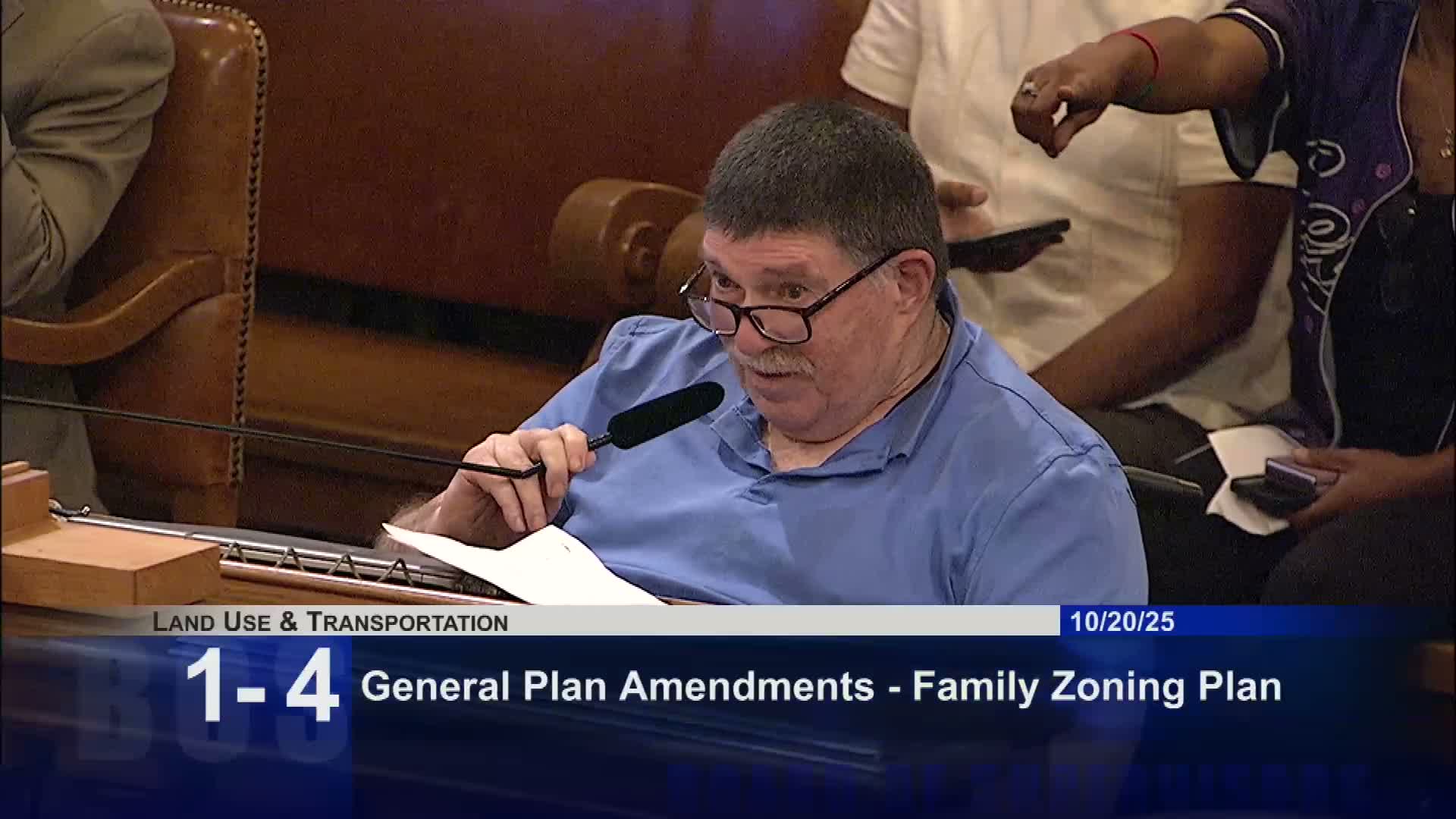
"I am in opposition to the proposed upzoning family zoning plan unless some of the amendments we've talked about today are accepted," George Whaling told the committee in public comment, summarizing a widely shared concern that the package would not produce sufficient deeply affordable housing without stronger protections.
Labor representatives from the San Francisco Labor Council and hotel and construction unions urged guarantees for rent‑controlled stock, high‑road labor standards on new projects, and 100% affordable housing on public parcels. Neighborhood and historic‑preservation speakers asked for exemptions or targeted protections for category A eligible landmarks and stronger controls on lot mergers. Small‑business advocates urged a developer‑funded small‑business relocation or preservation fund and a conditional‑use review to create negotiating leverage when storefronts face redevelopment.
Opponents of big changes argued the plan risks erasing neighborhood character and waterfront vistas; supporters — including groups such as the Sierra Club, Habitat for Humanity, construction unions and many neighborhood pro‑housing organizations — said expanding capacity near transit is needed urgently and can reduce greenhouse‑gas emissions by enabling more residents to live near jobs and transit.
After public testimony the committee acted procedurally: it accepted several sponsor amendments that had been vetted with the mayor and the city attorney, duplicated the ordinance files to carry competing amendment packages for review, and scheduled follow‑ups (Nov. 3 for the main amended package; Dec. 1 for items requiring Planning Commission re‑referral). No ordinance adoption or final vote occurred that night; the hearing’s outcome was a set of technical and calendaring decisions designed to allow legal, environmental and HCD review before final action.