Get Full Government Meeting Transcripts, Videos, & Alerts Forever!
Get email alerts on the Homelessness Assessment topic
No spam. Unsubscribe anytime.
Oversight committee reviews 2025 homelessness needs assessment; calls for clearer outcomes, data alignment and emphasis on racial equity
Summary
Committee members flagged a large inflow of people into homelessness versus placements, urged more person‑level outcome tracking, asked staff to clarify DPH/HSH data differences (DPH uses a two‑year accumulation), and proposed a short cover letter highlighting inflow, rising family/TAY counts and racial disparities.
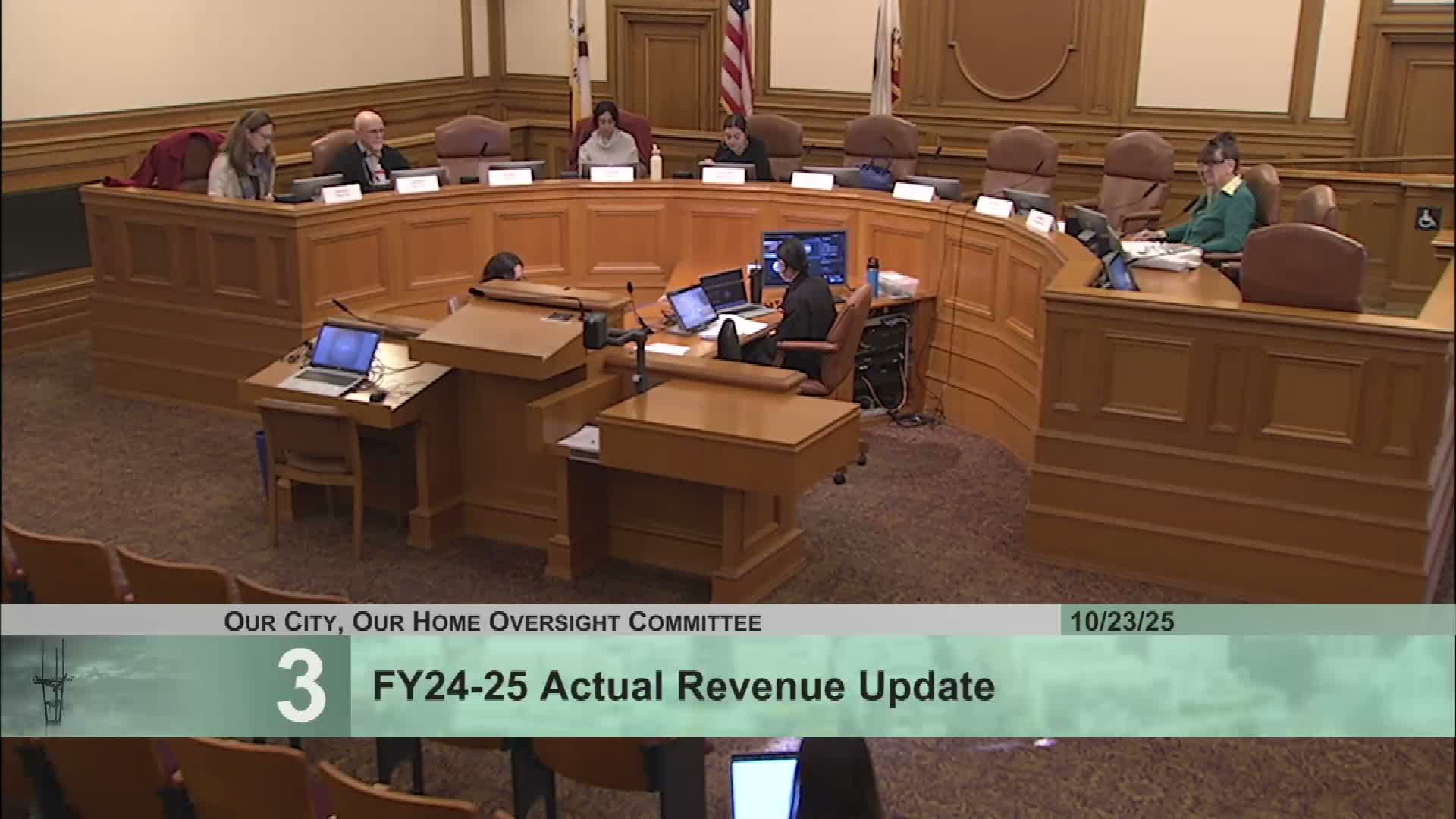
The San Francisco Oversight Committee on Homelessness spent the bulk of the meeting reviewing the draft 2025 Homelessness Needs Assessment and identifying changes it wants before sending the report to the mayor and Board of Supervisors.
Member Alton urged the committee to emphasize outcomes and drew attention to Slide 20, saying the draft shows a roughly "3 to 1 inflow challenge" of people entering homelessness relative to the system's placements. "When you look at, for example, homeless prevention, we see a lot about units of service. But it's important to look at outcome numbers when you look at people coming into homelessness at the rate that they're coming in," Alton said.
Staff and departmental representatives explained methodological choices. Sarah (from staff presenting the draft) said some administrative data are captured at a household level and that the slide comparison used households to align with service reporting, though person‑level demographics are available elsewhere in the draft. "We often have to determine based on context just to try to simplify the messaging, choices between presenting information at a household versus a household level," she said. The draft translates the headline counts into individuals (the report shows 7,111 households and 8,323 individuals) but staff acknowledged the committee's interest in clearer person‑level presentation.
Kelly Kirkpatrick of the Department of Public Health clarified a separate figure cited in the draft: the DPH number covers people who received health care services in the past two years and reported experiencing homelessness, so it is an accumulated two‑year total (16,671), not a single‑year count. "It is people who had received health care services in the past 2 years and reported experiencing homelessness," she said, noting that health records do not consistently carry a homelessness tag so direct cross‑walking with HSH administrative data is imperfect.
Committee members recommended the report and an attached cover letter highlight: (1) the large inflow and need for prevention, (2) rising family and transition‑age youth (TAY) homelessness together with racial disparities in need and service access, and (3) improved outcome metrics and data sharing across agencies (including clearer footnotes or more prominent disclaimers where DPH's two‑year figures appear). Several members cautioned against framing policy proposals that would move away from a housing‑first approach, instead urging stronger behavioral‑health supports inside supportive housing rather than reliance solely on interim housing.
Members also requested follow‑up informational items, including updates on the Housing Authority, coordinated entry priorities, and the downsizing task force; staff noted Emergency Housing Vouchers (EHV) are concluding in 2026 and that bridge funding of $27,000,000 has been set aside in the budget and may factor into planning.
Next steps: staff will draft a concise cover letter with the committee's prioritized points and bring requested informational items back to a future meeting. The committee closed the discussion and moved on to other business.