Get Full Government Meeting Transcripts, Videos, & Alerts Forever!
Get email alerts on the Performance Metrics topic
No spam. Unsubscribe anytime.
Public Works performance report shows improved response times, more proactive work and mixed urban forestry results
Summary
The department reported higher response rates on service requests, faster pothole repairs, expanded proactive work and mixed urban forestry metrics including fewer contractor pruning outputs but more internal crew maintenance; commissioners requested follow-up data on tree equity and program metrics.
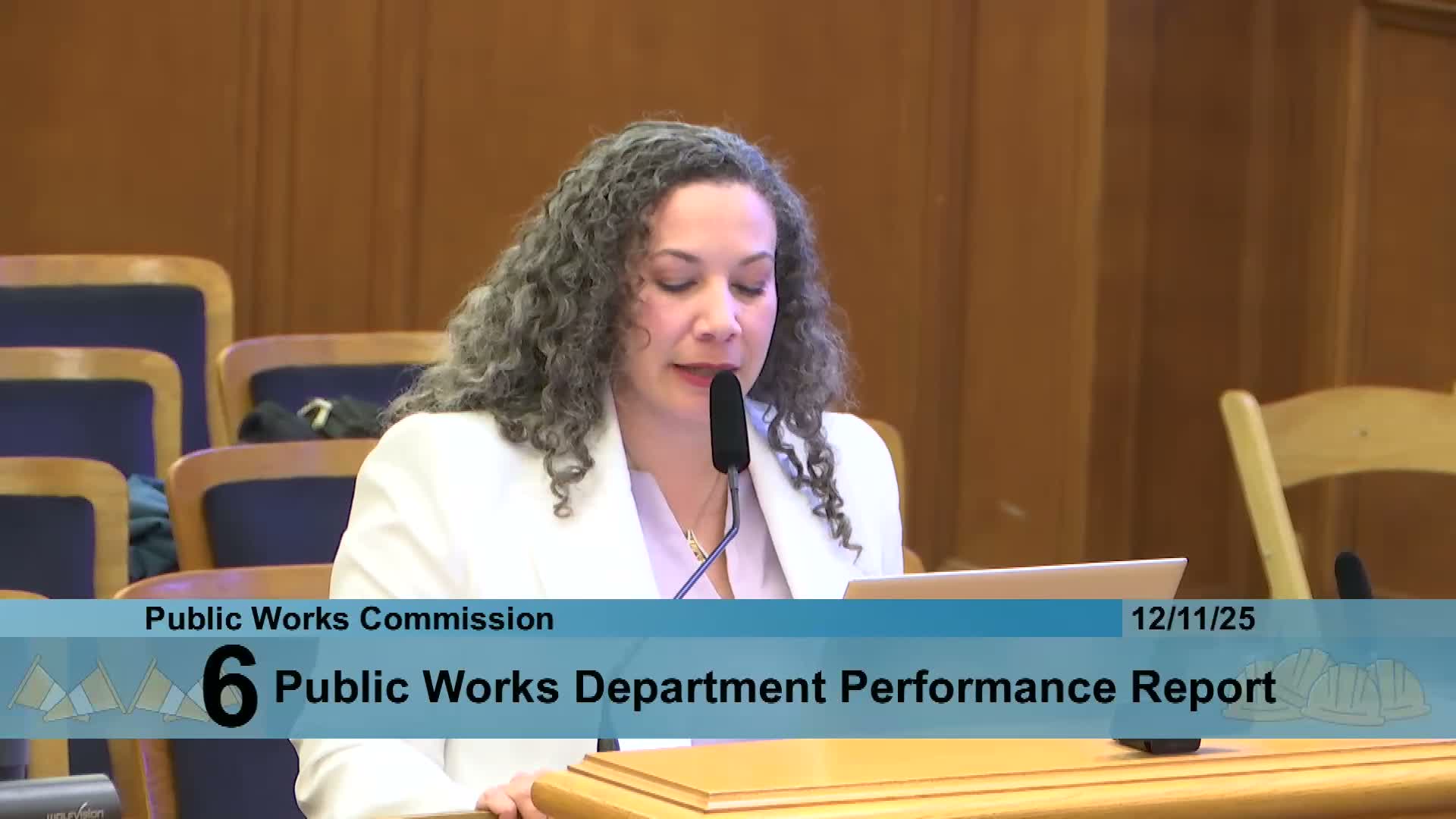
Alexandra Badeau, planning and performance manager for San Francisco Public Works, presented a second annual performance report covering core services such as street cleaning, graffiti abatement, right-of-way permitting, building and street repair, urban forestry and capital delivery.
Badeau highlighted improved response rates for certain service areas (for example, street-cleaning service-level response rose from about 73% to 76% despite a 20% increase in service requests). She said time-to-close metrics improved in parts of the portfolio and noted the department is tracking more proactive work in addition to reactive 3-1-1 responses.
On potholes and pavement work, staff reported a roughly 50% decline in pothole service orders and attributed the change to a combination of proactive repairs, maintenance activities such as slurry sealing and unusually dry weather in the period reviewed. "Last year we had a great time doing pothole repairs proactively," Badeau said, adding that maintaining a pavement condition index score of about 75 helps prevent potholes.
Urban forestry metrics were mixed: overall pruning requests rose in service volume (from about 9,000 to 14,000), pruning completed decreased (from roughly 12,000 to 7,000) likely due to contractor capacity issues, while internal crews completed more of the workload. Staff said the department will provide more detailed context and a follow-up deep dive on urban forestry metrics requested by commissioners.
Badeau also described capital delivery trends—changes in change-order volumes and causes (e.g., unforeseen site conditions and client requests)—and highlighted positive results in certain asset programs such as resurfacing and guardrail inspection scores.
Commissioners asked for more context to interpret the raw numbers (for example, what the unmet need is for pruning or how the opt-in graffiti program is funded). Badeau and Director Short said follow-up materials and presentations will be provided on request.
Why it matters: the report offers baseline performance metrics that inform city priorities, budgeting and public expectations; commissioners asked for clearer context to support public communication and budget requests.
Next steps: staff will provide follow-up presentations and more granular metrics on urban forestry, service-level agreements and the opt-in graffiti abatement program.