Get Full Government Meeting Transcripts, Videos, & Alerts Forever!
Get email alerts on the Community Food Access topic
No spam. Unsubscribe anytime.
Fillmore community leader urges urban farming, culturally relevant food and jail culinary programs
Summary
Community leader Phyllis Bowie urged the board to support urban farming and culturally relevant food access in the Fillmore and proposed bringing gardening and culinary training into San Bruno Jail; community members and board members discussed partnerships and program disruptions caused by lockdowns.
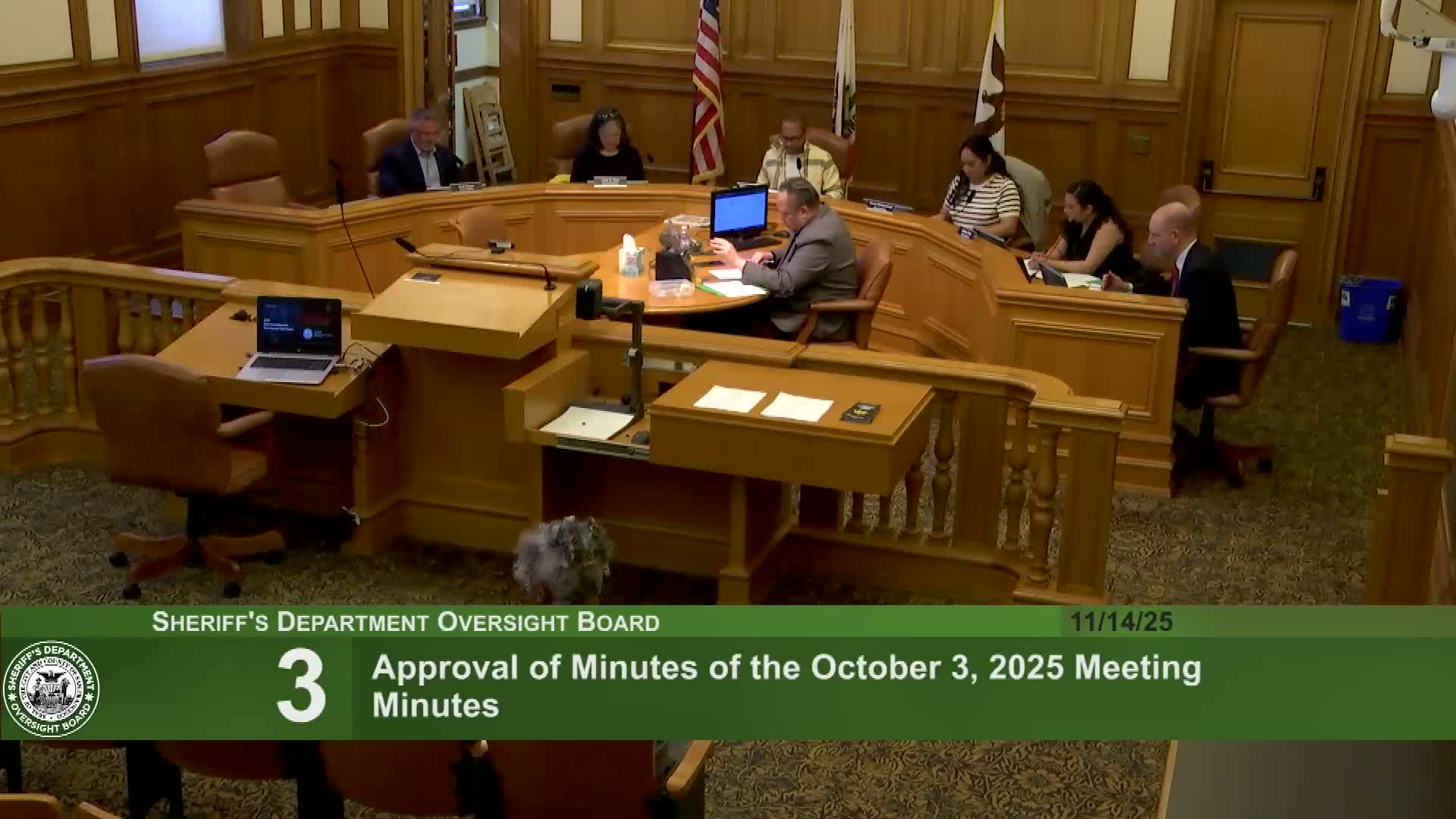
Phyllis Bowie, founder of Living with Phyllis and Sankofa Urban Farms, told the San Francisco Sheriff's Department Oversight Board on Nov. 14 that her work in the Fillmore focuses on ‘‘fighting hunger by educating the community how to grow your own food’’ and promoting culturally relevant meals to support healing and reentry. Bowie traced her community leadership to local rent strikes and organizing, described partnerships with Gateway High School and KIPP High School gardens, and urged support for community‑owned grocery models rather than chain stores.
Bowie said she wants more urban farming at the San Bruno Jail to bring fresh produce to incarcerated people and to provide culinary and rehabilitation training. ‘‘Rehabilitation, interested in the culinary arts,’’ she told the board during questions. Board members endorsed the idea of connecting farming, local farmers and kitchen crews that train people for reentry.
During public comment later in the meeting, representatives from the Latino Task Force and community groups said programming delivered by outside partners is being disrupted by jail lockdowns, which can cancel spiritual groups, AA meetings and other supports. Kathy Almendarez and Veronica (representing Nuestra Causa) flagged that lockdowns sometimes prevent showers and interrupt daily routines, and they urged the board to elevate the issue with sheriff's programming staff.
Board members said they would explore inviting prisoner legal services and jail health experts to future meetings and look for ways to sustain programming even when pods are locked down.