Get Full Government Meeting Transcripts, Videos, & Alerts Forever!
Get email alerts on the Hydrant Rules topic
No spam. Unsubscribe anytime.
SFPUC adopts stricter hydrant-use rules to protect system, limit unauthorized water take
Summary
Commissioners adopted new rules requiring meters and backflow prevention on temporary hydrant hookups, limiting revocable permits to six months and authorizing penalties for unauthorized use after staff highlighted hydrant damage and pedestrian hazards.
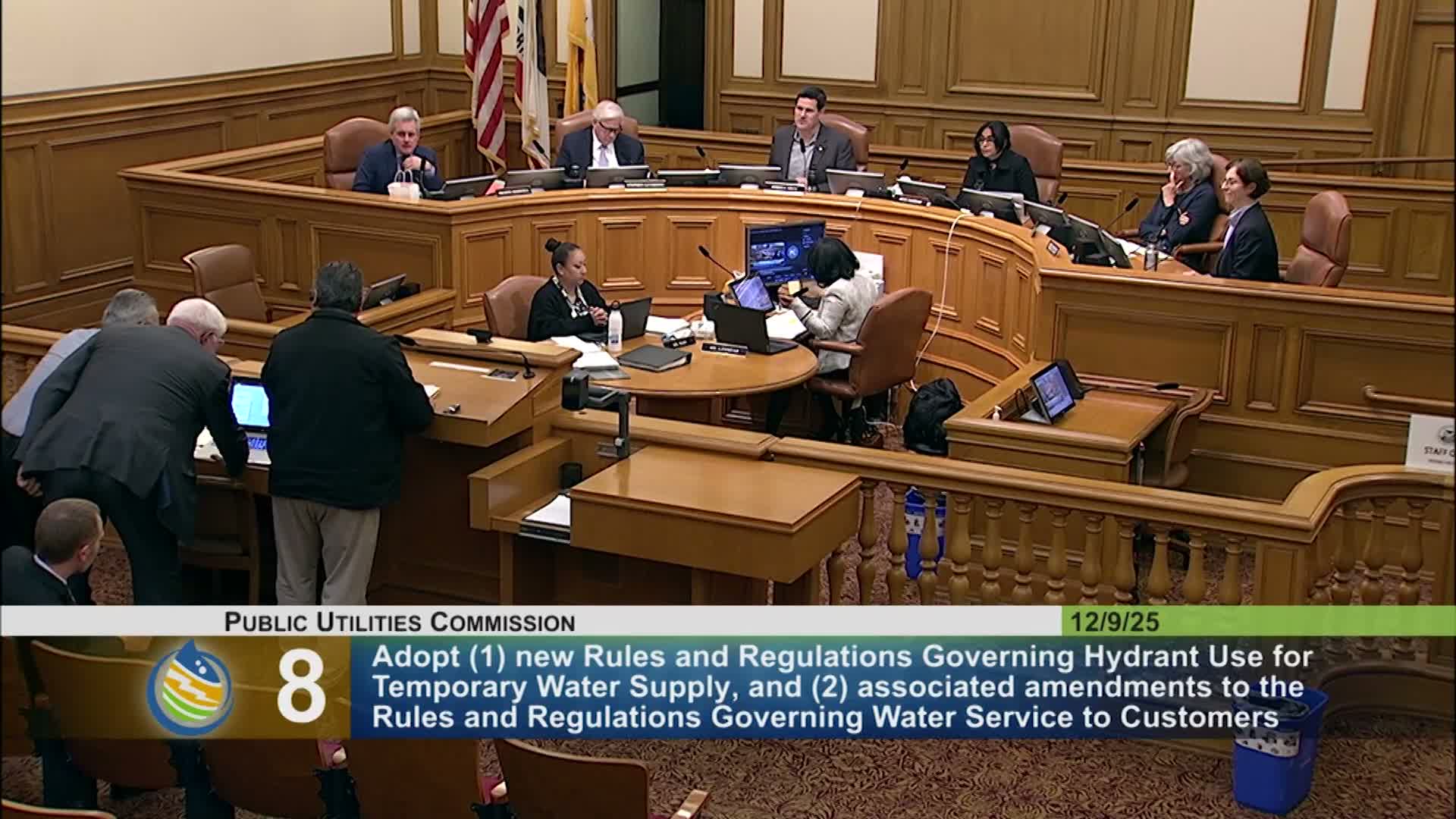
The San Francisco Public Utilities Commission voted Dec. 9 to adopt new rules and regulations governing the temporary use of city hydrants for construction, filming, events and mobile sanitation.
Division Manager Bill Tien told the commission the SFPUC operates 8,952 low-pressure hydrants and typically has about 300 active meter hookups at a time. Staff cited recurring problems: straight hookups without meters or backflow prevention, improper tools that damage hydrants, and hoses stretched across sidewalks and intersections that create hazards.
The adopted rules require proper metering and backflow prevention for temporary hydrant use, limit revocable permits to six months for purposes such as general construction and special events, and allow the general manager to make minor corrections as needed for implementation. The rules also create enforcement tools and fines for unauthorized or unsafe hydrant access.
Tien showed photos of damaged hydrant spindles and explained that a damaged hydrant can be taken out of service and replaced to restore reliable operation for fire and other emergency needs. Commissioners endorsed the update, noting the city’s close coordination with the Fire Department on hydrant operations.
Ending: The Commission approved the rules by roll call; staff said hydrant swaps and repairs are typically done quickly and that these rules will help protect public safety and the water system’s operational readiness.