Get Full Government Meeting Transcripts, Videos, & Alerts Forever!
Get email alerts on the Dpa Report topic
No spam. Unsubscribe anytime.
DPA reports understaffing, rising jail population and video‑evidence gaps to oversight board
Summary
The Department of Police Accountability told the San Francisco Sheriff’s Department Oversight Board it is 'severely understaffed' handling sheriff investigations, noted a rising jail population and warned that malfunctioning surveillance and limited body‑worn cameras have hampered some investigations.
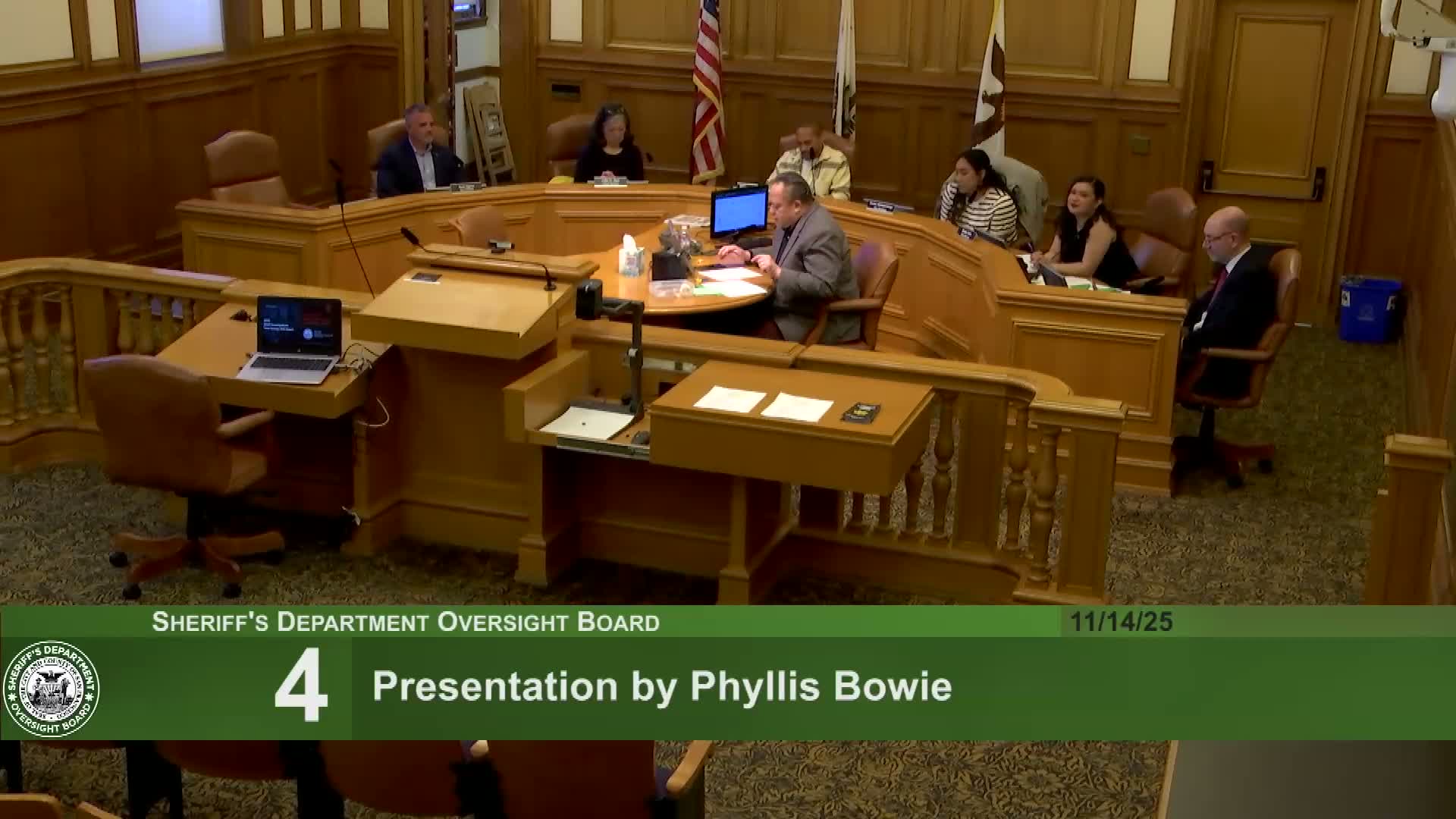
Marshall Keim, chief of staff for the Department of Police Accountability, told the San Francisco Sheriff’s Department Oversight Board on Nov. 14 that the DPA is ‘‘severely understaffed, with only 1 dedicated investigator and 1 senior investigator working on all of the sheriff's investigations.'"
Keim said the department continues to prioritize the most serious allegations but that pending cases remain ‘‘at an all time high.’’ He gave the board a snapshot of the jail population: 1,299 on Nov. 7 and 1,362 the morning of the meeting, with a 180‑day average of roughly 1,318. He added the female jail population has dropped to about 6 percent, which he said may reduce available services for women.
The presentation detailed how case outcomes have often depended on video evidence. Keim said some closed cases were ruled 'unfounded' where video footage ‘‘directly contradicts what the allegations were.’' He warned, however, that the jail surveillance system is older, prone to malfunctions, has limited fields of view and often lacks sufficient storage, meaning footage can be lost before a complaint is filed. He also noted the sheriff's office has not yet provided body‑worn cameras to every deputy in the jails, which has complicated investigative work.
Keim briefed the board on DPA’s technology projects, including migration of DPA and sheriff data to the DataSF platform and early implementation of an electronic use‑of‑force tracking product known as Blue Teams. He said dashboards are planned to make statistics more usable for the public.
On legal access, Keim said new state legislation (Assembly Bill 847) amended Government Code 25303.7 and Penal Code section 832.7, and ‘‘potentially opens up confidential information to this board,’’ but cautioned any use of personnel records would have to follow closed‑session rules and counsel from the city attorney and sheriff's legal staff.
Board members pressed the DPA for updates on vendor contracts for jail food and asked whether lost footage has directly affected case outcomes. Keim confirmed loss of footage has at times resulted in insufficient evidence findings and said staffing losses in the DPA have made it harder to meet statutory timelines.
The board agreed members should press for funding and technical upgrades to improve evidence preservation and investigative capacity; Keim said the board's advocacy could help secure needed resources.