Lifetime Citizen Portal Access — AI Briefings, Alerts & Unlimited Follows
Police Commission approves new SFPD district boundary maps, amid community demands for staffing plan
Loading...
Summary
After a multiyear review and public hearings, the Police Commission voted 7–0 to adopt revised SFPD district boundary maps. Neighbors and business groups urged the commission to secure a concrete staffing plan for Southern Station before implementation.
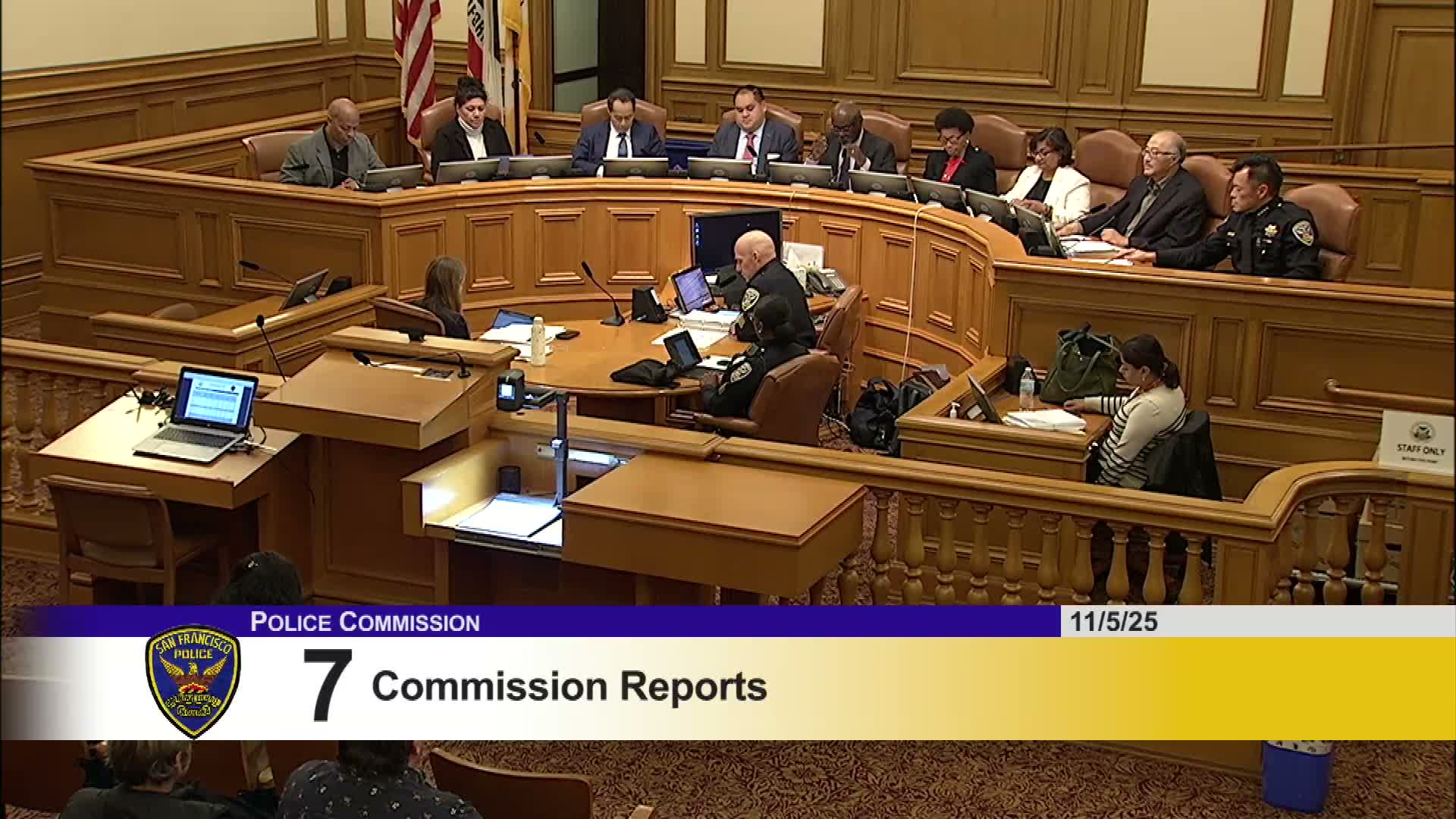
The San Francisco Police Commission voted unanimously on Nov. 5 to adopt revised San Francisco Police Department district boundary maps that reassign portions of the city among several stations, including an expansion of Southern Station’s territory.
The recommendation, presented by Jason Cunningham, SFPD program manager, combined seven commission-requested changes with three smaller department-proposed adjustments. Cunningham told commissioners the analysis relied on decennial census data and 2023 calls-for-service and incident reports and quantified impact on workload; for example, he said that extending Central Station to Van Ness would have translated to about 4,392 additional calls for service in 2023 under the proposed lines. “The recommendation that is before you is the acceptance of the 7 changes that were brought to the department by the commission,” Cunningham said during his presentation.
Why it matters: The maps are intended to align station boundaries with current population, major streets and incident patterns after the federal census; supporters argued the changes will bring resources to historically underserved neighborhoods such as the Tenderloin and Lower Polk. Opponents and many speakers from SoMa, Mission Bay and Southern Station neighborhoods warned the change will substantially increase Southern Station’s workload without a binding staffing plan and urged the commission to require concrete staffing commitments before implementation.
Public debate and community reaction: The hearing drew sustained public comment spanning neighborhood coalitions, business associations and community groups. Supporters including Lower Nob Hill Neighborhood Alliance and UC Law SF said the maps would bring needed resources to vulnerable areas. Critics from SoMa West and other downtown groups presented data and petitions showing projected increases in calls-for-service (often cited as roughly a 25% rise for Southern Station) and urged the commission not to approve the maps without an explicit staffing plan. Resident speakers repeatedly asked for timeline details and assurances that redeployment and new hires would cover the increased workload.
Implementation timeline and staffing commitments: Commissioners and SFPD leadership said implementation would not be instantaneous. SFPD staff indicated a target cutover window in the second half of next year, identifying July 1 or Oct. 1 as possible dates and estimating “6 to 12 months” of phased personnel moves, equipment and dispatch updates to effect the change. Interim Chief Paul Yip told the commission the department will “make staffing adjustments as necessary” and that redeployment would be data-driven, adding that the department planned to surge resources for events and adjust permanent assignments as staffing levels permit.
Formal action: Vice President Benedicto moved to adopt the department-recommended maps and the commission recorded a unanimous vote in favor: Commissioners Teke, Scott, Leung, Yi, Elias, Vice President Benedicto and President Clay each voted yes (7–0).
What’s next: Commissioners and SFPD pledged public outreach and forums to monitor the redeployment and invited community feedback. Several speakers asked for written staffing commitments and for the commission to withhold implementation until staffing assignments are finalized; the commission did not set a hard precondition in the adopted motion. The department will now begin the technical, staffing and public-notification steps described at the hearing.