Get Full Government Meeting Transcripts, Videos, & Alerts Forever!
Get email alerts on the Land Use Drones topic
No spam. Unsubscribe anytime.
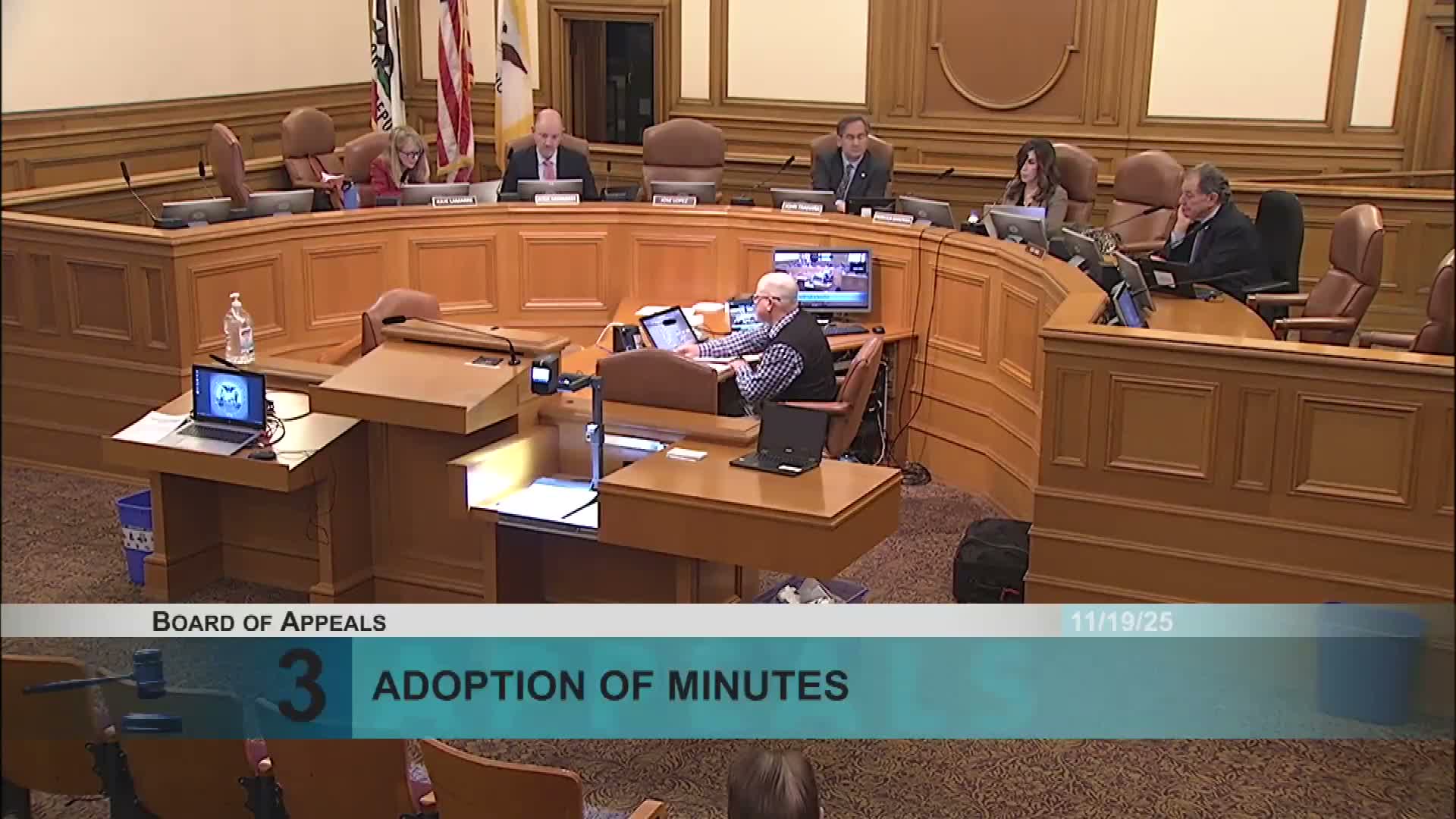
Board of Appeals upholds zoning ruling allowing limited DoorDash Labs drone testing at Folsom Street site
Summary
The San Francisco Board of Appeals denied an appeal by Teamsters Local 665 and upheld a planning department letter of determination that limited outdoor drone testing by DoorDash Labs at 1942 and 1960 Folsom St. qualifies as a laboratory use in the PDR‑1‑G district; the vote was 3–0.
The San Francisco Board of Appeals on Nov. 19 denied an appeal by Teamsters Local 665 and upheld a zoning administrator’s Aug. 19 letter of determination that limited outdoor testing of delivery drones by DoorDash Labs at 1942 and 1960 Folsom Street qualifies as a laboratory use in the PDR‑1‑G district.
The board’s decision, made by a 3–0 vote, resolves a narrow legal question the panel considered: whether the proposed activities as described in the request fall under the planning code’s definition of a laboratory use and whether that use is principally permitted at the site. The ruling does not grant building or operational permits; those would be separate applications subject to additional review and public comment.
Mark Leeson, representing the appellant Teamsters Local 665, told commissioners the proposed program’s central activity is outdoor drone flight and testing, and argued that “we do not believe that the laboratory land use designation was ever intended to include the outdoor flying activities of privately owned drones.” He urged the board to find that the zoning administrator erred in classifying outdoor drone flight as a laboratory use.
DoorDash Labs’ counsel Megan Jennings asked the board to uphold the zoning administrator’s determination, saying the planning code, past letters of determination and the purpose of the PDR‑1‑G zone support treating research and development (R&D) and testing on site as a laboratory use. “We respectfully ask that you uphold the zoning administrator’s letter of determination and deny the appeal tonight,” Jennings said.
Jim O’Sullivan, DoorDash’s head of drone strategy, described the company’s planned operations as early‑stage R&D focused on how drones interact with ground infrastructure. “Flights would be limited in time and frequency, and would stay within the property boundaries,” he said, and added that operations would comply with FAA and state rules.
Corey Teague, the city zoning administrator, told the board the LOD is a narrow land‑use interpretation and that the planning code contains no explicit prohibition on a laboratory operating outdoors in this zoning district. “There is no prohibition or limitation in the planning code on the operation of a laboratory use outdoors,” Teague said, and stated the LOD was consistent with precedent and did not constitute an abuse of discretion.
Neighborhood speakers raised concerns about outreach, noise and privacy. Resident Hannah Haber said she received no direct contact from DoorDash and noted the mailed notice lacked a company name; she told the board the mailed schedule showed outdoor testing hours as 9 a.m. to 6 p.m. and said she worried about noise and cameras capturing images of neighbors. Eric Arguello, representing a local Latino cultural organization, said community groups likewise reported no outreach and urged the board to protect PDR (production, distribution, repair) spaces and blue‑collar jobs.
Commissioners repeatedly emphasized the limited scope of the LOD hearing. Several members noted that the LOD answers only whether the described use is a laboratory use and whether that use is permitted on the property; any future project applications, building permits or operational approvals would be separate and would provide additional opportunities for public comment and appeals.
Commissioner Rick Swig moved to deny the appeal and uphold the zoning administrator’s determination; the motion passed 3–0 (President John Trezvino: Aye; Commissioner Rebecca Saroyan: Aye; Commissioner Rick Swig: Aye). The board received speaker cards from several participants and closed the matter. If DoorDash pursues a permit or other approvals, those subsequent applications are expected to trigger additional public‑notice and review processes.
The appeal was recorded as record number 20250553 and the address in question is 1942 and 1960 Folsom Street in the PDR‑1‑G zoning district. The zoning administrator noted the property’s height limit is 58 feet and said FAA and state regulations would continue to apply to any in‑air operations.