Get Full Government Meeting Transcripts, Videos, & Alerts Forever!
Get email alerts on the Parks Trees topic
No spam. Unsubscribe anytime.
Parks and Tree advisory councils present annual reports; county readies outreach for parkland and canopy planning
Summary
The Parks Advisory & Recreation Council and the Tree Advisory Council presented 2024 annual reports, including parkland nominations, a 0.5-acre acquisition, support for a 2026 parkland referendum, and recommendations on the master tree list and canopy retention.
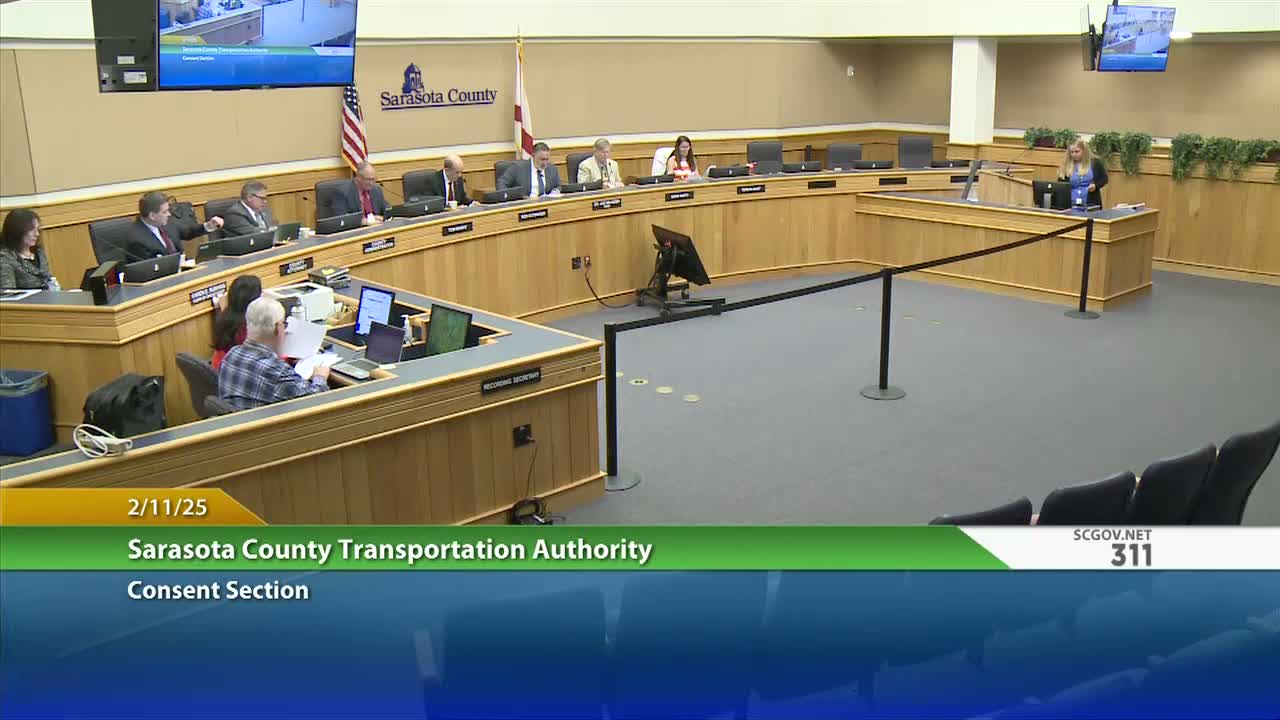
The Sarasota County Board of County Commissioners received annual reports from two advisory bodies on Feb. 11: the Parks Advisory & Recreation Council and the Tree Advisory Council.
Nicole Risler, director of Parks, Recreation and Natural Resources, introduced Michelle Stanley, chair of the Parks Advisory & Recreation Council. Stanley highlighted 2024 accomplishments including 14 land nominations for the Neighborhood Parklands Acquisition Program, a 0.5-acre acquisition at West Bay Street in December 2023, and rapid Legacy Trail recovery after the hurricane. The council’s 2025 priorities include supporting implementation of the parks strategic master plan, expanding water-access trails and athletic facilities, and improving citizen outreach ahead of a referenced referendum (identified in the meeting record as likely in 2026). Stanley said community groups such as Friends of the Legacy Trail are prepared to assist with outreach and events.
Rachel Herman (Environmental Protection Division manager) introduced Carol Delahanty, vice chair of the Tree Advisory Council. Delahanty urged a "right tree, right place" approach to the master tree list; recommended adding medium-size species appropriate for smaller lots (for example, Japanese blueberry was cited as an addition to the county list); and recommended re-examining the seven-year retention window so canopy is sustained beyond short-term development cycles. The council proposed employing remote sensing and updated canopy-assessment methods to inform policy and recommended staffing adjustments if urban forestry workloads increase.
Commissioners thanked the volunteers and staff, asked for educational materials and outreach, and urged coordination ahead of the upcoming referendum and neighborhood-acquisition efforts.