Get Full Government Meeting Transcripts, Videos, & Alerts Forever!
Get email alerts on the Attainable Housing topic
No spam. Unsubscribe anytime.
Sarasota outlines density bonuses and tiered attainable-housing rules as pipeline grows
Summary
City planning staff described a suite of zoning incentives (downtown 4x density bonus; corridor mixed-use 3x base density) with minimum 15% attainable units for 30 years and a tiered AMI requirement; more than 20 applications and roughly 800 attainable units are in process.
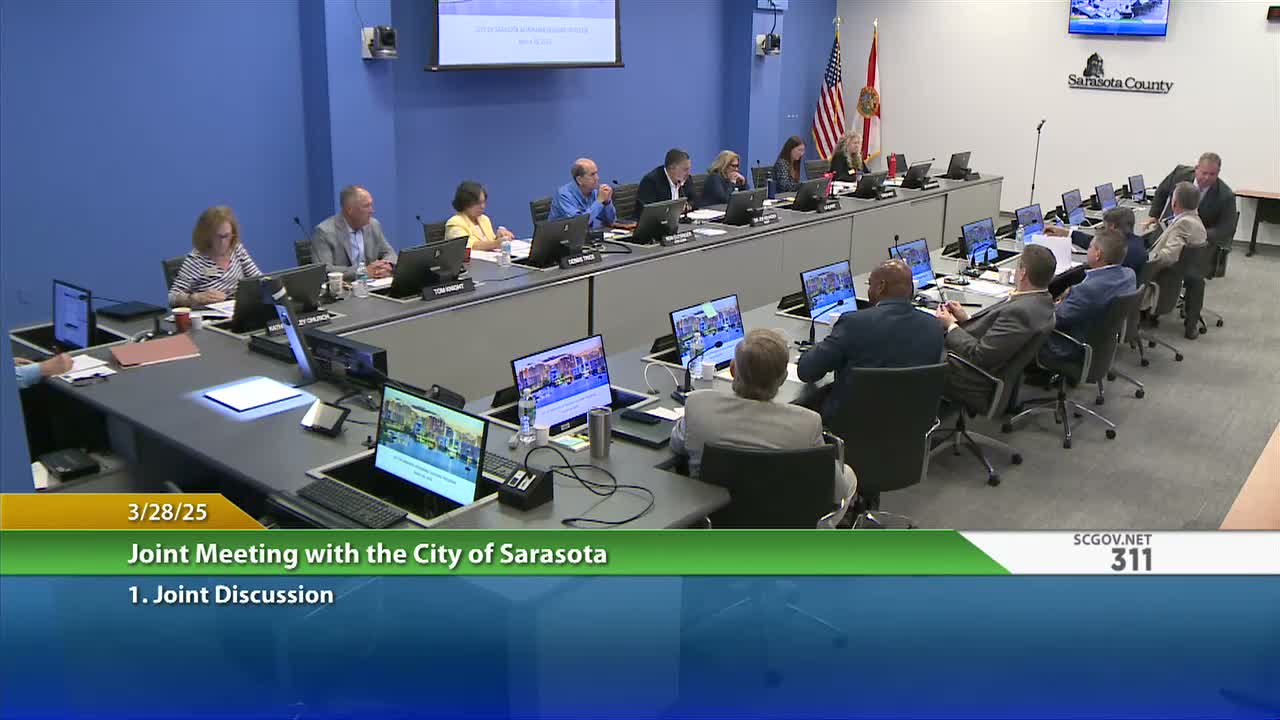
Steve Coover, planning director for the City of Sarasota, described the city's recent policy approach to incentivize "attainable housing." The program pairs density bonuses with minimum set-asides: downtown projects can seek up to four times base density if at least 15% of bonus units are reserved as attainable housing for a minimum 30-year period, and corridor mixed-use zones allow up to three times base density with similar set-asides.
City staff explained a tiering requirement intended to spread affordability across income levels: at least one-third of units must be for households at or below 80% of area median income (AMI), up to one-third for households between 101% and 120% of AMI, and the remainder for households between 80% and 100% of AMI. Steve Coover told the boards that median monthly rent for a one-bedroom in the City of Sarasota is "almost $2,300" not including utilities.
Planners said the program has a developing pipeline: more than 20 active attainable housing applications and a combined total approaching 800 units in process across private and nonprofit projects. The city has also allocated continuous funding from a recent penny surtax (estimated at about $200,000 per year toward attainable housing initiatives) and has used zoning changes, parking reductions and impact-fee deferrals as tools.
Commissioners asked for an inventory of existing attainable units, demographic uptake and whether incentives reach the public-safety and other occupations the program targets. City staff said they can produce income-level breakdowns but that private developments limit the ability to report exact professions of tenants. The meeting also raised a caution about pending state legislation (referred to by staff and commissioners as House Bill 943) that could preempt local rules; planners characterized Sarasotas approach as incentive-based to reduce risk from state preemption.
City staff said they would provide inventory numbers and follow up on data requests about who the program is reaching.