Get Full Government Meeting Transcripts, Videos, & Alerts Forever!
Get email alerts on the County Budget topic
No spam. Unsubscribe anytime.
Sarasota County reviews FY24 results and flags state tax and pension risks ahead of FY26 budget
Summary
County staff presented FY24 unaudited results, reserve balances and capital plans, and warned commissioners that pending state proposals—including a proposed sales‑tax cut and changes to homestead exemptions—could materially affect future budgets; staff reiterated a flat millage assumption and outlined next steps for the FY26 cycle.
Sarasota County staff told commissioners on March 27 that FY24 closed better than expected but that the county faces significant revenue uncertainty from active proposals in Tallahassee.
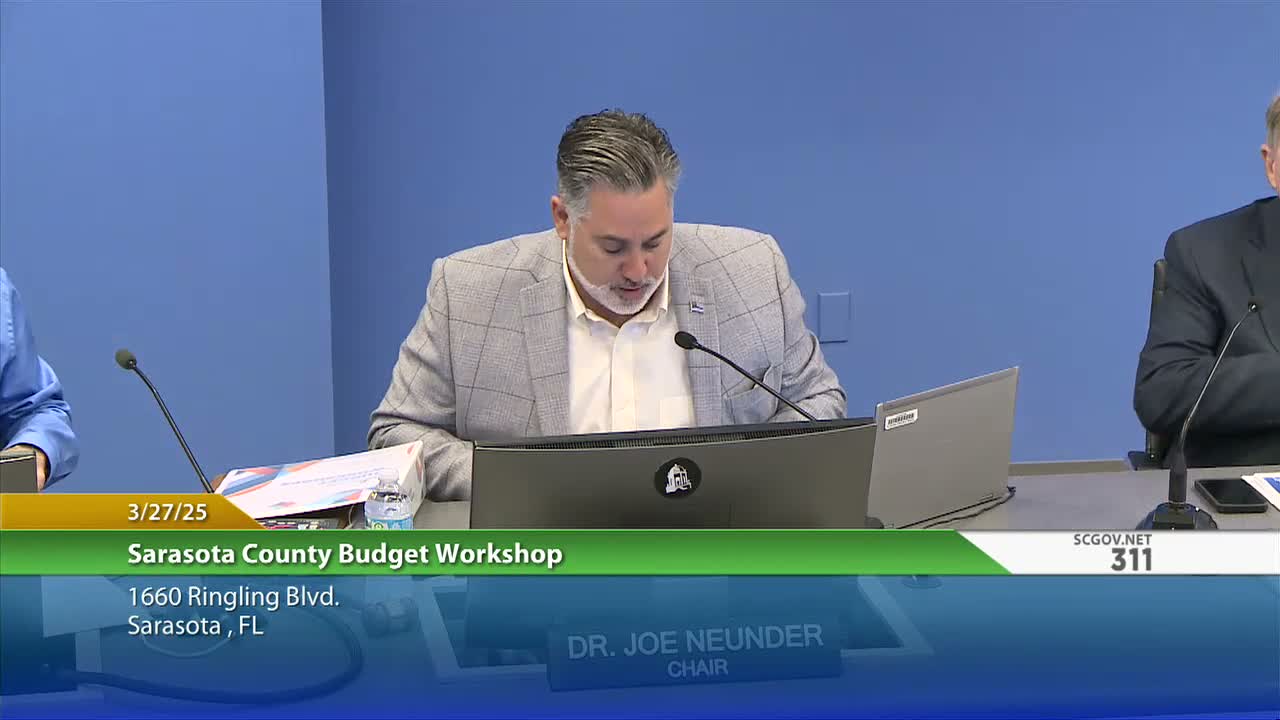
Rob Lewis, county administrator, opened the budget workshop by describing the year‑round budget process and the assumptions staff will use in preparing the FY26 model. Lewis cautioned the board the county is watching roughly 400 bills this legislative session that could affect county revenue and operations and noted one of the county’s appropriations requests (Lorraine Road) appears in a Senate committee chair’s proposed budget.
Kim Radke, director of the Office of Financial Management, presented FY24 unaudited results and reserve data. Radke said county revenues came in about $4.3 million over budgeted general‑fund projections and that 17 of 19 reserve targets were met; total reserves are about $281 million, but most reserves are legally or programmatically restricted.
Staff emphasized two budget‑level assumptions they are carrying forward: a flat millage rate in the model and the segregation of mental‑health‑related social‑service millage that the board set previously. Lewis said the flat millage assumption is important because once the county advertises a truth‑in‑millage rate it becomes the maximum the board may adopt without restarting the process.
The county also flagged specific state proposals that could affect local finances. Lewis said proposals to cut the state sales tax (reported by outside sources as a potential $5 billion state revenue reduction) and bills to modify commercial rental tax or homestead exemptions could materially reduce shared and local revenues. Kim Radke noted changes adopted to the Florida Retirement System contribution rates will increase county costs and estimated roughly $1.8 million to the general fund and $1.35 million to fire/EMS funds for the coming fiscal year.
Staff presented capital‑project updates and operating‑cost considerations for projects coming online, including the Longboat Key library, the Regional Fire Training Academy and other parks and wastewater investments. Carolyn Eastwood, capital projects director, said the five‑year CIP totals about $593 million, with wastewater representing the largest share.
Lewis and staff outlined the calendar for the budget process: continued internal work, CIP review, July property‑value updates, and two public hearings scheduled for September. The board did not change the staff assumptions at the workshop but directed staff to continue analysis and to return with the advertising language and resolutions required later in the process.
What’s next: staff will refine models with final FY24 audited numbers, return to the board for CIP and financial updates, and bring proposed rates and advertising language to the board in the weeks ahead.