Get Full Government Meeting Transcripts, Videos, & Alerts Forever!
Get email alerts on the Parks Recreation topic
No spam. Unsubscribe anytime.
Stockton council approves police digital‑forensics contract and two parks items; adopts parks master facilities plan
Summary
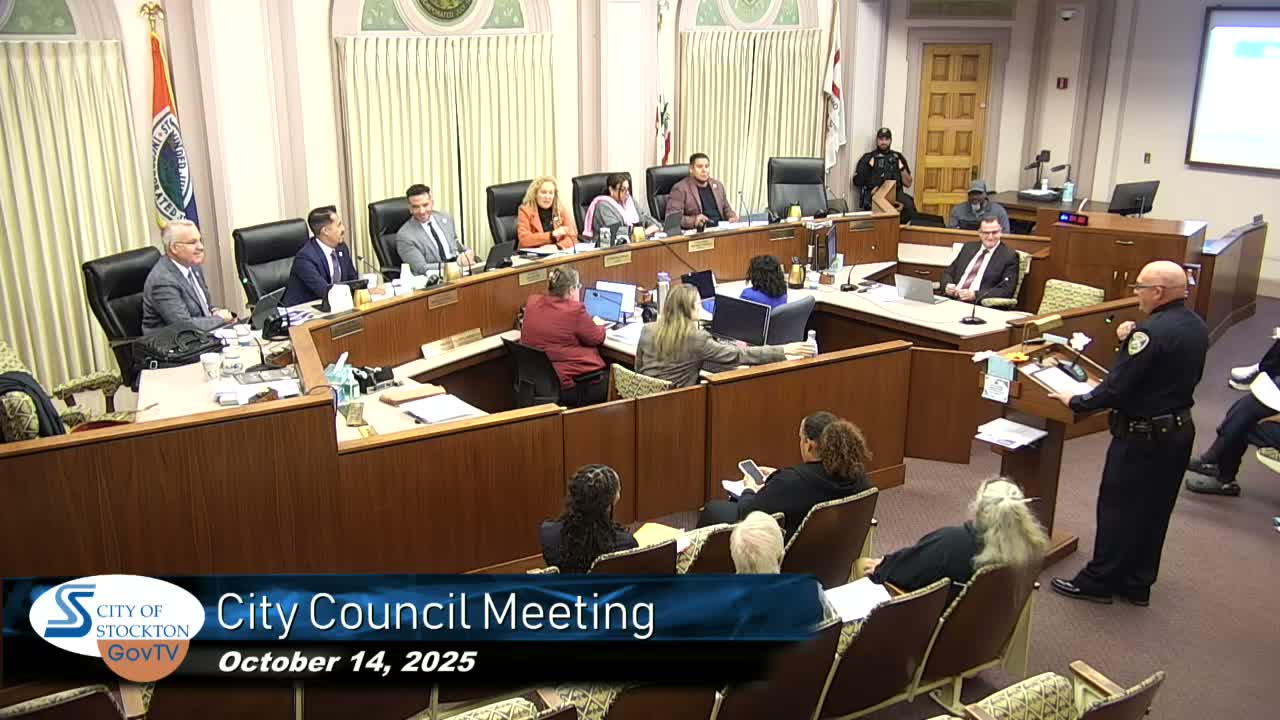
At its Oct. 14 meeting the Stockton City Council approved a five‑year Cellebrite contract for digital forensics, authorized Anderson Park playground construction, and adopted the 2025 Parks & Recreation Master Facilities Plan to guide park investments and aquatics modernization.
On Oct. 14 Stockton City Council approved several consent and policy items related to public safety and parks.
The council authorized a five‑year agreement with Cellebrite Inc. for digital forensic tools and services not to exceed $245,431. Police staff explained that the software and extraction tools help investigators with forensic device extraction and court‑ready export formats; use requires a warrant or owner consent. Council voted 6–0 to approve the sole‑source contract.
Council also authorized the Anderson Park Playground project, with staff estimating construction in spring 2026 (weather and permitting permitting). Councilmembers noted playground accessibility features and were told the new playground would include limited inclusive features, not as extensive as at Sandman Park. The motion to approve carried 6–0.
Separately, staff and Westwood Professional Services presented the 2025 Parks & Recreation Master Facilities Plan, which summarized outreach (239 survey participants), an inventory and gap analysis, revised park typologies, and recommended aquatics phasing (modernize McKinley, Oak Park and Victory Park pools in phased investments). The council adopted the plan by unanimous vote; staff described it as a set of recommendations to guide future capital projects and fee updates rather than immediate operational changes.