Get Full Government Meeting Transcripts, Videos, & Alerts Forever!
Get email alerts on the Municipal Employment topic
No spam. Unsubscribe anytime.
Stockton approves 2026 employee health plans; council orders staff to find offsets after Sutter’s steep rate rise
Summary
Faced with a reported 35% renewal increase from Sutter Health that would raise employee costs by thousands annually, the council approved renewal of 2026 plans but directed staff to return within 60 days with options to offset impacts on city workers.
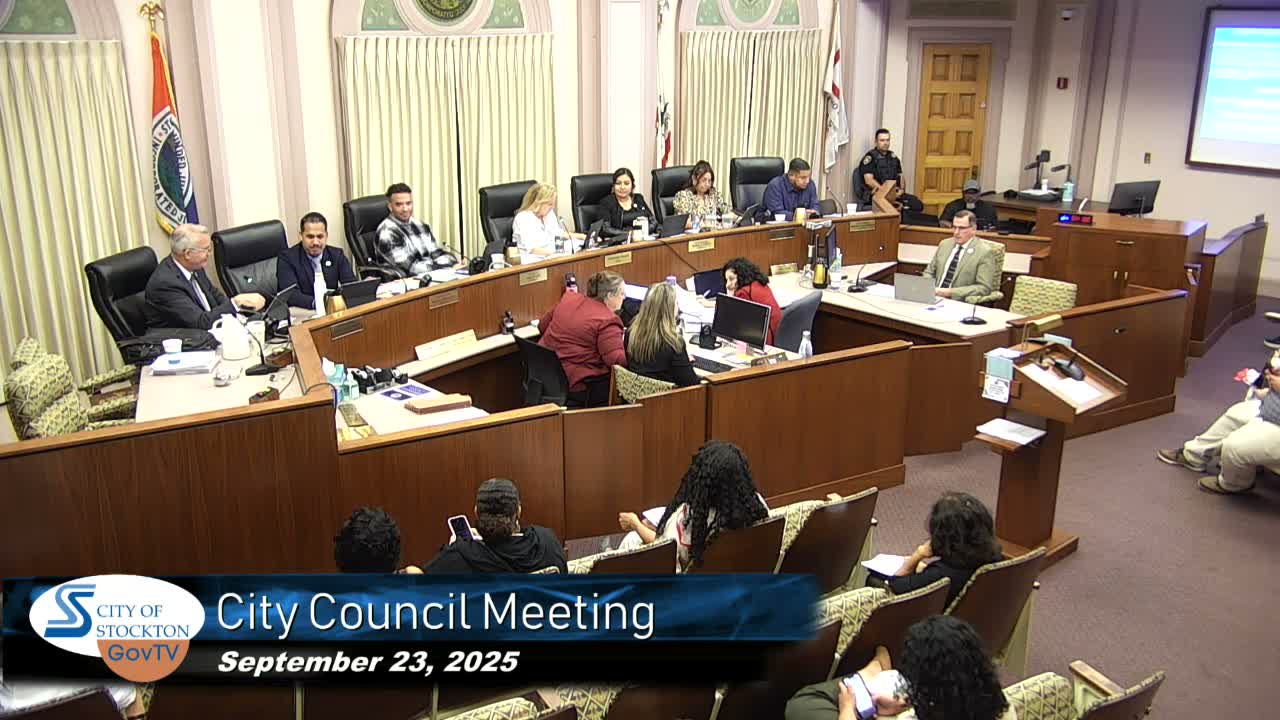
After a lengthy public segment in which multiple city employees and union representatives described the personal impacts of rising premiums, Stockton’s City Council approved the 2026 employee health‑plan renewal on Sept. 23 and directed staff to seek funding offsets and report back within 60 days.
Several city employees told the council the proposed Sutter Health increase would be unaffordable. “The proposed increase in medical insurance starting January 2026 would add more than $600 a month to my costs,” said Christina Neely, a revenue assistant who said switching providers would disrupt continuity of care (Christina Neely, SEG 1174–1180). Another staffer who said she is pregnant warned that changing insurance mid‑pregnancy is impractical.
HR staff described a constrained procurement environment. Maya Rev, Deputy Director of Human Resources, told council the city issued an RFP and pursued pools and alternate vendors but many insurers declined to bid or said they could not price without the city’s utilization data; staff reported final negotiations reduced Sutter’s initial quote from a 39% proposed increase down to about 35% in late summer. HR said open enrollment must begin Oct. 1 for changes to take effect Jan. 1, creating a tight council timeline.
Staff provided an example of employee impact for one Sutter HMO plan: current monthly employee premium $151.78 ($1,800/year) rising to $455.38 ($5,464.56/year), an annual increase of about $3,600. Council members asked about alternatives, including joining other pools or changing carriers; staff said alternatives would take a year or more and could cause loss of doctors for employees.
Councilmembers pushed for offsets rather than rejecting the renewal and leaving employees without coverage. Padilla and the vice mayor proposed using one‑time or targeted funds to mitigate the impact; staff recommended any assistance be dollar‑based (not percentage) to preserve long‑range budgeting. The council approved the renewal and a motion by Vice Mayor Lee directing staff to identify offset funding and return in 60 days with options, a motion that carried 7–0.
Next steps: city staff will examine internal funds, possible short‑term supplements and side‑letters with unions to offset the increased employee contribution pending a longer procurement strategy.