Get Full Government Meeting Transcripts, Videos, & Alerts Forever!
Get email alerts on the Behavioral Health topic
No spam. Unsubscribe anytime.
Stockton council rejects motion to apply for state behavioral health grant for Teen Impact Center
Summary
After hours of debate about conflicts, readiness and operations, Stockton City Council voted against authorizing a state BHCIP grant application that would have used the vacant Teen Impact Center as a 10% in-kind match for an estimated $58 million construction request.
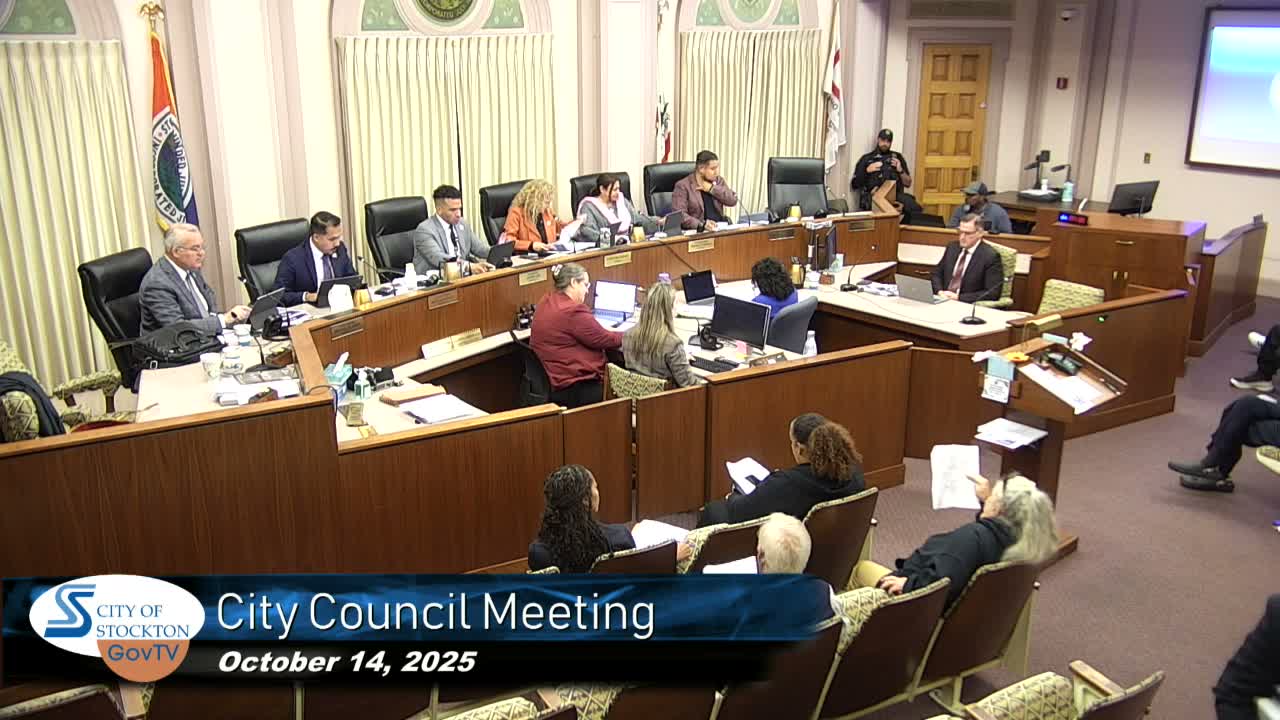
Council members debated for more than two hours on Oct. 14 before declining to authorize the city to apply for round‑2 of California's Behavioral Health Continuum Infrastructure Program (BHCIP) using the city‑owned Teen Impact Center as an in‑kind match. The agreement under consideration would have let the city list the Teen Impact Center at an estimated in‑kind value of about $6.4 million to support an application that, on paper, could seek up to $58 million for construction and rehabilitation.
The proposal, presented by Jordan Peterson, deputy director of economic development, described the Teen Impact Center as a 27,000‑square‑foot facility that has stood vacant since operations agreements lapsed in 2021. Staff said recent architectural estimates put full rehabilitation at roughly $12–14 million. Peterson said the state program requires a 10% local match and city land equity could supply that match without upfront cash.
Amelia Williamson, representing Hollywood Cares Foundation and the I Am Ready initiative, outlined a plan to operate the renovated building as a youth hub that pairs a county‑run outpatient mental health clinic, a 20‑bed peer respite operated by Main Street Youth and Family Services, and daily youth programming focused on workforce and leadership. "There's a real need for just a place to go," Williamson said, arguing the center would provide behavioral health access and short‑term respite for transitional‑age youth.
Several council members, notably Councilmember Padilla and others, pressed staff and presenters on process and transparency questions: whether the city had adequately run a competitive outreach process after an RFQ and whether other applicants could have been included; whether the proposed co‑applicants had been fully vetted; and what operational funding would look like after construction. City Attorney counsel explained that vice mayor Lee's role as an unpaid nonprofit board member required his recusal from votes but that recusal did not legally bar the nonprofit from being a partner on an application.
Opponents on the dais and among the public raised concerns about optics and public trust, given the compressed calendar for the state's application (the RFA window closed in June; applications were due Oct. 28) and earlier rounds of outreach. Peterson and the applicant team said they had completed many of the technical items the state requires (pro forma operating budgets for five years, design specifications, a PAC call with the fiscal manager) but acknowledged the compressed timeline limited broader engagement.
Councilmember Blauer moved to authorize the city to submit the BHCIP application; Councilmember Enriquez seconded. After extended questioning, the motion failed on the council floor. The mayor then confirmed the outcome: the council would not authorize the application at this time.
The applicants and city staff said they would continue to pursue alternatives, including other funding sources and further community partnerships, but any future application would require additional council approval. No immediate transfers of property or funding were authorized by the council at Oct. 14's meeting.