Get Full Government Meeting Transcripts, Videos, & Alerts Forever!
Newport consultants say current Big Creek Dam design would produce sharply higher water bills; council launches alternatives analysis
Summary
Consultants told the Newport City Council that the current $185M–$215M dam design would push typical residential water bills into the hundreds of dollars monthly under plausible financing scenarios, and the council directed staff to pursue an alternatives analysis to find less-burdensome options.
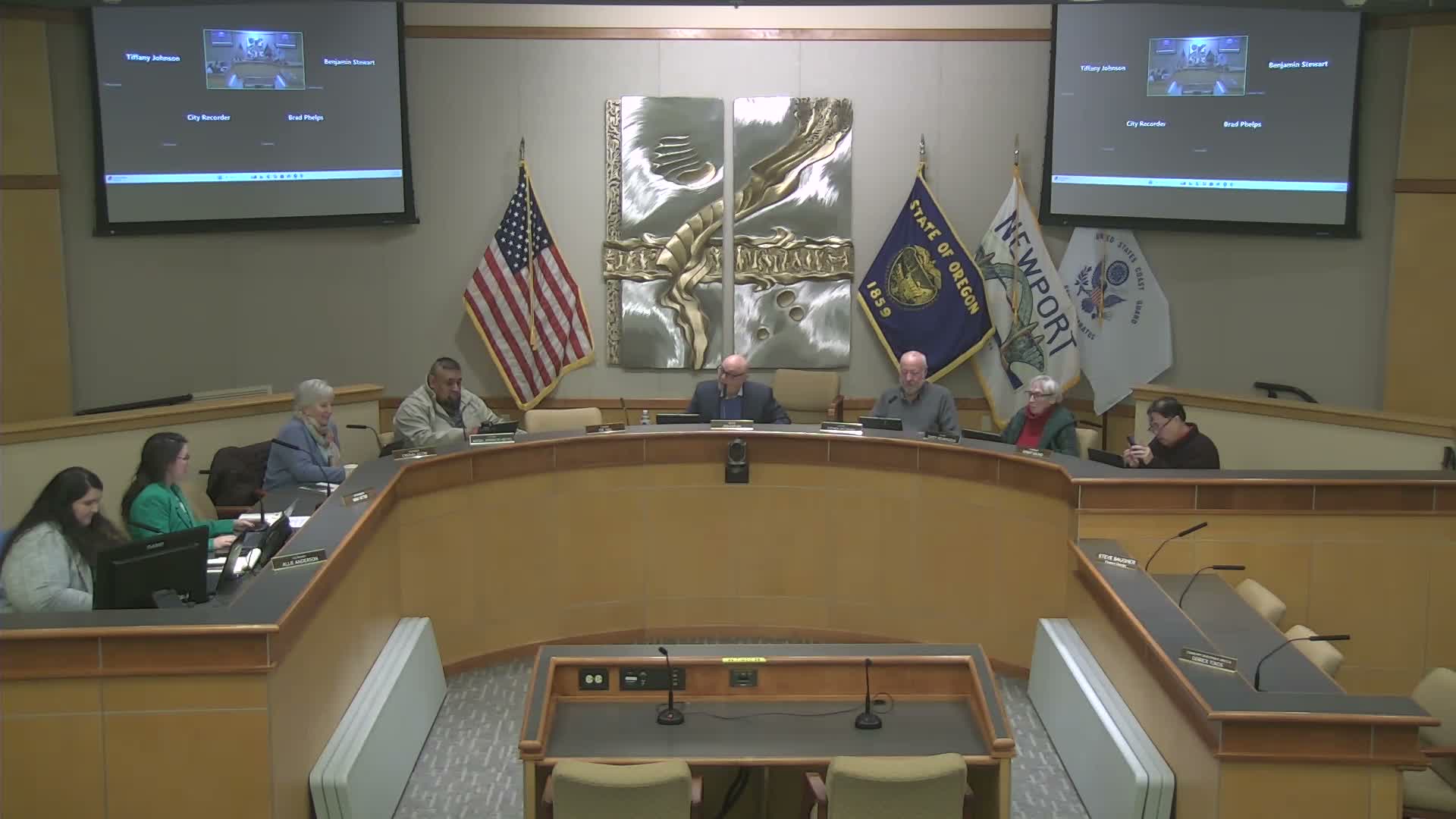
Consultants told the Newport City Council on Dec. 1 that the Big Creek Dam replacement as currently designed would create unaffordable water-rate impacts for residents unless large new grants or different project approaches are found.
The consultant presenting the financial analysis, identified in the meeting as Vince Stewart of Stantec, summarized a model that started from an HDR Engineering cost estimate of about $185,000,000 and, with escalation, modeled a project cost near $215,000,000. "All three scenarios for this project would result in water bills exceeding these industry affordability standards," the consultant said, concluding that the project in its current form "would not be financially feasible from the perspective of customer affordability."
Why it matters: the analysis modeled three funding approaches — (1) the water utility borrowing alone, (2) the utility plus a $50 million contribution from the City general fund, and (3) a combination that also used WIFIA loan financing — and found large rate increases in every case. Under the utility-only scenario the consultant estimated a typical residential bill near $385 a month by 2045 (a stated, modeled increase of over 400%); the $50 million general-fund scenario produced roughly $340/month; and the scenario including WIFIA produced about $328/month by 2045. The report measured affordability using industry benchmarks (bill as a percent of median household income and of the lowest income quintile, and hours at minimum wage to pay a bill) and found the modeled bills exceed common thresholds.
Funding constraints…
Already have an account? Log in
Subscribe to keep reading
Unlock the rest of this article — and every article on Citizen Portal.
- Unlimited articles
- AI-powered breakdowns of topics, speakers, decisions, and budgets
- Instant alerts when your location has a new meeting
- Follow topics and more locations
- 1,000 AI Insights / month, plus AI Chat