Get Full Government Meeting Transcripts, Videos, & Alerts Forever!
Get email alerts on the Records Management topic
No spam. Unsubscribe anytime.
Newport moves to digitize municipal records, highlights century-old archives
Summary
City Recorder Ally Anderson showcased Newport's historic archives and outlined plans to implement the Oregon Records Management Solution (ORMS). Staff expect a phased rollout beginning in February, with department user groups and scanning already underway in several departments.
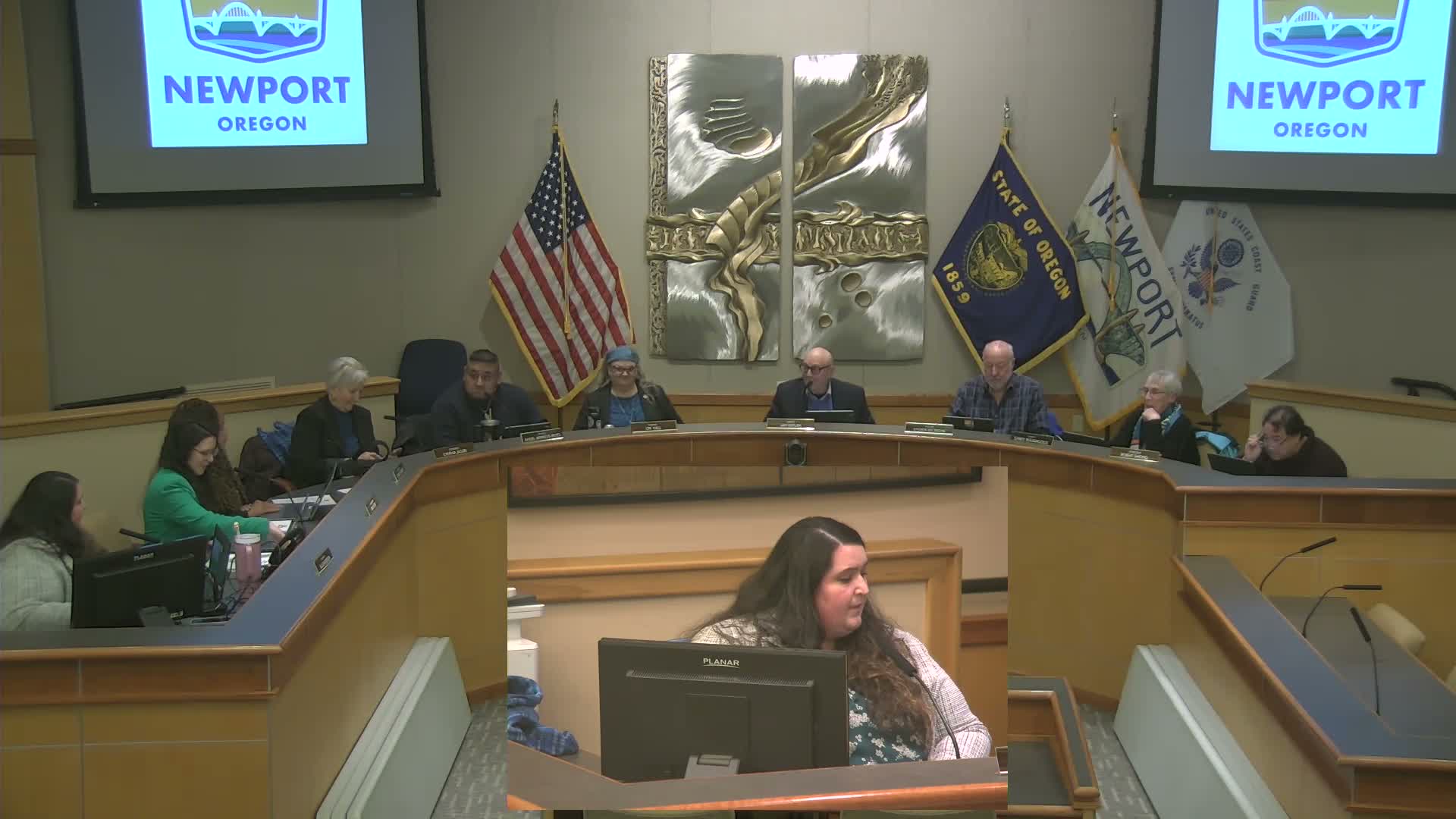
Ally Anderson, Newport’s city recorder, told the City Council work session that the city is preparing to implement the Oregon Records Management Solution (ORMS), a state-supported electronic filing system to organize, preserve and make public municipal records.
Anderson opened her presentation by calling records “evidence of leadership, memory, history, and progress,” and reviewed what counts as a public record under state rules — from agendas, maps and reports to text messages, audio and video — many of which carry permanent retention requirements. She said the city’s updated retention schedules (revised last July) and ORMS will govern how long documents are kept and when they can be lawfully disposed of or transferred to archives.
The presentation included a show-and-tell of fragile artifacts from Newport’s archives: early council minutes from the 1880s, telegrams tied to a 1930s jetty extension campaign, and photographs donated by local families. Chief Murphy held up a 1916 exempt-fireman certificate while describing volunteer firefighting history, underscoring staff remarks about preserving unique physical items even as day-to-day records move online.
Anderson described how ORMS will work in practice: departmental records managers will be designated and trained to apply consistent naming conventions and retention schedules; scanned files will be linked to state retention rules; and the system will present records via the state’s web portal so citizens can search for materials without a formal public-records request. "ORMS doesn't take any space on our website. It'll look like it's on a web portal through the state's website," Anderson said.
Councilors asked about digitizing stored hard-copy records. Anderson said several departments have already done heavy scanning work, notably the engineering department and the police records team, and that scanned electronic versions can allow lawful disposal of duplicates once an official electronic record is retained. She acknowledged the workload and said some scanning may be contracted out while archival items will likely be processed in-house.
Next steps: staff will stand up ORMS user groups across departments, provide training, and report back with data and progress reports. Anderson suggested regular reporting could be included in department reports so councilors can track implementation milestones. The city also plans to continue preserving selected physical archival items while improving public access to the broader records collection.
The recorder’s office and implementation leads said they are available to answer councilors’ questions as the city transitions to ORMS. No formal action or vote occurred during this work-session presentation.