Get Full Government Meeting Transcripts, Videos, & Alerts Forever!
Get email alerts on the Housing Development topic
No spam. Unsubscribe anytime.
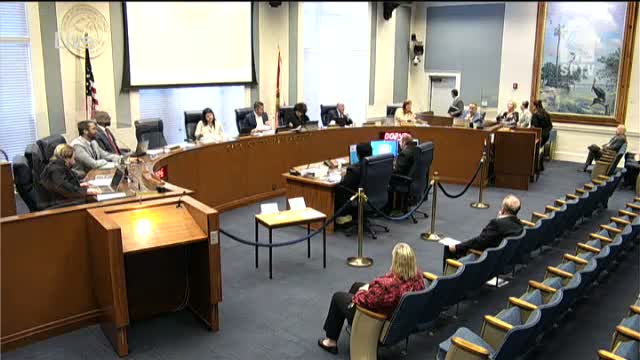
Council approves Azalea Gateway subsidy despite environmental and affordability concerns, 6‑1
Summary
The council approved financial support for phase 1 of the Azalea Gateway redevelopment on the former Raytheon site (phase 1: 340 units; 102 affordable/workforce units) by a 6‑1 vote. Council discussion focused on environmental remediation, the project's affordability mix and a roughly $6 million city subsidy request (per council discussion).
The St. Petersburg City Council on Thursday approved financial assistance for the Azalea Gateway redevelopment on the former Raytheon site, advancing a project the city says will add housing in a long‑stalled industrial parcel but which drew one councilmember's dissent over affordability and public subsidy.
Mark Van Lew presented the plan for Phase 1: 340 dwelling units with 102 units designated as affordable or workforce housing split between 80% and 120% area median income (AMI). He told council the per‑unit project cost is about $323,024 and that the per‑unit subsidy request averaged $17,647 across all 340 units (equivalently about $58,824 per affordable/workforce unit); the negotiated affordability term is 50 years. A staff slide also showed a multi‑phase master plan totaling roughly 1,000 units when all phases are built.
The project uses House Bill 1339 (the Live Local Act) to permit residential construction on industrially zoned land. Councilmembers discussed remediation and oversight: Greg Schultz (environmental engineer for the developer) said Raytheon retains responsibility for groundwater cleanup and that remaining soil impacts are minimal and will be managed with engineering controls and passive vapor venting beneath buildings.
Councilmember Richie Floyd prepared the dissent: he said he could not support subsidizing units at 120% AMI with city funds and expressed concern about both the half‑market (120% AMI) component and environmental history. "I do not support subsidizing 120 AMI with city money anymore," Floyd said during debate, pointing to rent levels approaching $3,000 monthly for some workforce units. Other councilmembers, including Brandy Gabbard, argued the ordinance change allowed by HB 1339 and use of the HCIP (Housing Capital Improvement Program) funds are tools to produce much‑needed housing in an area that has been dormant for years.
After discussion, Councilmember Gabbard moved approval; the motion passed 6‑1 with Floyd voting no and Councilmember Driscoll absent. The clerk announced the tally immediately after voting.
Staff noted phase 1 will carry infrastructure burdens that serve the whole site, and the requested financial subsidy is intended to make the economics of affordable and workforce units viable. Construction was presented on a timeline that anticipates permit approval in September, a financial closing with the LLC Azalea Gateway Apartments, and a construction start by November 2025 with completion in December 2027.
Council directions included continued oversight of remedial work (with developer testimony that Raytheon remains liable for groundwater cleanup), and use of HCIP funds as approved. The vote advances required agreements and subsidy authorizations; councilmembers asked staff to continue reporting on remediation measures and affordability metrics as the project moves toward permitting and financial closing.