DPA says jail tablet survey is ready; board asked for pilot testing, messaging and clarity on data use
Loading...
Summary
The Department of Police Accountability told the board a 13-section, tablet-based survey adapted by vendor Nucleos is ready for launch; members urged pilot testing, clarity on overlap with other surveys, and a plan for outreach, incentives and data use.
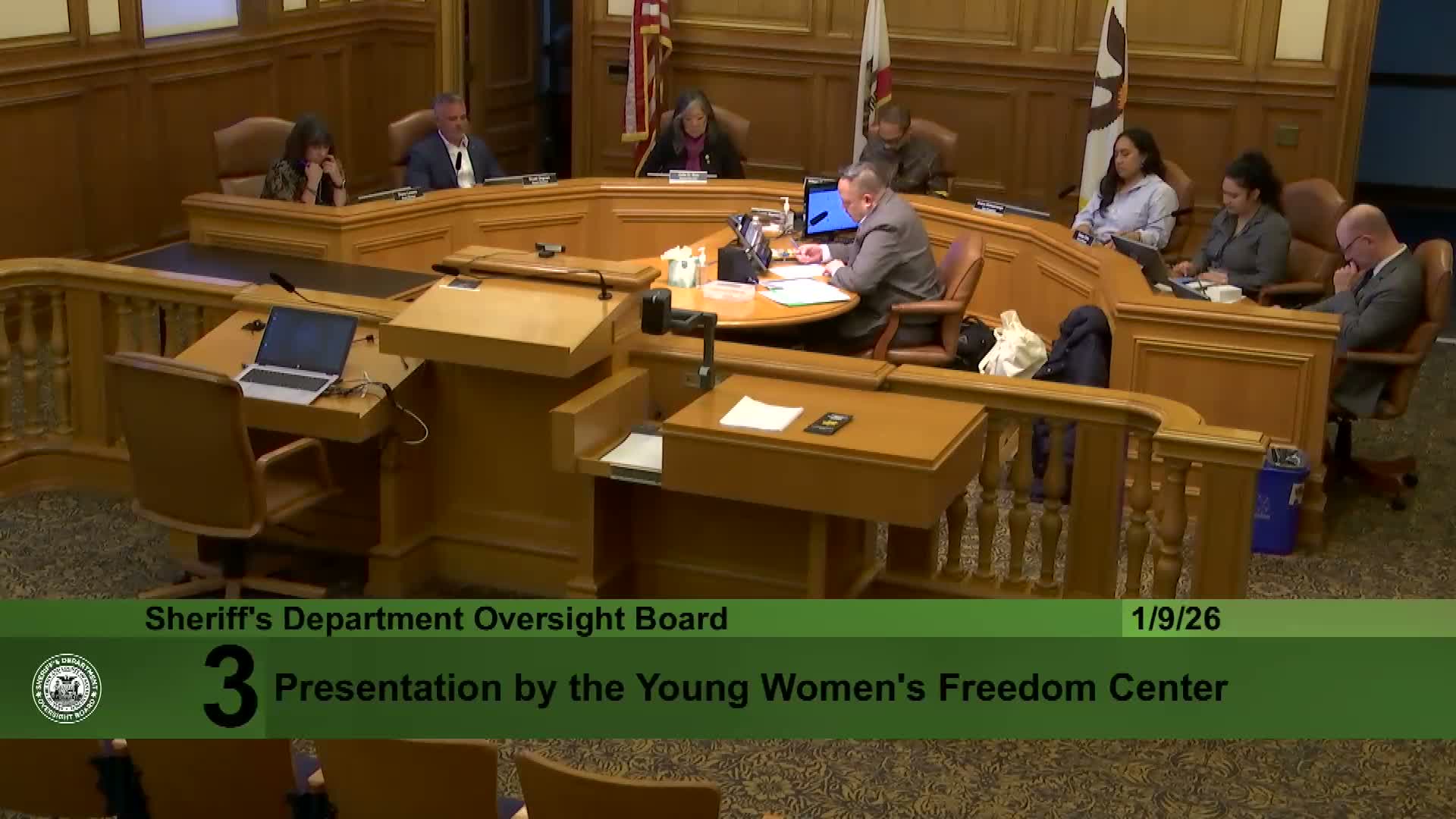
Marshall Kine, chief of staff at the Department of Police Accountability, briefed the board on a planned tablet-based survey for people incarcerated in San Francisco jails designed to collect anonymous feedback on facility conditions, legal-rights compliance, programs, visitation, commissary and reentry supports.
Kine said the survey is organized into 13 topical sections and contains roughly 75 questions. Vendor Nucleos adapted the instrument for the jail tablets and delivered the digital adaptation on Dec. 23; the DPA emphasized the application allows anonymous responses while ensuring only one submission per respondent.
The DPA asked the board for input on outreach messaging, proposed a preface or introductory message from the board and suggested appointing 1 to 3 board members to assist with in-person facility outreach. The DPA also said the Jail Justice Coalition is pursuing funds for a commissary snack-bag incentive to encourage participation.
Board members recommended pilot testing with a small cohort to detect technical issues, requested a board opportunity to review the user experience before launch, and asked DPA staff to coordinate with Prisoner Legal Services to avoid overlapping surveys and to clarify how DPA will use the results to guide priorities. DPA said it plans iterative updates and to set a time window for one response per person during each survey cycle.
No vote was taken; the board signaled support for a phased rollout, usability testing, and close coordination with stakeholders before a full launch.