Get Full Government Meeting Transcripts, Videos, & Alerts Forever!
Get email alerts on the Charter Amendment topic
No spam. Unsubscribe anytime.
Council approves first reading to send vice mayor term question to voters
Summary
Council approved on first reading an ordinance to place a charter amendment on the next ballot asking voters whether the vice mayor should be selected annually (one‑year term) rather than the current two‑year practice; council debate focused on whether charter amendments should go directly to voters or via a charter review board.
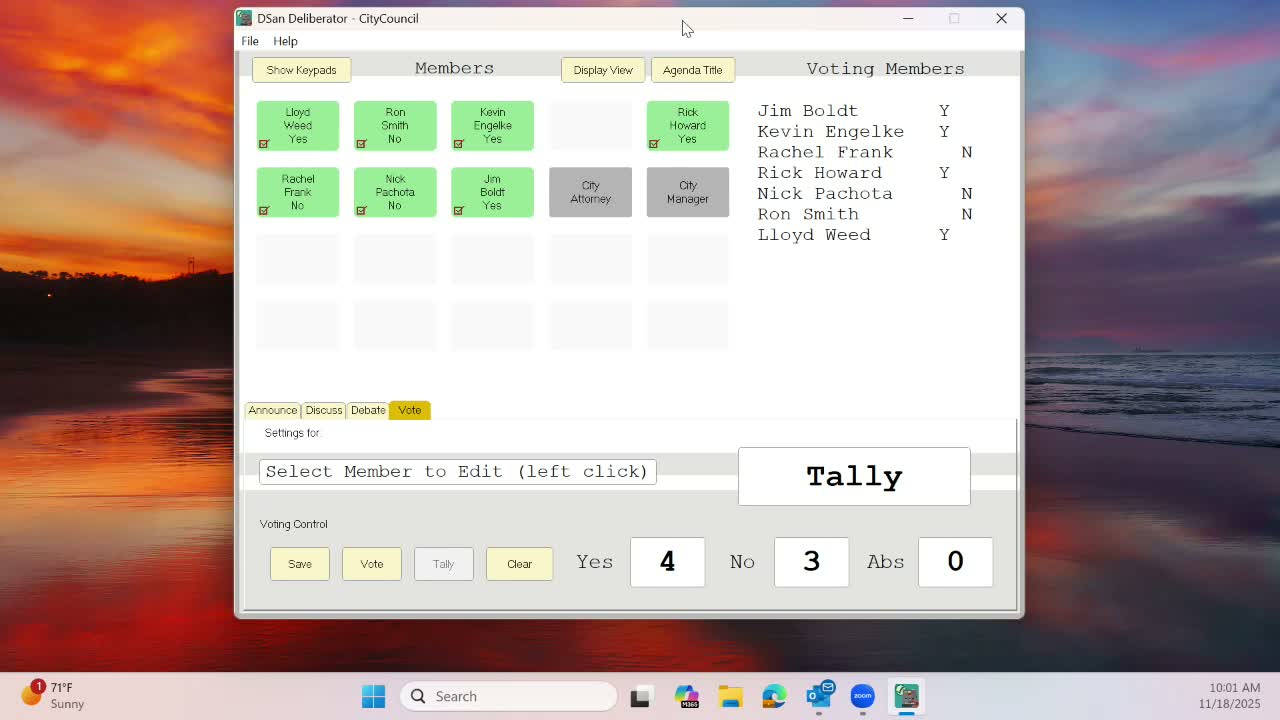
Venice City Council voted 5–2 on first reading to send a proposed charter amendment to the ballot asking voters whether they want the council to select a vice mayor each year (a one‑year term) instead of the current two‑year selection cycle.
The measure would, if approved by voters, restore the practice of an annual vice‑mayor selection. The city attorney told the council the ordinance would go to next November’s ballot; if approved by voters the charter would be amended accordingly.
Why it matters: Changing the vice mayor’s term affects internal council rotation and representation practices. Several council members argued the matter is minor and an appropriate decision for voters, while others urged more vetting through a charter review board before placing charter language on the ballot.
What happened: City attorney summarized the background: the 4‑year term change enacted last year altered election cadence and left the vice‑mayor selection on a two‑year cycle; the proposed ordinance puts a referendum before voters to determine whether to return to a one‑year selection. Councilmember Smith said he was concerned about placing charter amendments directly on the ballot without broader vetting, while Councilmember Frank favored letting voters decide. Council moved and seconded approval to schedule the ordinance for final reading; the motion passed 5–2.
What’s next: The ordinance will be placed on the next November ballot for voter approval; council will revisit final reading after required procedures.
Provenance: Topic introduced with Ordinance 2025‑40 reading (SEG 886) and concluded with the council’s first‑reading vote (SEG 1158).