
Commission opens review after letter shows high CIP change orders; commissioners question $93M bond sizing
Get AI-powered insights, summaries, and transcripts
Subscribe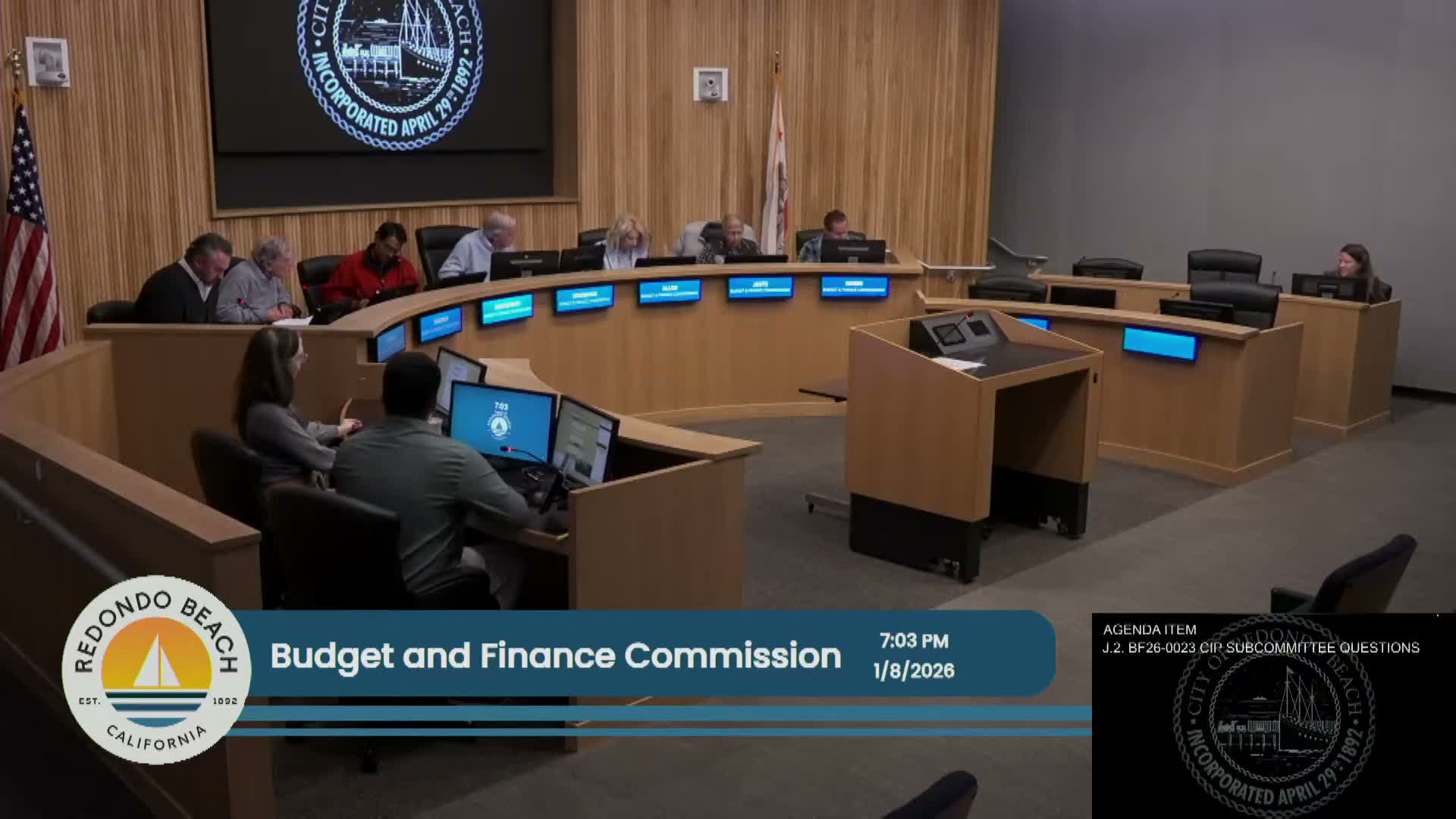
Summary
A resident's analysis showing 10 of 22 CIP projects with high change-order percentages prompted the commission to open a formal review, request targeted questions for the public works director, and ask staff to return with answers and possibly an external audit. Commissioners also raised concerns about planning for a voter-approved $93 million bond for fire and police facilities after a news quote about how the bond amount was chosen was read aloud.
The commission launched a review of capital improvement project (CIP) change orders after reading a letter from resident Jim Mueller outlining that 10 of 22 projects had significant change-order activity and that year-to-date change orders equaled about 19 percent of engineer's estimates for the sampled projects.
Commissioners said the pattern of change orders can indicate multiple causes: volatile materials and labor pricing, unforeseen site conditions, or deficient pre-bid scoping and design. The letter's author recommended deeper inquiry; commissioners agreed and asked that the CIP subcommittee assemble specific written questions for Public Works and for the public works director (or a high-ranking designee) to answer at a future meeting.
One commissioner also read an article excerpt alleging City Manager Mike Wazinski told a local news outlet that the $93,000,000 bond amount was chosen because "we just thought that was a good number." Commissioners said that quote, if accurate, raises transparency and planning concerns and should be clarified by city management. Staff responded that the city has engaged Griffin as an owner's representative to assist with planning, sequencing and procurement for the fire-and-police bond projects and that Griffin and the city's financial advisor are monitoring bond proceeds to stay within the approved amount.
Public commenters with contracting experience told the commission that truly unforeseen conditions are rare and that weak scope definition and fragmented oversight often produce predictable and repeat change orders. Commissioners debated whether to pause approving change orders, seek an outside consultant to audit projects, or tighten RFP and bidding language.
The commission voted to return the CIP questions and related materials to a future meeting after the subcommittee completes targeted questions and staff provides the public-works change-order process documentation and samples of competitive-bid packages to review.