
Miami Lakes committee discusses public‑records fees and ex‑parte disclosure; attorney outlines limits
Get AI-powered insights, summaries, and transcripts
Subscribe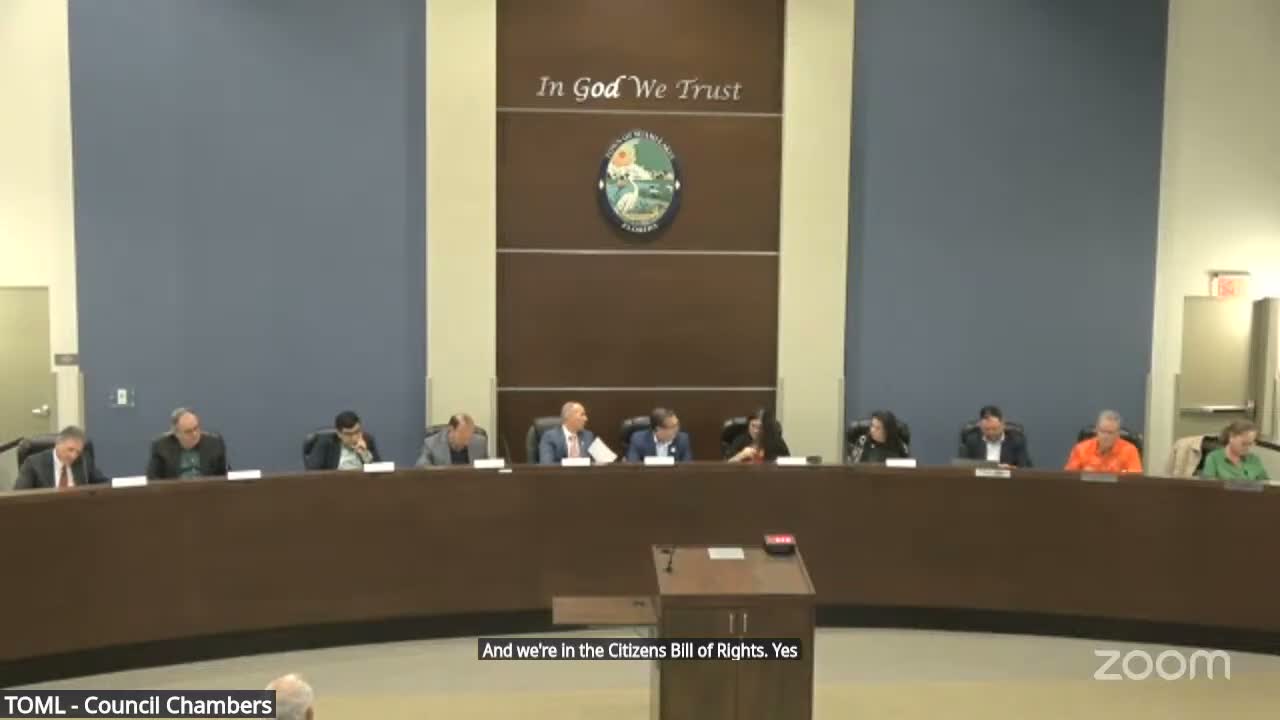
Summary
Commissioners debated whether the charter should explicitly authorize fees for large public‑records requests and whether ex‑parte disclosure rules apply to this committee; the town attorney said Chapter 119 governs fees and exemptions and that ex‑parte rules cited are for quasi‑judicial matters, not charter revision.
During public comment and committee discussion on January 22, residents and commissioners raised concerns about public‑records fees, transparency and whether ex‑parte disclosure requirements apply to the charter revision body.
A commissioner said the town has seen large invoices for records in the past and that attorney review fees can act as a deterrent. The town attorney and staff responded that Florida’s Chapter 119 governs public‑records access, exemptions and special service charges and that for substantial requests the clerk’s office provides a cost estimate the requester may accept or withdraw. The attorney also noted exemptions and redaction obligations when privileged material or sensitive technology information is involved.
Commissioner Bennett asked whether Resolution 1‑20 (an ex‑parte communication disclosure form) should be required of this committee. The town attorney explained that the statutory ex‑parte rules (the section cited in the meeting) are specific to quasi‑judicial matters—things like land‑use hearings—and that the charter revision body is not quasi‑judicial. The attorney advised commissioners they may communicate with council members, staff and the public, but recommended asking the town attorney when in doubt to avoid Sunshine Law violations.
No charter language was adopted on public‑records fees or ex‑parte disclosures; the committee recorded the discussion and will entertain specific proposed language if commissioners wish to return with redlines.