
Lawmakers told traveler nurse reliance drives EFR costs; grants aim to reduce reliance
Get AI-powered insights, summaries, and transcripts
Subscribe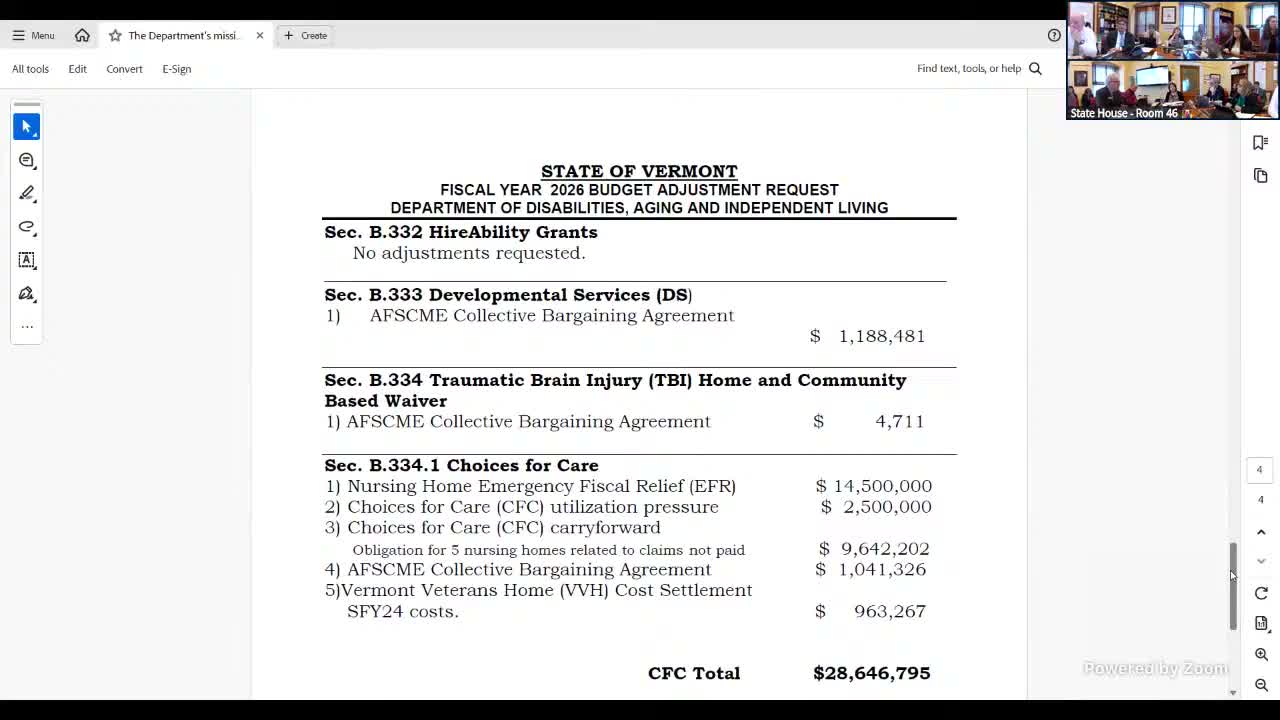
Summary
Officials told the House Human Services committee that reliance on traveling nurses and contract staff is a major cost driver for emergency relief requests, declining in participating facilities from about 35% to 25%, and that targeted grants are intended to increase retention and lower future EFR need.
Lawmakers at a House Human Services hearing focused questions on the role of traveling and contract staff in driving Emergency Financial Relief requests for nursing homes.
"We're going from, like, 35% of the staff being traveler or contracted staff down to, like, 25%," the commissioner said, describing the impact of recent grant investments. Committee members contrasted that figure with a national average "closer to 5%."
Representatives pressed whether traveler reliance is a majority driver of EFR costs; agency staff said it is a "huge factor" and that the LNA-type grants discussed in the presentation are designed to reduce reliance on travelers by supporting retention, in-house training and onboarding. Jennifer Garabedian, the developmental disability services division director, said the grant program expanded from 11 to 17 participating facilities this year and that evaluation and tracking of outcomes will be part of this year's work.
Agency staff described the grants as competitive and targeted; facilities engaged during ownership transfers or mid-transition may not participate. Officials said they will include a full summary of grant outcomes in upcoming budget materials.
Lawmakers asked whether the department will require outcomes tied to future EFR eligibility; the agency said tracking and evaluation are being developed as part of its stabilization strategy.