
Goshen board keeps public hearing open, orders third-party risk review paid from applicant escrow
Get AI-powered insights, summaries, and transcripts
Subscribe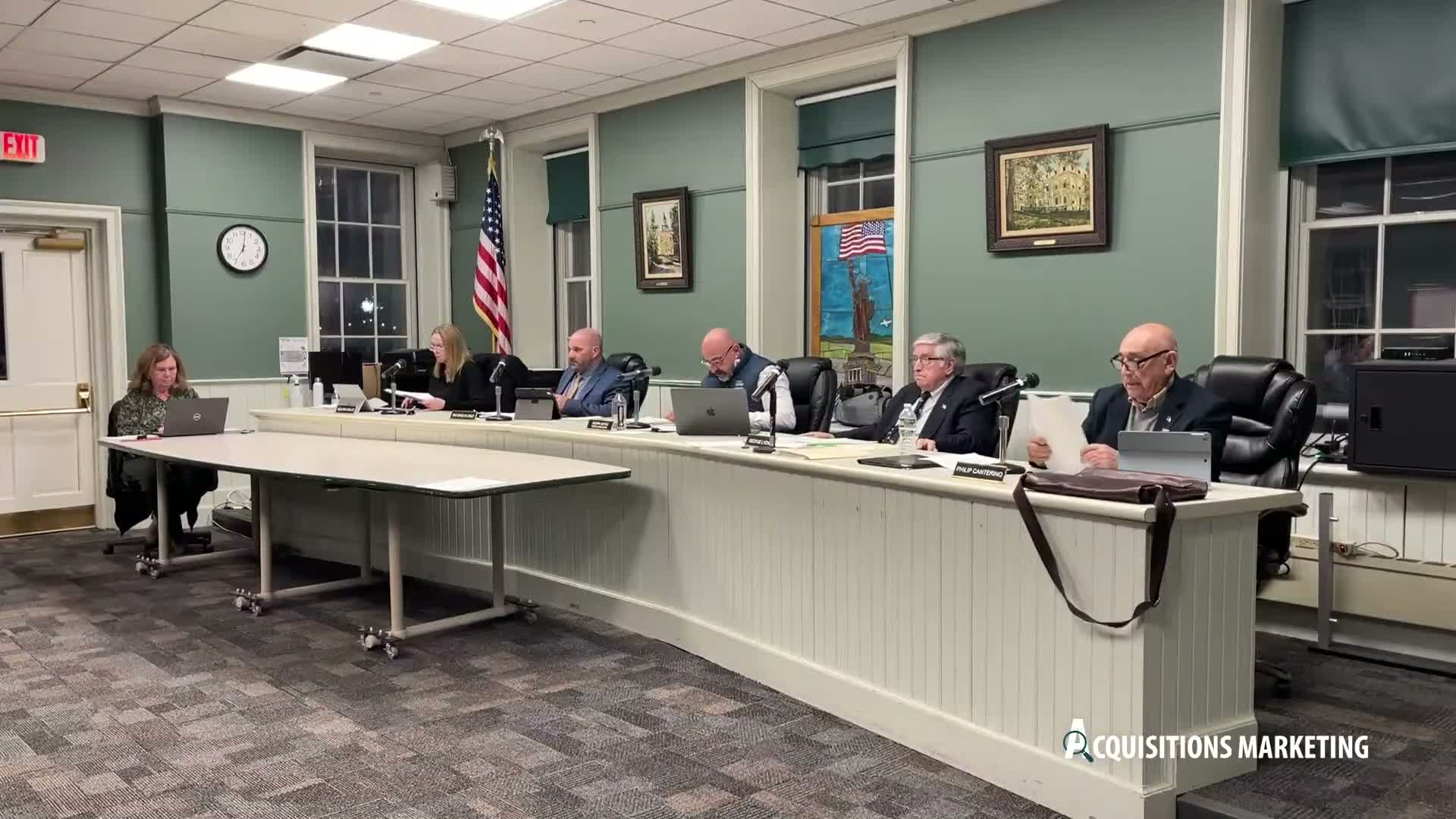
Summary
After extended debate over safety and timing, the Goshen Town Board voted to keep its public hearing open on an applicant’s battery storage project, authorize a third‑party risk analysis to be paid from the applicant’s escrow, and assign a board member to coordinate the review.
The Goshen Town Board continued its review on Jan. 8 of a proposed battery energy storage project and decided to pursue an independent risk analysis financed from the applicant’s escrow while leaving the public hearing open.
In a discussion that spanned multiple board members and the project applicant, the board heard concerns about public safety and process timing. An unnamed board member said the town needed “at least 6 months” to review battery storage proposals and cited prior fires and certification gaps. Terrence Nolan, representing New Leaf Energy of Troy, N.Y., confirmed he authorized use of his company’s escrow funds and said, “we're submitting a $6,500 check” to replenish the account. Nolan told the board the preferred outcome was to remain in the application process while an independent consultant assesses risk.
Why it matters: the board must balance local safety and regulatory concerns with the applicant's financial and permitting timelines. Nolan said incentive programs administered through NYSERDA are declining over time and that a delay could jeopardize the project’s economics; the applicant described the chosen site as “adjacent to the substation, 700 feet away from any residences” and in the existing battery overlay district.
The board asked staff and counsel whether the draft moratorium in the local law could be lifted early; the attorney said the current iteration did not explicitly provide an early‑lift mechanism, though the board retains the power to revisit a moratorium by vote. After a brief executive session to discuss potential litigation, the supervisor asked for a motion to extend the public hearing, use the applicant’s escrow to hire a risk analyst “as quickly as possible,” and assign Phil to coordinate questions with the consultant.
The supervisor said he would obtain a price from the consultant and seek board approval before any escrow funds were spent. Nolan said the company would replenish escrow and was willing to accept the risk that a future ordinance change could affect the project: “that’s a risk that I think yeah…we're willing to take that risk because…if there's ever a site we believe that would make sense, it’s the site we’ve chosen.”
Next steps: the board set a follow-up date (January 22) to continue the public hearing, tasked a board member with coordinating the third‑party review, and instructed staff to contact a risk analysis firm for timing and pricing.