
DCF and judiciary flag gaps in supervised visitation access; committee asks for FY27 plan
Get AI-powered insights, summaries, and transcripts
Subscribe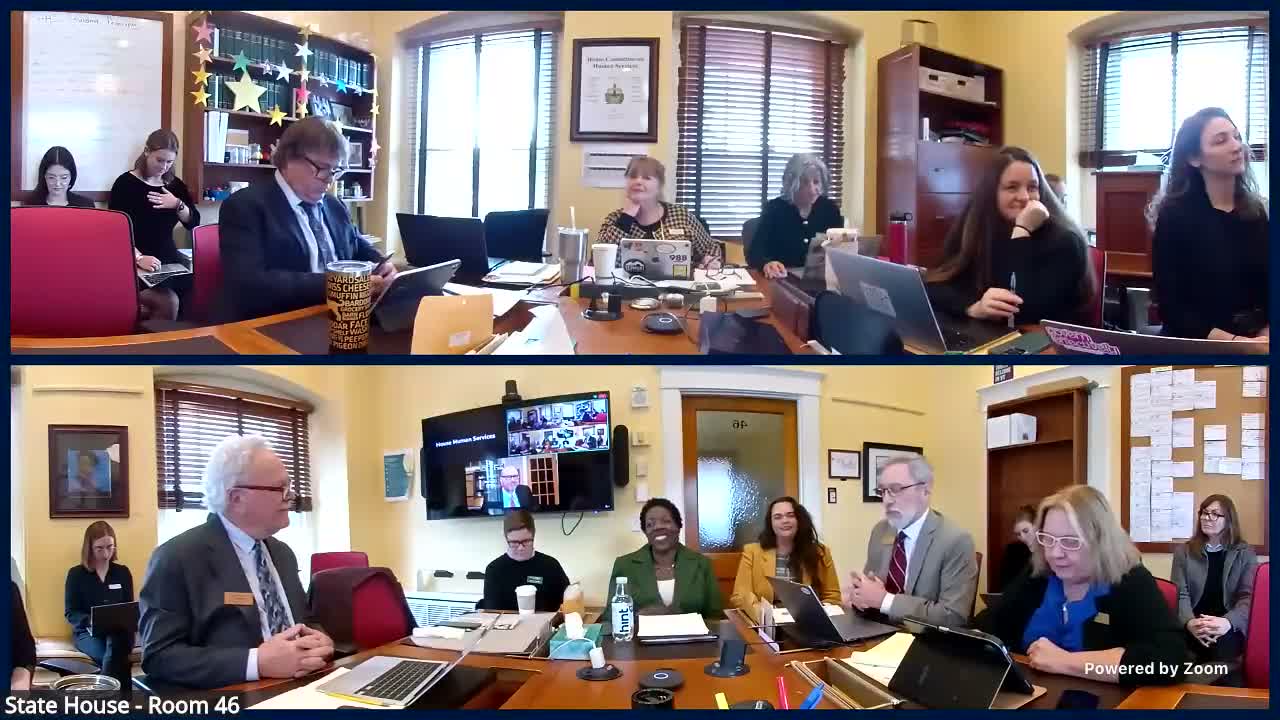
Summary
A joint DCF–Judiciary report found supervised‑visitation capacity uneven across Vermont, with wait lists, underfunded programs, and geographic gaps; the judiciary urged county‑level access and the committee asked DCF, victim services, and community partners to cost out closing the gaps for FY27.
A joint report prepared by the Department for Children and Families and the Vermont judiciary found that supervised‑visitation programs — used when child contact requires monitoring for safety — are unevenly available across the state, leaving families and courts to work around capacity gaps, witnesses told the House Human Services Committee on Jan. 13.
Erica Radke, Deputy Commissioner of the Family Services Division, said the report (prepared under Act 27) documents "uneven access across the state, capacity constraints even when programs do exist, and risks that can arise when families rely on informal supervision arrangements." Lindsay Barrett, director of policy and planning for Family Services, described a multi‑month information‑gathering effort including focus groups and surveys of providers, courts, staff and families.
Barrett summarized the team's key findings: demand consistently exceeds capacity; underfunding limits staff availability and safety infrastructure; rural counties face higher startup costs and transportation barriers; documentation and supervision practices vary by program; and program instability risks service loss without stable funding.
Julie Riley, the program manager who administers a federal supervised‑visitation grant, said DCF distributes roughly $100,000 in federal funds among 7–8 programs; most programs receive between $8,200 and $16,400 annually from that source, and that funding is only one piece of a program’s budget.
"Programs consistently receive high volumes of referrals," Barrett said. "Wait lists are common; families are often referred across county lines and sometimes out of state."
Chief Superior Judge Tom Zurney told the committee courts use supervised visitation for cases with significant safety concerns — domestic violence, substance misuse, untreated mental health needs, and other risks. "We would like them available in every county for every family that needs them and every child that needs them because they offer a safer and a more neutral alternative to no contact, informal arrangements," Zurney said.
Committee members pressed witnesses on program structure and funding. Members asked whether the state should develop a statewide administration for supervised visitation or instead support the current community‑based model with consistent standards and targeted funding. Witnesses favored building on community partners while improving coordination, documentation, and stable funding.
The committee asked DCF, the Center for Crime Victim Services, the Vermont network that supports supervised‑visitation programs, and other stakeholders to quantify the cost of filling geographic gaps in the state and to return with proposals for the FY27 budget process. "We will be asking for what it would take to fill that gap in the middle," Chair Teresa Wood said, referring to counties without programs.
Next steps: the committee will request cost estimates, continue partnership conversations, and include supervised‑visitation funding considerations in its FY27 planning.