Get Full Government Meeting Transcripts, Videos, & Alerts Forever!
Get email alerts on the Employment Law topic
No spam. Unsubscribe anytime.
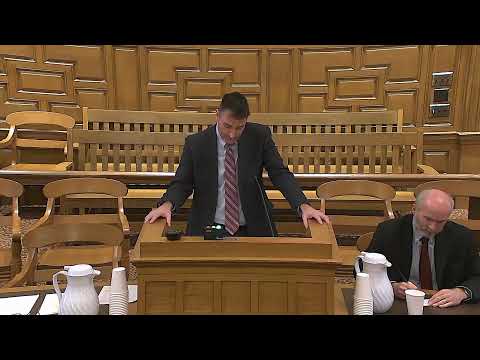
Appeals Court hears argument over DCF religious-exemption denial for vaccine requirement
Summary
In Jangle v. Sutters, plaintiff counsel argued DCF failed to show granting a religious exemption would cause undue hardship because the agency relied on a literature-review affidavit; DCF counsel said the record facts were undisputed and that permitting the exemption would impose substantial burdens on operations. The panel submitted the case.
Plaintiff counsel Peter Vickery argued that the Department of Children and Families (DCF) failed to prove that granting Timothy Jangle a religious exemption from a COVID-19 vaccine requirement would impose an undue hardship. Vickery emphasized that the issue turned on whether the employer had a reasonable, evidence-based basis to conclude that an unvaccinated employee would pose an elevated risk to children and colleagues and that the affidavit relied on by DCF (from a state epidemiologist) failed to establish that level of risk.
The appellees responded that the trial court correctly treated many facts as undisputed under the Superior Court’s Rule 9 practice and that the record shows granting the exemption would have imposed substantial operational burdens, including risks to vulnerable children and extra staffing costs. Counsel for DCF and other appellees pointed to an administrative review and a detailed interagency process (EOHHS/office of diversity and inclusion) that examined job duties and concluded accommodation was not reasonable without undue hardship. Appellee counsel also noted case law that employers are not required to reassign essential functions to create an accommodation.
The judges questioned whether the appellant had produced admissible contradictory expert evidence and discussed the impact of subsequent federal and regional decisions; they also explored whether the plaintiff’s Rule 9 filings preserved disputed facts. After argument, the panel submitted the matter for decision and recessed.