Get AI Briefings, Transcripts & Alerts on Local & National Government Meetings — Forever.
Charter commission declines to certify Fairgrounds petition after Metro Legal flags expired code definition
Summary
The Charter Revision Commission voted unanimously not to certify a petition that would have removed auto racing as a required Fairgrounds use and allowed affordable or workforce housing, after Metro Legal said the petition relies on a definition in Metro Code chapter 2.213 that expired on 07/02/2024.
The Charter Revision Commission voted unanimously not to certify a petition seeking to change permitted uses at the Nashville Fairgrounds Speedway, citing a legal flaw in the petition text.
Petitioner Mike Kopp told the commission the petition has two parts: remove "auto racing" from the list of required activities at the Fairgrounds and allow "affordable or workforce housing" as defined in Metro code, and adopt a provision requiring the fair board to ensure no auto racing occurs within 1,000 feet of Browns Creek. "The 2 basic components of this proposed petition are as follow," Kopp said, summarizing the proposal to let voters decide the site’s future and to add environmental protections near Browns Creek.
Metro Legal told the commission the petition does not "convey a reasonable certainty of meaning." Jackie of the Department of Law said the petition adopts the definition of "affordable and workforce housing" from chapter 2.213 of the Metropolitan Code, but that chapter "expired on 07/02/2024 and has been null and void since that time." Metro Legal advised that reliance on a non‑existent code definition prevents certification under the charter’s requirement for clear meaning.
Commissioners pressed a number of related questions: whether the city can hold citizen referenda more frequently than every two years (Metro Legal said it has been more than two years since the last referendum), whether portions of the Fairgrounds are Metro property (petitioners said parts are Metro‑owned while other parts are leased), and how a 1,000‑foot Browns Creek prohibition would be measured in practice.
Several commissioners and petitioners treated the issue as fixable. Multiple speakers urged the petitioners to include the necessary definitions in the petition text rather than referencing a code provision that no longer exists. "I think this is an easy fix," said one commissioner, urging petitioners to add the definitions to clarify meaning and avoid litigation.
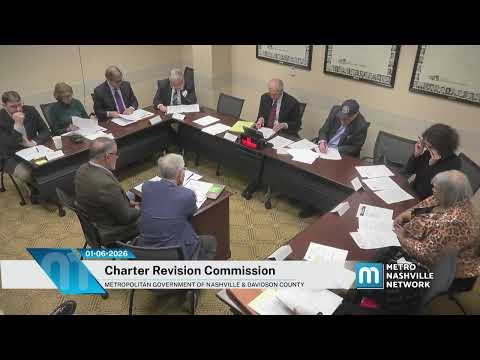
After deliberation, a commissioner moved to not certify the petition "for the reasons set forth in the Metro Legal memorandum" and the motion was seconded. Chair announced the motion "passes unanimously," and the commission stated the petition will not go forward in its current form this year.
Metro Legal advised that petitioners have 15 calendar days from the decision to file a revised petition; once filed, the commission then has 15 days to meet and decide whether to certify the revised petition. The commission tentatively scheduled a follow‑up meeting for Thursday, January 22 at 10:00 a.m. to remain within the statutory window.
Public commenters at the meeting included residents who urged preserving the Fairgrounds as community space and opposed wholesale removal of racing and track facilities; one commenter, Shane Smiley, told the commission he had reviewed deeds and called media statements that the Fairgrounds were "given to the people of Davidson County" misleading.
The commission’s role in this session was procedural: to determine whether the petition text meets the Metro Charter and code requirements for placement on the ballot, not to take a position on the underlying policy.