
Arlington County board member outlines four priorities for 2026, flags budget and housing steps
Get AI-powered insights, summaries, and transcripts
Subscribe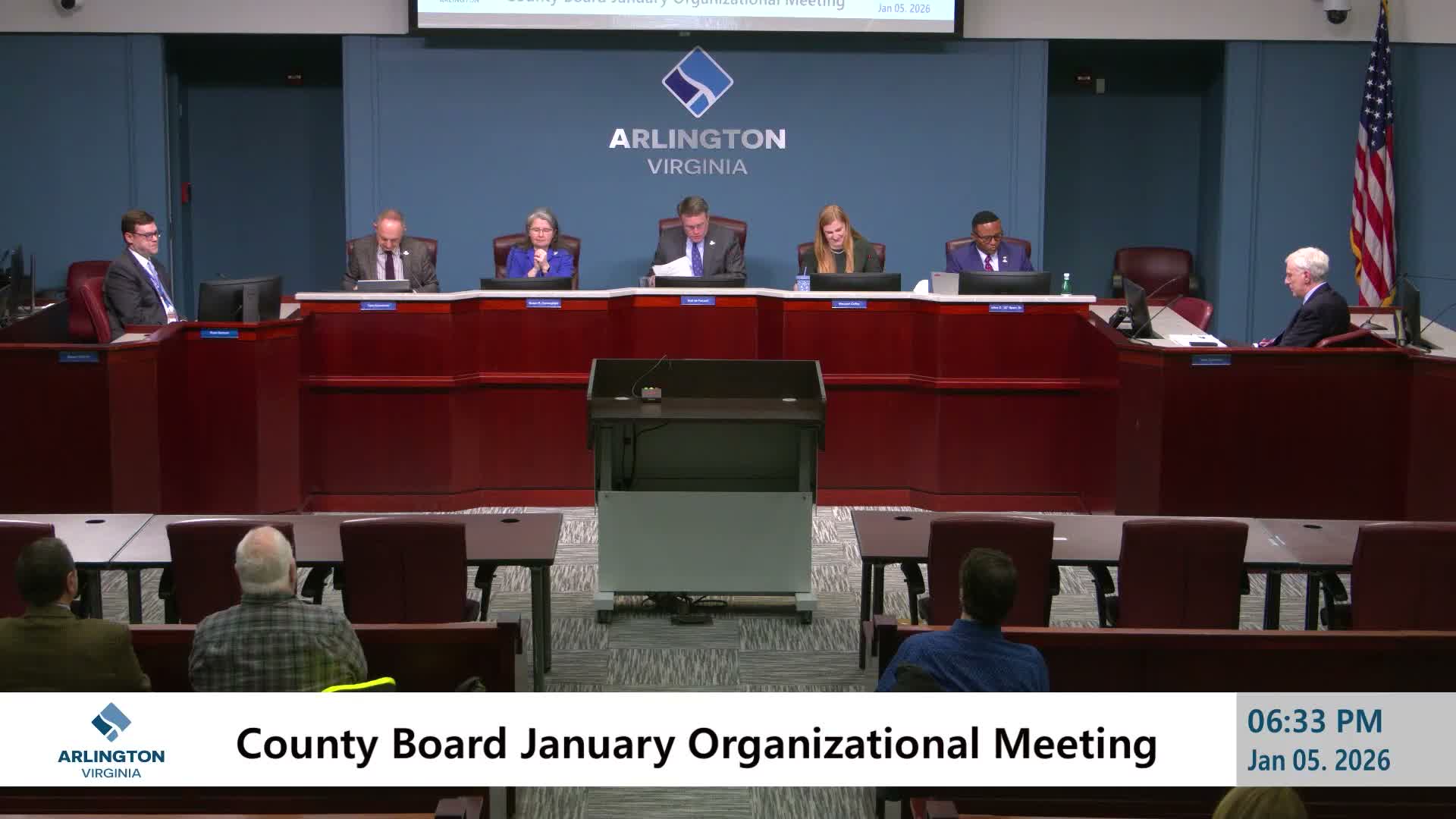
Summary
A member of the Arlington County Board framed 2026 as a critical year and urged focus on economic stabilization, support for vulnerable residents, public safety funding, and investments in schools and climate work. The remarks referenced prior budget actions including $11.5 million in reserves and $10 million in ongoing public safety funding.
Speaker 1, a member of the Arlington County Board, used opening remarks to set a theme of "joy cometh in the morning" and laid out four priorities for 2026: stabilize the economy, protect the county's most vulnerable residents, keep communities safe, and preserve investments in the environment and schools.
The speaker said federal policy changes have created immediate fiscal and social pressure on Arlington, asserting that immigrant families and federal workers have been targeted and that the county must continue to respond. "In 2025, our community invested in additional resources," the speaker said, and noted the county "set aside $11,500,000 in budget reserves to guard against the Trump administration's cuts." The remarks called for continued work to convert obsolete office buildings to housing under the Commercial Market Resiliency Initiative (CMRI) and cited earlier actions that reduced office vacancy.
Why it matters: The priorities outlined shape the county's budget planning and policy agenda for the year. The speaker framed the budget work as urgent, with the county manager's budget due on or about Feb. 21 and a 6–8 week review period ahead of an April adoption.
Economy and transit: The speaker said Arlington's economic backbone relies on metro service and pledged to advocate for sustainable metro funding in Richmond and through the speaker's role on the metro board. On commercial real estate, the speaker urged continued redevelopment of obsolete office space into residential units as a way to shore up housing supply and local revenues.
Protecting vulnerable residents: The remarks listed prior steps the county has taken to assist immigrant families, including a partnership with the Arlington Community Foundation and an amended county immigration policy that ends voluntary cooperation with ICE. The speaker cited roughly 22,000 Arlington residents living under 150% of the poverty line ("49,000 for a family of four," as stated) and said more than 4,000 Arlington households receive weekly assistance from AFAC. The speaker proposed beginning a local effort to partner with faith institutions on affordable housing and referenced state-level legislation referred to in the remarks as "YIGBY."
Public safety and criminal justice: The speaker said the board "has already agreed to an additional $10,000,000 in ongoing funding for our police and fire departments" to address vacancies and understaffing, and thanked the sheriff's office for moving toward in‑house medical services (attributed in the remarks to Sheriff Quirozzi). The speech also highlighted school zone speed safety cameras and the role of civilian oversight bodies in identifying best practices.
Environment and schools: The speaker said the county will prioritize climate action plan engagement and energy audits to encourage weatherization and solar adoption, and noted a one-time allocation of more than $400,000 in 2025 for after‑school programs that serve students in need. The speaker thanked county staff and Arlington Public Schools leadership, mentioning Superintendent Duran by name.
Budget timeline and governance: The speaker reiterated key calendar dates: manager's proposed budget expected on or about Feb. 21, an intensive review in the following 6–8 weeks, and an expected adoption in April. The speaker also said the board will revisit governance topics in July.
The remarks closed with thanks to colleagues and staff and then yielded to Vice Chair Coffey to continue the meeting.