House Appropriations Committee hears ACCD update: most ARPA dollars spent; VHIP projects near completion
January 10, 2026 | Appropriations, HOUSE OF REPRESENTATIVES, Committees, Legislative , Vermont
This article was created by AI summarizing key points discussed. AI makes mistakes, so for full details and context, please refer to the video of the full meeting. Please report any errors so we can fix them. Report an error »
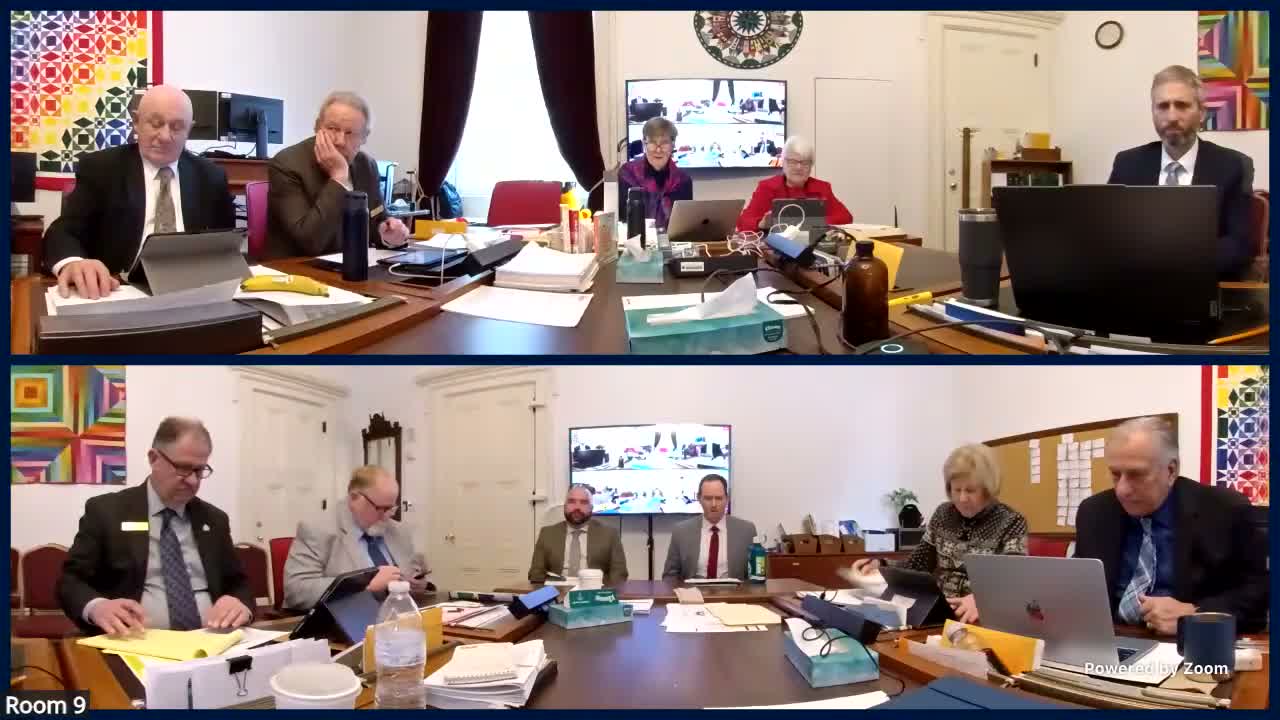
The House Appropriations Committee heard an update on Jan. 9 from the Agency of Commerce and Community Development (ACCD) and the Department of Housing and Community Development (DHCD) on federal ARPA dollars, accounting changes and the status of housing projects funded through those awards.
Dan Dickerson, ACCD’s administrative services director, told the committee the agency had received nearly $100 million in ARPA‑related appropriations across economic development and housing programs and that "we are down to our last roughly $600,000 to spend." He described a recent pattern in which the state recovery office has allowed agencies to swap ARPA appropriations for state general funds and then obligate those general funds through programs such as the Community Recovery and Revitalization Program (CRP). Dickerson said the CRP currently carries about $18,000,000 in obligated, converted general‑fund commitments.
Dickerson walked members through his departmental spreadsheet and clarified accounting terms the committee uses to track grant funding. He differentiated funds that are encumbered or expended in the financial system from his working "obligated" column, which reflects executed grant agreements, contracts or federal set‑asides for staffing costs. He also described a small number of true reversions where funds could not be obligated in time; examples he cited included an $87,500 water‑system improvement line and an $800,000 high‑efficiency devices line that were returned when they could not meet federal timelines.
"For the federal, I think it was the 12/31/24 deadline," Dickerson said when explaining why some ARPA lines reverted; a committee staff member reported the general‑fund swap extension runs to Dec. 31, 2027.
Sean Gilpin, DHCD housing division director, summarized the housing programs funded with ARPA dollars. He said the Vermont Housing Improvement Program (VHIP) has been a large recipient of ARPA support and that DHCD "will have created more than 1,000 units through the VHIP program" once the final, reimbursement‑based projects submit claims and lease up. Gilpin said VHIP is primarily a reimbursement program (payments are made after work is completed), so ledger balances can remain until projects submit final invoices and reach occupancy.
Gilpin added the department has worked with five homeownership centers across the state and that most ARPA‑funded VHIP projects are expected to complete in weeks; he described internal target dates (many participants were told to finish by Feb. 1, with March 1 as a softer deadline) while acknowledging construction and contractor timing can require flexibility.
Dickerson and Gilpin also discussed changes in grants management technology. ACCD moved from an initial plan to use Salesforce toward contracting with Intelligrants to manage four major grant programs; Dickerson said procurement and contract‑holder arrangements (ADS holds the contract) can make amounts appear as available in the VT Buys system even when the department believes those funds are effectively obligated.
Committee members pressed on several points, including how reverted amounts were reallocated, whether money had been returned to federal authorities (Dickerson said he did not believe any funds had been sent back to the feds), and whether municipalities were fully informed about downtown revitalization and predevelopment grant opportunities administered through the CRP. Dickerson said every dollar on his document currently has a grant agreement behind it and that remaining balances generally represent reimbursement timing or small staffing set‑asides for program oversight.
The meeting closed with routine scheduling: the committee will hold a budget workshop at noon in Room 10 and proceed with budget work ahead of the FY27 process.
The department materials and the audio/video of the Jan. 9 briefing (except for a brief, unrecorded in‑room activity) were noted as available on the committee website.
Dan Dickerson, ACCD’s administrative services director, told the committee the agency had received nearly $100 million in ARPA‑related appropriations across economic development and housing programs and that "we are down to our last roughly $600,000 to spend." He described a recent pattern in which the state recovery office has allowed agencies to swap ARPA appropriations for state general funds and then obligate those general funds through programs such as the Community Recovery and Revitalization Program (CRP). Dickerson said the CRP currently carries about $18,000,000 in obligated, converted general‑fund commitments.
Dickerson walked members through his departmental spreadsheet and clarified accounting terms the committee uses to track grant funding. He differentiated funds that are encumbered or expended in the financial system from his working "obligated" column, which reflects executed grant agreements, contracts or federal set‑asides for staffing costs. He also described a small number of true reversions where funds could not be obligated in time; examples he cited included an $87,500 water‑system improvement line and an $800,000 high‑efficiency devices line that were returned when they could not meet federal timelines.
"For the federal, I think it was the 12/31/24 deadline," Dickerson said when explaining why some ARPA lines reverted; a committee staff member reported the general‑fund swap extension runs to Dec. 31, 2027.
Sean Gilpin, DHCD housing division director, summarized the housing programs funded with ARPA dollars. He said the Vermont Housing Improvement Program (VHIP) has been a large recipient of ARPA support and that DHCD "will have created more than 1,000 units through the VHIP program" once the final, reimbursement‑based projects submit claims and lease up. Gilpin said VHIP is primarily a reimbursement program (payments are made after work is completed), so ledger balances can remain until projects submit final invoices and reach occupancy.
Gilpin added the department has worked with five homeownership centers across the state and that most ARPA‑funded VHIP projects are expected to complete in weeks; he described internal target dates (many participants were told to finish by Feb. 1, with March 1 as a softer deadline) while acknowledging construction and contractor timing can require flexibility.
Dickerson and Gilpin also discussed changes in grants management technology. ACCD moved from an initial plan to use Salesforce toward contracting with Intelligrants to manage four major grant programs; Dickerson said procurement and contract‑holder arrangements (ADS holds the contract) can make amounts appear as available in the VT Buys system even when the department believes those funds are effectively obligated.
Committee members pressed on several points, including how reverted amounts were reallocated, whether money had been returned to federal authorities (Dickerson said he did not believe any funds had been sent back to the feds), and whether municipalities were fully informed about downtown revitalization and predevelopment grant opportunities administered through the CRP. Dickerson said every dollar on his document currently has a grant agreement behind it and that remaining balances generally represent reimbursement timing or small staffing set‑asides for program oversight.
The meeting closed with routine scheduling: the committee will hold a budget workshop at noon in Room 10 and proceed with budget work ahead of the FY27 process.
The department materials and the audio/video of the Jan. 9 briefing (except for a brief, unrecorded in‑room activity) were noted as available on the committee website.
View the Full Meeting & All Its Details
This article offers just a summary. Unlock complete video, transcripts, and insights as a Founder Member.
✓
Watch full, unedited meeting videos
✓
Search every word spoken in unlimited transcripts
✓
AI summaries & real-time alerts (all government levels)
✓
Permanent access to expanding government content
30-day money-back guarantee
