Community Action of Greene County tells legislature it is stretched thin; HUD changes and rising rents hamper housing work
Loading...
Summary
Florence Lorenz, executive director of Community Action of Greene County, told the county legislature the agency meets nearly all federal organizational standards, runs three HUD grants and VITA tax assistance that returned about $300,000 to the community last year, but faces challenges from HUD policy changes and rising rents that limit housing placements.
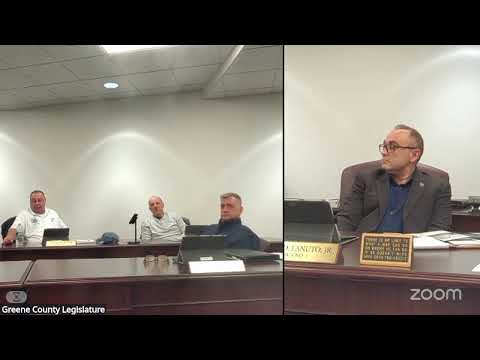
Florence Lorenz, executive director of Community Action of Greene County, briefed the legislature on the agency nd told members it is facing operational strain as federal program rules and local housing costs change.
"We are 1 of over 1,000 agencies nationwide. We're funded with federal dollars, the community services grant," Lorenz said, describing the agency's tripartite governance, thrift store revenue model and direct client services. She told the legislature the agency met 57 of 58 federal organizational standards in its last assessment and attributed the single shortfall to a payroll-tax filing issue with their payroll processor, not to program management.
Lorenz said Community Action operates three HUD-funded grants, including permanent-supportive and transitional housing programs, and that a recent Notice of Funding Opportunity and resulting policy proposals at the federal level have placed some of that work "on hold." She said housing placements are becoming harder because fair‑market‑rent limits are not keeping pace with local market rents.
On program details she said the agency's thrift store proceeds support administrative expenses and that its VITA (Volunteer Income Tax Assistance) site produced roughly $300,000 in tax refunds returned to low‑income residents in the last year. About victim services, Lorenz said the agency now operates "safe dwellings" (nonresidential shelter services) and has a four‑unit transitional apartment building in Columbia County; safe dwellings can serve up to nine people at a time and staffing is Monday through Friday with rotating on‑call support.
Lorenz addressed a specific concern about harm‑reduction equipment: "We have never used your dollars for tenants ... And none of your dollars went to the harm reduction machine in our parking lot. That's covered entirely by a grant," she said.
Legislators asked about how Community Action tracks its internal allocations and whether a $50,000 figure referenced by a member was separately tracked; Lorenz said general operating funds are commingled and that line items such as a "line of bridal" (bridging line) are used to smooth timing gaps when state or federal contracts are delayed.
Lorenz offered to provide regular client counts by program (transportation, housing) on a quarterly or semiannual basis so the legislature can better track service volumes.
The presentation was followed by a brief question‑and‑answer period and the legislature thanked agency staff for their work over the past 25 years.