
Norman oversight committee considers earlier public input, fees and independent review for TIF districts
Get AI-powered insights, summaries, and transcripts
Subscribe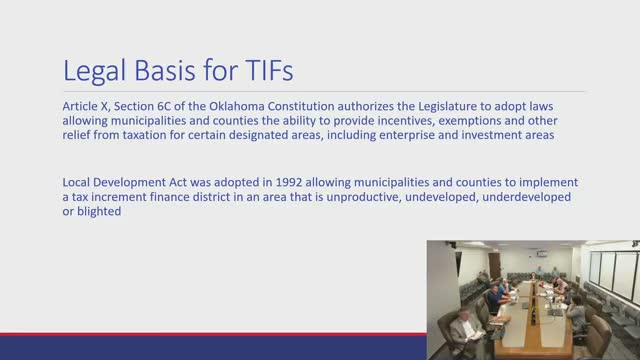
Summary
A presenter recommended expanding early public engagement for tax increment finance (TIF) districts — including citizen committees, application fees to cover city review, and independent economic analyses — and committee members asked staff to return with policy options.
Catherine, the presenter at Thursday’s oversight meeting, urged the committee to consider ways to bring the public into tax‑increment finance (TIF) planning earlier in the process, including appointing citizen review panels, setting application or administrative fees to fund city review, and commissioning independent economic analyses to validate developer projections.
"A TIF is is not a new tax. It's essentially taking the growth in taxes in an area and allocating that to particular project costs," Catherine said, explaining the Local Development Act framework for TIF districts and how increments can include ad valorem and sales taxes and be allocated as 100%, 50% or another percentage depending on project needs.
Catherine described the statutory review committee process, which she said typically includes a city representative as chair (often the mayor), a planning commission designee and representatives from taxing jurisdictions such as Cleveland County, the health department, the library and Norman Public Schools, and then three at‑large appointees. She noted the statutory committee does not usually provide a formal public comment opportunity and suggested a citizen committee could supplement the review for projects with direct neighborhood impacts.
Committee members discussed examples and tools from other cities. Fort Worth and Kansas models were cited for application‑fee approaches; Catherine said an independent economic analysis for the arena project was under $25,000 and that the city has sometimes contracted third‑party work to test developer projections. Members also raised policy options such as adopting a district‑specific policy guide (as the city did for Center City) and tying affordable‑housing set‑asides to certain TIF plans.
No vote was taken. Committee members asked staff to return with draft policy options and the group agreed to revisit the topic in a future oversight meeting to allow time to digest the materials and refine a possible TIF district master plan.