
State Rep. Carrie Ann Lisenby outlines bills on school health curriculum, voter‑roll cleanup and redistricting at Davis County forum
Get AI-powered insights, summaries, and transcripts
Subscribe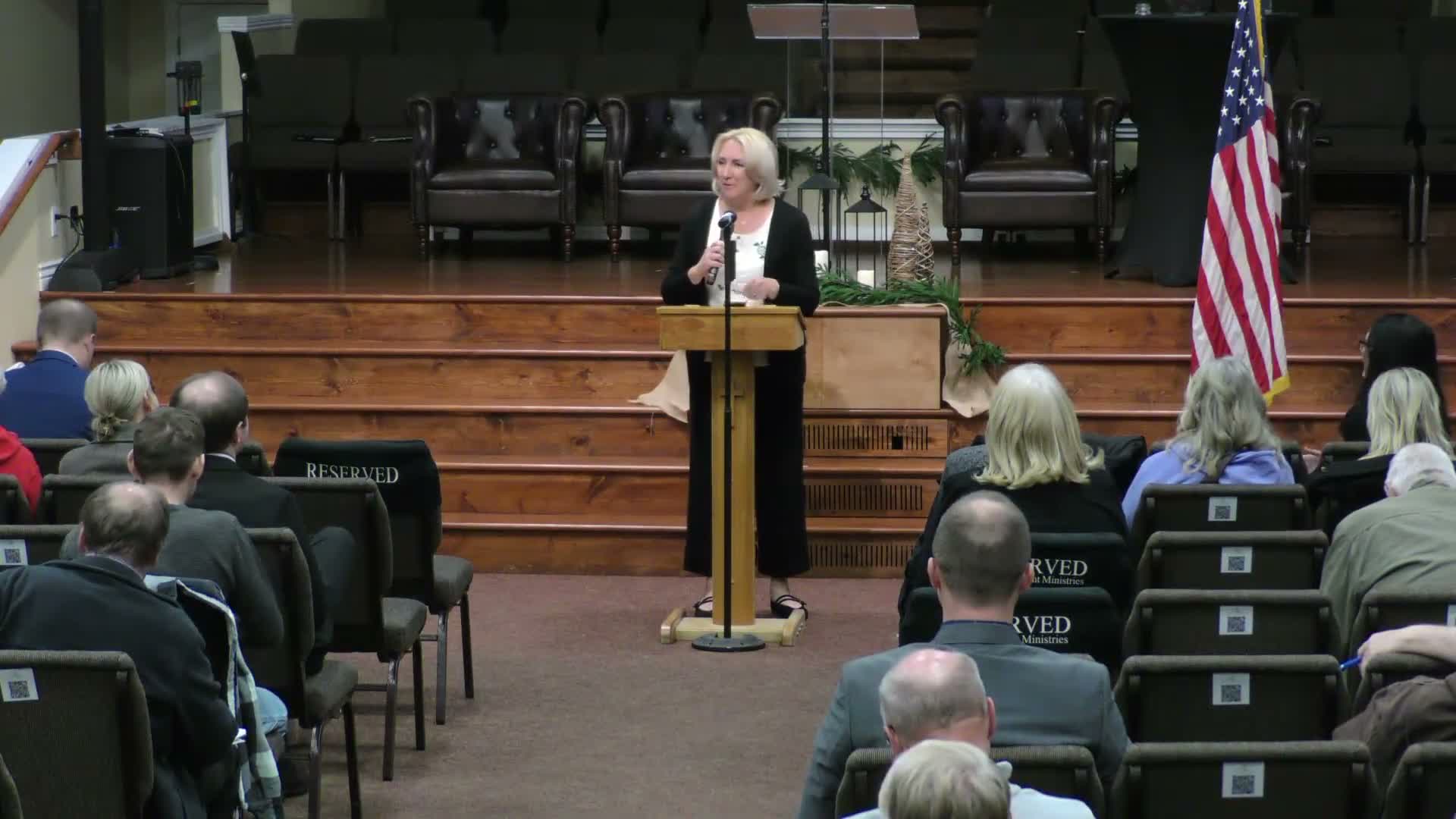
Summary
At a Davis County Conservatives forum, State Rep. Carrie Ann Lisenby described draft legislation to require developmentally accurate prenatal videos in high‑school health classes, a bill to tighten voter‑roll maintenance and bar noncitizen voting, and steps the legislature is taking on redistricting and judicial transparency.
State Rep. Carrie Ann Lisenby told a packed Davis County Conservatives forum that she is shepherding a slate of bills this legislative session focused on education content, election integrity and judicial transparency. "I will be running a few big ones," she said, adding that some drafts will be transferred to colleagues for filing and numbering.
Lisenby described one draft titled "human growth and development instruction," saying it would require that the existing high‑school health class include a developmentally accurate prenatal video that shows prenatal development "all the way through prenatal development." "The language requires that the video be developmentally appropriate and it's not a specific video," she said, noting similar requirements in other states.
She also described a refiled bill aimed at preventing noncitizen voting and improving voter‑roll maintenance. Lisenby said whistleblowers brought examples of noncitizens registered in Utah; after checking the clerk database she said she found matches. "Took that information, checked it against the VISTA database that clerks use. Sure enough, they're on there and they're registered and voting in Utah," she said. She cited an audit that found roughly 1,400 deceased people on Utah's voter rolls and said three deceased registrants had voted after death, which she used to argue for statutory changes and better database comparisons.
On interstate data sharing, Lisenby said she has for several years sought to remove Utah from ERIC (Electronic Registration Information Center), arguing alternative multistate agreements can achieve cross‑state checks without ERIC's costs or risks. She said the measure stalled in the senate in prior sessions.
Lisenby also addressed the current redistricting fight, judicial appointments and retention. She characterized a recent redistricting judicial decision as overreach: "She clearly legislated from the bench. Full stop," Lisenby said of the judge responsible for drawing the map. She described legal and practical limits on reversing implemented election results and outlined a layered strategy — appeals, expedited court timelines and back‑pocket remedies — while acknowledging uncertainty about any single path to reversal.
To increase voter oversight of judges, Lisenby said she refiled HB 512 to add consolidated information about judges' caseloads and decision tendencies to the voter pamphlet ahead of retention votes. "If we are going to have more information as voters when we go to vote on these judges, this bill will help," she said.
Lisenby urged constituents to engage with their legislators on statewide zoning proposals and other bills she opposes. She also announced that Chris Bramwell, the state's data privacy officer, would speak at the group's next meeting on AI and data‑privacy issues. "If you have issues with AI and digital identity ... you have a huge interest in being here," she said.
The representative said many drafts are not yet numbered and some will be handed to colleagues to carry; attendees were told to monitor the state legislative website for bill filings and numbers. Lisenby repeatedly asked for constituent feedback and offered to share bill text by request.
Next steps: Lisenby said some drafts will be filed and transferred in the coming days; she noted an appeal on the Prop 4 redistricting decision had been filed to the Utah Supreme Court and said additional filings may follow.